10 Leading Python API Frameworks Ranked by Popularity
When you need to expose data or services over HTTP, the right Python API framework can make a world of difference. It’s not just about getting something that works; it’s about choosing a tool that fits your team’s skill set, scales with demand, and keeps the codebase clean.
What Makes an API Framework Worthy?
There isn’t a single magic bullet, but a few patterns keep popping up. First, documentation quality often predicts how quickly new developers can get up to speed. Second, community activity—GitHub stars, issues closed, and third‑party extensions—signals long‑term viability.
Performance matters, too, especially for micro‑services that handle dozens of requests per second. Finally, the learning curve: a framework that feels too heavy for a simple project can slow you down, while a minimalist library might lack the features you eventually need.
How We Ranked the Frameworks
- GitHub popularity: stars, forks, and recent commit frequency.
- Adoption in the wild: presence in notable open‑source projects and enterprise stacks.
- Feature set: built‑in validation, authentication helpers, and async support.
- Ease of use: clarity of documentation and availability of tutorials.
We gave each framework a score out of 10 for those criteria, then averaged the results. The numbers aren’t perfect—some projects thrive behind private repos—but they give a solid snapshot of current trends.
The Top 10 Python API Frameworks
1. FastAPI
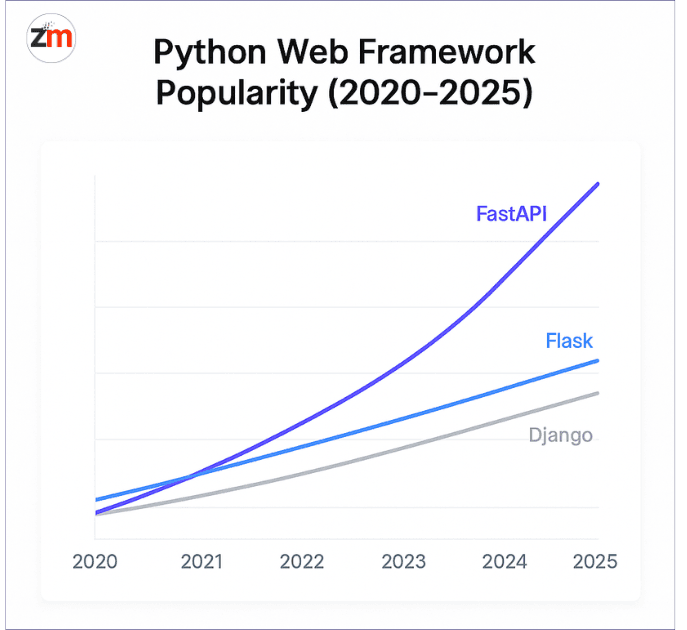
FastAPI surged ahead thanks to its native async support and automatic OpenAPI schema generation. If you’re building a modern, high‑throughput service, you’ll likely appreciate its declarative style.
- Python 3.7+ required.
- Built‑in data validation via Pydantic.
- Excellent interactive docs (Swagger UI, ReDoc).
Drawback? The async paradigm can be tricky for teams accustomed to synchronous code.
2. Flask‑RESTful
Flask itself is a classic, and Flask‑RESTful extends it with resource‑based routing. It stays lightweight, which is why many startups love it.
- Works with any Flask extension.
- Simple class‑based resources.
- Good for quick prototypes.
However, you’ll have to add extra packages for things like pagination or authentication.
3. Django REST framework (DRF)
DRF sits atop Django, offering a full‑featured toolbox for complex APIs. If your project already uses Django’s ORM, DRF feels like a natural extension.
- Serializers handle validation intelligently.
- Browsable API is a lifesaver for debugging.
- Rich authentication options out of the box.
Its depth can be overwhelming for simple services—there’s a learning curve.
4. Tornado
Tornado is known for its non‑blocking network I/O, making it a solid choice for WebSocket‑heavy applications.
- Native async/await support.
- Low‑level control over request handling.
- Scales well under high concurrency.
But the API is more bare‑bones; you’ll write more boilerplate compared to FastAPI.
5. Bottle
As the name suggests, Bottle is tiny—just a single file. It’s perfect for micro‑services that need only a few endpoints.
- No external dependencies.
- Easy to embed in existing scripts.
- Supports routing, templates, and simple request handling.
Its simplicity also means you miss out on advanced features like automatic schema generation.
6. Falcon
Falcon markets itself as “fast, reliable, and lightweight.” It’s a good middle ground between Bottle’s minimalism and FastAPI’s async magic.
- Focus on request/response speed.
- Supports both sync and async views.
- Extensible through middleware.
Documentation is solid, though community size lags behind the top three.
7. Eve
Eve builds on top of Flask and MongoDB, turning a database collection into a RESTful API with minimal code.
- Automatic CRUD endpoints.
- Built‑in pagination, filtering, and sorting.
- Works out‑of‑the‑box with MongoEngine.
If you’re using a relational DB, Eve isn’t the best fit.
8. Hug
Hug aims to make APIs as simple as possible while still supporting modern Python features.
- One decorator can expose a function as an API endpoint.
- Built‑in validation and documentation.
- Supports multiple protocols (HTTP, CLI, etc.).
The project’s activity has slowed recently, so consider the long‑term roadmap before committing.
9. Connexion
Connexion lets you define your API with an OpenAPI (Swagger) spec and then map it to Python functions. It’s a “spec‑first” approach.
- Auto‑generates routes from YAML/JSON.
- Integrates with Flask or Tornado.
- Great for teams that like contract‑driven development.
Learning the OpenAPI spec adds overhead for newcomers.
10. APIStar
APIStar combines ideas from Flask, Django, and modern async frameworks. It’s relatively young but gaining traction.
- Declarative resources with validation.
- Supports async out of the box.
- Simple project scaffolding.
Community size is still modest, so you may need to rely on the core docs more heavily.
Choosing the Right Fit for Your Project
There’s no universal answer. If speed and modern async are paramount, FastAPI or Falcon are strong candidates. For teams already entrenched in Django, DRF saves you a lot of integration work. When simplicity reigns, Bottle or Flask‑RESTful get the job done without excess baggage.
Don’t forget to factor in future needs. A framework that feels lightweight today might become a bottleneck as you add authentication, rate limiting, or complex data validation.
Where to Learn More
- Official docs: always the most reliable source.
- Community forums: Reddit’s r/Python and Stack Overflow are treasure troves.
- Video tutorials: YouTube channels like “Corey Schafer” often cover Flask and Django REST.
Whatever you pick, spend a few days building a tiny prototype. That hands‑on feel will reveal the hidden quirks that no ranking can capture.