2023 WEF Jobs Report: What It Means for the Future of Work
The World Economic Forum’s 2023 Jobs Report landed amid a whirlwind of headlines about AI, remote work, and climate‑driven economies. While the data tables are dense, the story they tell is surprisingly clear: the nature of work is shifting faster than most policies can keep up. In the next few sections we’ll unpack the report’s headline findings, explore the skills that are turning into “must‑haves,” and offer practical ideas for both employers and employees looking to stay ahead of the curve.
Key Findings from the 2023 WEF Jobs Report
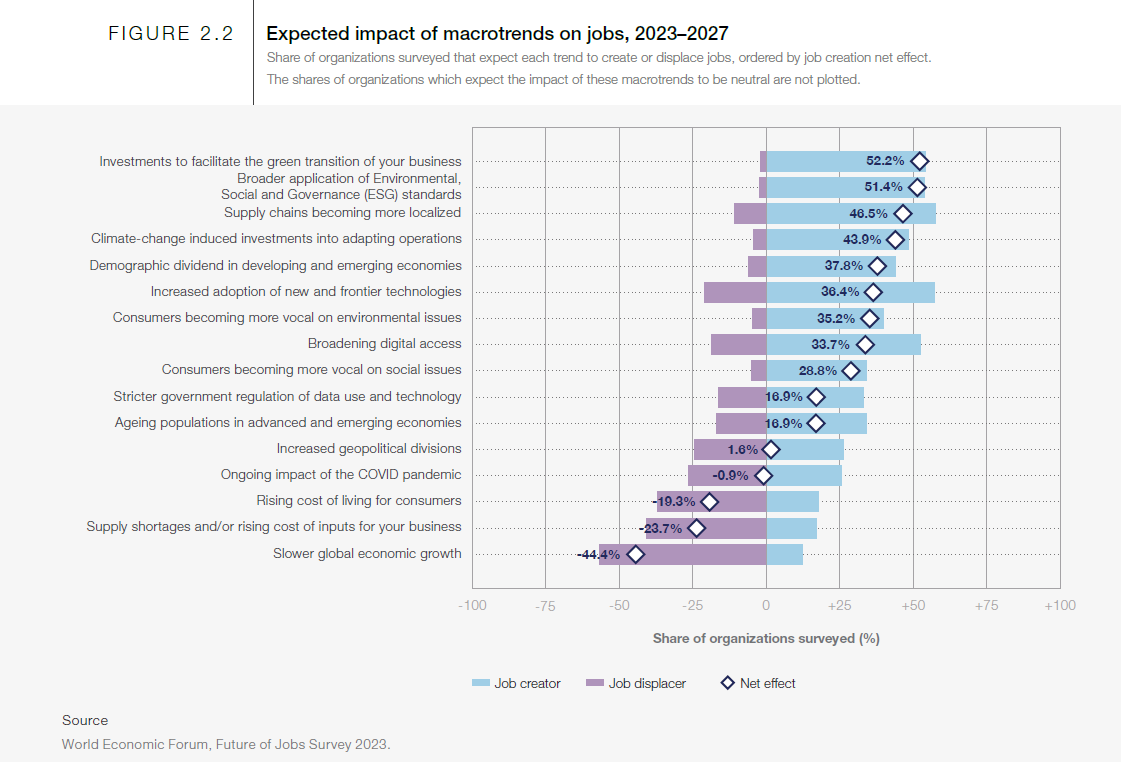
Among the most striking takeaways, the report highlights three broad trends that will shape labour markets over the next decade.
- Automation is reshaping roles, not just eliminating them. Routine tasks across manufacturing, finance, and even legal services are increasingly performed by software, freeing up humans for higher‑order problem‑solving.
- Demand for digital and green skills is outpacing supply. Jobs that blend data analytics, renewable‑energy expertise, and sustainability reporting are growing at double‑digit rates in many regions.
- Hybrid and gig‑based arrangements are becoming mainstream. More than half of surveyed companies now list flexible work models as a core part of their talent strategy.
These trends intersect in ways that make the labour market feel both volatile and full of opportunity. The report warns that without proactive upskilling, workers risk falling behind; yet it also suggests that the very same disruption creates pathways into emerging sectors.
Why Skills Matter More Than Ever
One of the report’s recurring messages is that “skill intensity” – the proportion of a job that relies on specialised knowledge – is on the rise. In practical terms, this means a cashier who once only handled transactions now needs to navigate inventory‑management software, while a project manager may be expected to interpret AI‑generated risk models.
Soft skills remain essential, but they’re being paired with technical capabilities. Communication, adaptability, and critical thinking are now often listed alongside coding, data‑visualisation, or carbon‑accounting. Employers are looking for “hybrid talent” – people who can bridge the gap between domain expertise and digital fluency.
Emerging Sectors Shaping Tomorrow’s Careers
Three industry clusters stand out as the biggest job generators according to the WEF analysis.
- Renewable Energy & Climate Tech. From solar‑panel installation to carbon‑capture engineering, the transition to a low‑carbon economy is creating thousands of new roles, many of which require both engineering know‑how and regulatory insight.
- Health‑Tech & Biotechnology. Telemedicine platforms, AI‑driven diagnostics, and personalised medicine are expanding the demand for data scientists, bioinformaticians, and digital‑health strategists.
- Advanced Manufacturing & Robotics. Smart factories blend IoT sensors, predictive maintenance, and collaborative robots (cobots), calling for technicians who can troubleshoot both hardware and software.
These sectors don’t exist in isolation; they pull talent from traditional fields and remix skill sets. A civil engineer might find a niche in building resilient infrastructure for climate‑impacted regions, while a marketer could transition into user‑experience design for health‑tech apps.
How Employers Can Future‑Proof Their Workforce
For organisations, the report isn’t a warning bell so much as a roadmap. Companies that invest early in learning ecosystems tend to see higher retention and better productivity. Here are a few strategies that resonated with the WEF’s case studies:
- Continuous micro‑learning. Short, on‑demand modules let employees upskill without disrupting daily workflows.
- Cross‑functional project teams. Rotating staff through interdisciplinary projects builds the hybrid skill sets the report champions.
- Partnerships with educational providers. Co‑creating curricula with universities or bootcamps ensures that graduates hit the ground running.
Crucially, leaders are encouraged to map current job roles against projected skill gaps, then design targeted interventions rather than a one‑size‑fits‑all training program.
Practical Steps for Workers to Stay Relevant
If you’re navigating the same labour landscape, consider treating your career as a series of iterative projects.
- Audit your skill portfolio. Identify which of your daily tasks could be automated and which require uniquely human judgement.
- Prioritise digital fluency. Even a basic understanding of data analysis tools (Excel, Tableau, or Python) can dramatically increase your marketability.
- Explore green credentials. Short courses on sustainability reporting, renewable‑energy fundamentals, or ESG (environmental, social, governance) metrics are increasingly valued across industries.
- Leverage flexible work. Remote‑first roles often come with broader geographic options, giving you access to markets where demand for your skill set is higher.
Remember, the goal isn’t to become a jack‑of‑all‑trades but to develop a core expertise complemented by a few high‑impact, transferable skills.
FAQ
What are the most in‑demand skills according to the 2023 WEF Jobs Report?
The report highlights data analytics, AI‑related competencies, sustainability expertise, and advanced digital literacy as the top growing skill categories.
How fast is automation expected to affect current jobs?
While the exact pace varies by industry, the WEF estimates that roughly 30 % of tasks in many occupations could be automated within the next five years, reshaping rather than outright replacing roles.
Can remote work boost career resilience?
Yes. The report finds that workers who have experience in hybrid or fully remote settings tend to have broader networking opportunities and access to roles in regions with higher skill demand.
Should I invest in formal degrees or short certifications?
Both have merit. Formal degrees provide deep theoretical grounding, whereas short, industry‑aligned certifications can quickly fill specific skill gaps highlighted by the report.