AI For Football Prediction: Does It Actually Work?
You have probably seen the ads. Flashy interfaces promising 90% accuracy,Algorithmic picks that beat bookmakers, and sophisticated dashboards that look like they belong in a NASA control room. The rise of AI for football prediction has turned a hobbyist’s pastime into a high-tech battlefield. But amidst the hype, there is a persistent question: can an algorithm truly outthink the chaos of a 90-minute match?
Football is notoriously unpredictable. A red card in the fifth minute, a VAR incident, or a striker slipping on mud can render the most data-driven model obsolete in seconds. Yet, machine learning continues to advance, processing more variables than any human analyst could ever track. The reality is somewhere in the middle. AI isn’t a crystal ball, but it is a formidable statistical engine. Understanding how these tools work, their limitations, and which ones actually deliver value is crucial for anyone looking to leverage data in match analysis.
How Machine Learning Changes The Game
Traditional statistical models relied on simple averages. If Team A won their last five games and Team B lost their last three, Team A was the logical pick. It was clumsy, but it was all we had for a long time. modern AI for football prediction operates on a completely different level. These systems ingest vast datasets, often millions of data points, to find patterns that are invisible to the naked eye.
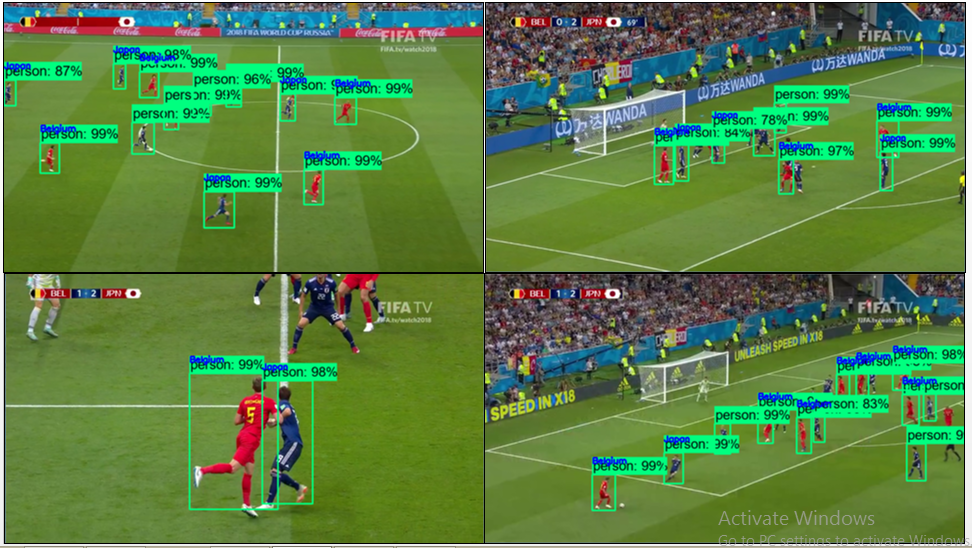
Machine learning algorithms can analyze player passing networks, heat maps, and even biometric data from wearables. They can adjust for weather conditions, travel fatigue, and tactical formations. The key differentiator is the ability to process non-linear relationships. For example, an AI might recognize that a specific manager’s team performs significantly worse when playing away against high-pressing defenses, even if their overall stats look good. This contextual nuance is where the predictive power lies.
The Landscape Of Predictive Software
The market is flooded with tools claiming to use AI, but few actually employ sophisticated machine learning. Here is a breakdown of the types of platforms currently shaping the industry:
- Statistical Engines: These platforms use historical data to project future outcomes. They are excellent for identifying value bets where the odds don't reflect the true probability. They don't predict the future; they identify market inefficiencies.
- Real-Time Data Analyzers: Some tools track live in-play data, adjusting predictions minute-by-minute. These are particularly useful for markets like next goal scorer or corner bets, where momentum shifts rapidly.
- Proprietary AI Models: These are the high-end solutions used by professional syndicates. They often use neural networks to simulate matches thousands of times, creating a probability distribution for every possible outcome. Access to these is usually restricted or extremely expensive.
It is important to distinguish between tools that simply present data and those that actually predict. A dashboard showing xG (Expected Goals) is informative, but it is not a prediction engine in itself. True AI prediction involves synthesizing this data with external variables to output a concrete probability.
The Limitations Remain Real
No matter how advanced the algorithm, football retains an element of pure randomness. This is often referred to as "low-scoring noise." In tennis, the better player wins most of the time because scoring is frequent. In football, a single deflection or a lucky own goal can decide the match. AI can calculate the probability, but it cannot control the event.
Furthermore, AI models struggle with qualitative factors. They have difficulty quantifying locker room morale, the psychological weight of a derby match, or the sudden injury to a star player just before kickoff unless that data is explicitly fed into them. Relying blindly on an AI tool without considering these human elements is a recipe for loss. The best users treat AI as a second opinion, not a gospel truth.
What To Look For In A Prediction Tool
If you are evaluating AI for football prediction, skepticism is your best friend. Avoid any service that guarantees profits. Legitimate data science deals in probabilities, not certainties. Look for transparency. A good tool will explain its methodology. Does it use xG data? Does it adjust for home advantage? Does it have a track record of verified results?
Also, consider the learning curve. Some platforms offer simple "win/loss" predictions, which can be misleading. Others provide detailed probability percentages for various outcomes, allowing you to make informed decisions based on your own risk tolerance. The latter is generally more valuable for long-term success.
Integrating Data With Intuition
The most successful analysts hybridize their approach. They use AI to crunch the numbers and identify edges, then apply human intuition to filter for context. For instance, if an AI picks an underdog because their recent form is strong, a human analyst might check if the underdog's star striker is injured. A quick lookup can save you from a data trap.
This synergy between algorithmic precision and human experience is the current gold standard. It mitigates the cold blindness of pure data while avoiding the emotional biases that plague pure human judgment.
Future Of The Industry
As technology evolves, we can expect AI for football prediction to become more integrated into live broadcasting and fantasy sports. Real-time predictive analytics may soon be accessible to casual fans, providing instant insights during matches. However, the core principle will remain unchanged: data improves decision-making, but it does not eliminate risk.
The question is not whether AI will replace traditional analysis, but how it will augment it. For the savvy user, these tools offer a significant edge in understanding the game. They strip away noise and highlight the underlying truths of team performance. Used correctly, they transform guesswork into informed strategy.
Frequently Asked Questions
Can AI guarantee winning football bets?
No. No tool can guarantee wins. Football is inherently unpredictable, and AI only provides probabilities based on historical and real-time data. It helps identify value, not certainty.
Which AI football prediction tools are considered the most accurate?
Accuracy varies by league and market. Tools that use comprehensive xG data and machine learning models, such as those analyzing vast statistical databases, tend to perform better than simple form-based algorithms. Always verify claims with independent audits.
Is it expensive to use AI for predictions?
Pricing ranges widely. Basic statistical tools may be free or low-cost, while advanced proprietary AI models used by professionals can cost hundreds or thousands of dollars per month.
How much weight should I give AI predictions?
Use AI as one input among many. Combine its data with your own research on team news, injuries, and tactical matchups. Never rely on AI output exclusively, as it may miss critical qualitative context.