Air Source Heat Pumps for Hot Water: The Complete Guide
Walking into a shower and expecting a warm cascade only to be met with a cold trickle is a universal home-owner nightmare. We tolerate it for a few seconds, grumbling about our thermostat or the weather, but eventually, we look for a better way. That’s where air source heat pumps enter the conversation. They aren’t the most glamorous appliance in your utility closet, but they represent a significant shift in how we think about home heating.
Traditional boilers burn gas or oil to heat water directly. It’s simple, immediate, and unfortunately, expensive and carbon-heavy. An air source heat pump does something entirely different. It doesn’t create heat; it moves it. Think of it like a refrigerator running in reverse. Instead of pulling heat out of your fridge to keep your food cold, it pulls thermal energy from the outside air—even when it’s chilly—and pumps it into your water tank. The concept sounds like magic, but the physics are solid, and the savings can be considerable.
How the Technology Actually Works
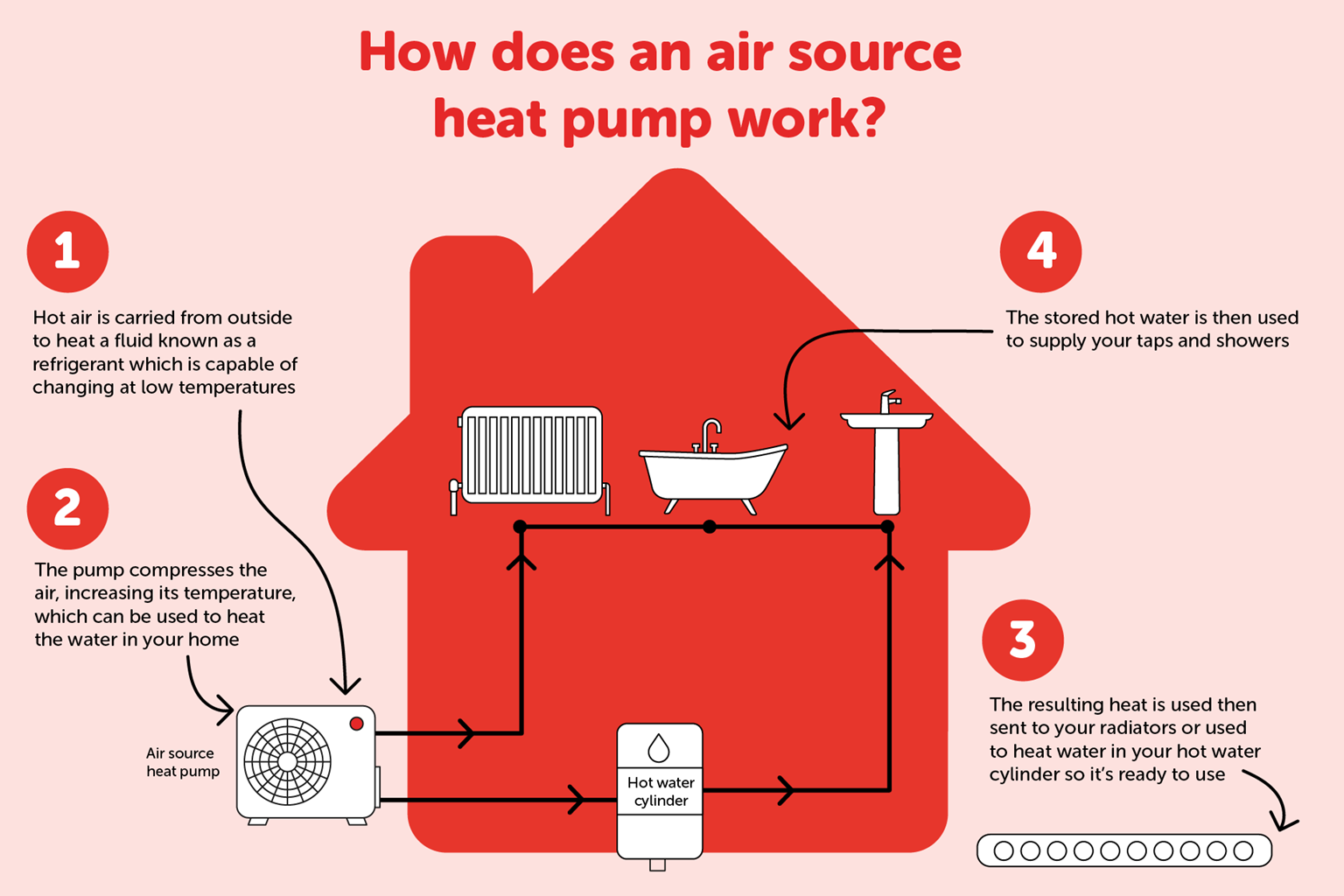
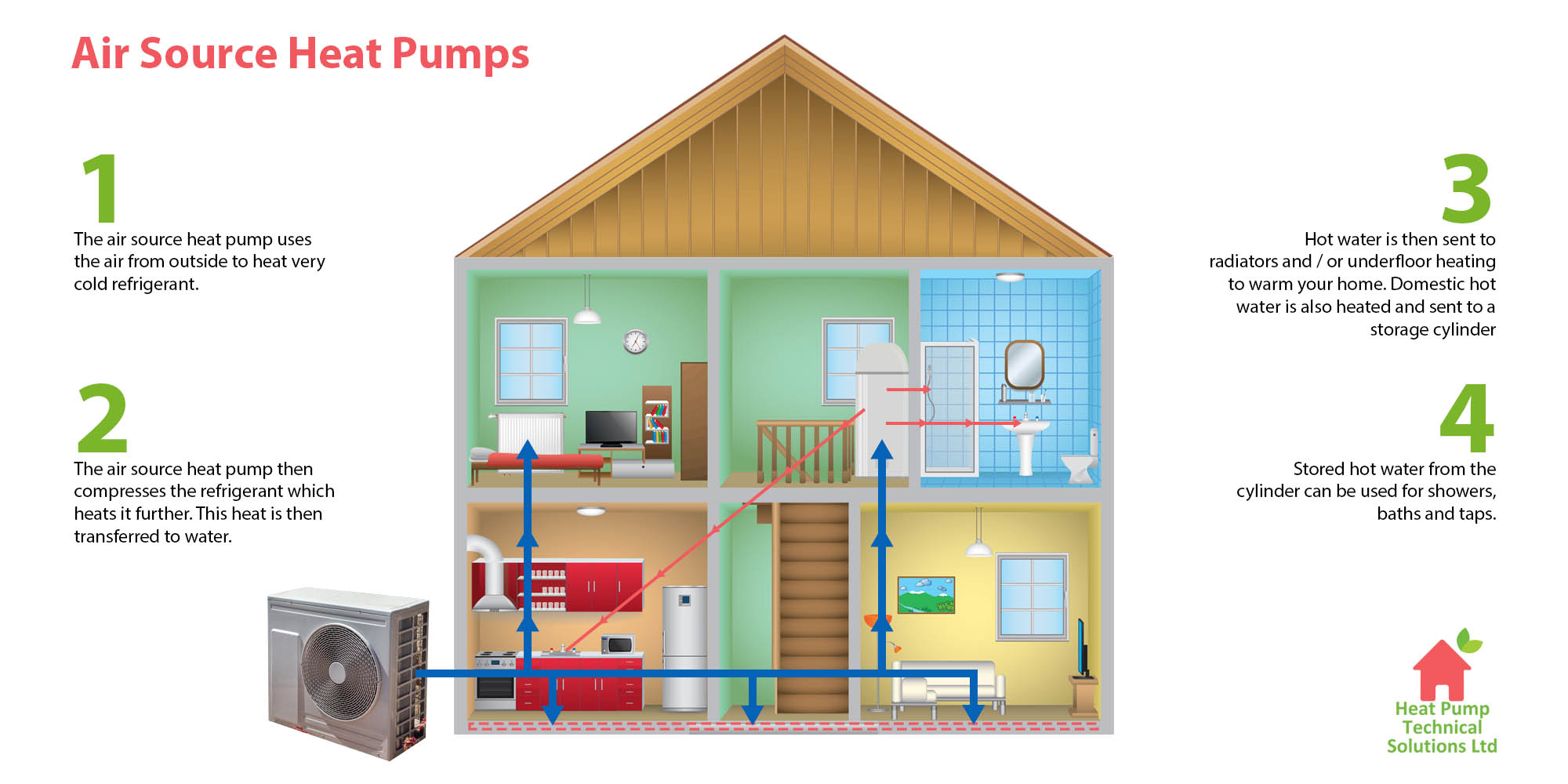
To understand why these units are so efficient, you have to look past the "free heat" marketing hype. The process relies on a refrigerant liquid circulating through the system. When this liquid passes through the outdoor unit, it absorbs low-temperature heat from the air. This causes the liquid to boil and turn into a gas, even at freezing temperatures, because the refrigerant is designed to change state at very low heat levels.
This gas is then compressed by a compressor. Compression does two things: it raises the pressure and, crucially, it raises the temperature significantly. This hot, high-pressure gas flows into a heat exchanger inside your hot water cylinder. As it passes through, it transfers its heat to the water. The refrigerant cools down, condenses back into a liquid, and the cycle starts all over again.
The beauty here is the coefficient of performance (COP). For every kilowatt of electricity you use to run the pump, you can get three or four kilowatts of heat energy out of it. Nothing is truly free, of course—the electricity has a cost—but squeezing that much output from a single unit of input is where the efficiency lies. It’s why running a heat pump is often cheaper than using direct electric immersion heaters, which have a COP of just 1:1.
Efficiency and the Cold Weather Myth
The biggest hesitation people have is the British or European winter. "If the air is cold," they ask, "how can it heat my water?" It’s a fair question. The reality is that heat exists in everything above absolute zero. Even at -10°C, there is thermal energy to be harvested. However, efficiency does drop as the temperature plunges. You won’t get the same 4kWh output at -5°C that you do at 15°C.
Modern units are surprisingly resilient. They are designed to keep working down to specific temperature limits, usually around -15°C or -20°C. If you live in an area with severe winter freezes, you might need a backup element in your cylinder or a 'wet and dry' dual-fuel boiler that switches to gas when it gets too cold for the pump to be economical. For most temperate climates, though, the system handles the temperature swing without breaking a sweat.
Installation and Space Considerations
Unlike a gas boiler that might fit neatly in a cupboard, an air source heat pump needs two main components. You have the outdoor condenser unit, which looks remarkably like an air conditioning unit. It needs to be mounted on a wall or placed on the ground, with enough clearance for airflow. It’s slightly noisier than a silent thought, humming at a level comparable to a dishwasher or a quiet refrigerator. It’s noticeable if you’re right next to it, but usually indistinguishable from background traffic noise from a bedroom window.
Then there’s the water tank. This is the catch. Standard boilers fire water on demand. Heat pumps work best when they heat water slowly over time, storing it in a large thermal_mass tank. If you currently rely on a combi-boiler, switching to a heat pump means installing a dedicated hot water cylinder. These can be bulky, often requiring a airing cupboard or a dedicated plant room. If you’re renovating, plan for this space early. Retrofitting a large tank into a small flat can be a logistical headache.
Upfront Costs vs. Long-Term Savings
Let’s talk money, because that’s usually the deciding factor. The upfront investment is high. You’re looking at a significantly larger price tag compared to a standard condensing boiler. You’re paying for the outdoor unit, the cylinder if you don’t have one, the pipework, and the installation labor. It’s not a cheap fix.
However, the operational costs are typically lower. Since renewable energy tariffs are becoming more common and electricity prices are stabilizing in some markets, the的运行 cost can be competitive with gas. More importantly, if you are selling your home, having a green heating system adds value. It signals to buyers that you’ve invested in modern, future-proof infrastructure. As regulations tighten around fossil fuels, a gas boiler might become a liability rather than an asset. The heat pump is an insurance policy against those changing laws.
Is It Right for Your Home?
Not every property is a perfect candidate. Insulation is key. If your home leaks heat like a sieve, no heating system will feel efficient or comfortable. Ensure your loft insulation is top-notch and your windows are double-glazed. A well-insulated home heats up faster and holds that heat longer, allowing the heat pump to run for shorter, more efficient bursts rather than struggling constantly against the cold.
Also, consider your hot water usage. If you have a large family running multiple showers back-to-back in the morning, a standard cylinders might empty before it has time to recharge. You might need a larger tank or a specific model designed for high draw-off rates. It’s a balance between storage capacity and recovery speed.
Final Thoughts
Switching to an air source heat pump for hot water isn’t just an ecological gesture; it’s a practical upgrade for a modern home. It requires a bit of planning, a healthy budget for installation, and a willingness to understand how your new system works. But once it’s running, it’s largely maintenance-free, quiet, and incredibly efficient. In a world moving away from gas, getting ahead of the curve now means you’re already part of the solution, enjoying warm showers while keeping your carbon footprint small.
Frequently Asked Questions
- Do air source heat pumps work in winter? Yes, they do. While their efficiency peaks in milder weather, modern units are designed to operate effectively down to temperatures of -15°C or lower. They may rely on a backup heating element during extreme cold snaps, but they generally provide consistent hot water year-round.
- How much space do I need for installation? You need space for an outdoor unit, roughly the size of a large air conditioner, plus a dedicated hot water cylinder indoors. The cylinder can be bulky, so check if your airing cupboard or utility room can accommodate a tank that is typically 60-100 liters or more.
- Are they noisy? They produce a gentle humming sound, similar to a refrigerator or a dishwasher. Most manufacturers provide noise ratings in decibels. As long as the unit isn’t installed immediately next to a bedroom window, the noise is rarely an issue.
- Can I install one electric immersion heater? Yes, and you probably should. A backup immersion heater is standard in most heat pump cylinders. It ensures you have hot water if the main unit fails or if you need a quick boost of heat on particularly cold days, acting as a safety net.