C Programming Language What Is It Used For?
For decades, the C programming language has been the bedrock of modern computing. Despite being developed in the early 1970s, it remains one of the most widely used languages in the world. But what exactly is this language, and why do so many critical systems still rely on it? To understand its utility, we first need to peel back the layers of its design. C is not a high-level, abstracted language like Python or JavaScript. It is a mid-level language that strikes a delicate balance between low-level hardware control and high-level readability. This unique position allows developers to manage memory directly while maintaining a syntax that is relatively straightforward to human readers. It is a language that demands discipline, respect, and a deep understanding of how a computer actually works under the hood.
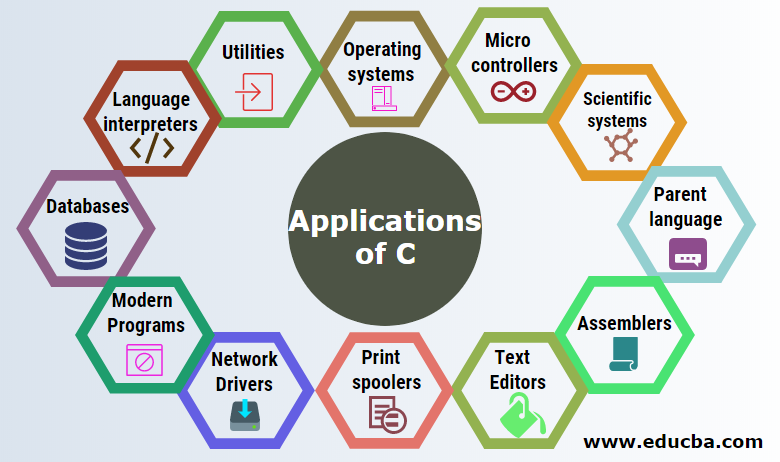
When you ask what C is used for, the answer spans almost every digital device you touch today. From the operating systems running on your laptop to the microcontrollers embedded in your washing machine, C is likely at work. Its strength lies in its efficiency, portability, and performance. In an era where speed and resource management are paramount, C offers a level of control that higher-level languages simply cannot match. It is the tool of choice when every millisecond counts and when memory resources are strictly limited.
Operating Systems and System Software
The most prominent use of C is in the development of operating systems. Early versions of Unix were written completely in C, and that legacy persists today. Linux, the kernel that powers much of the internet and nearly all Android devices, is written primarily in C. Even Windows and macOS utilize substantial amounts of C in their core system libraries and drivers. These systems require tight integration with hardware, and C provides the necessary tools to interact with CPU registers, memory addresses, and I/O ports directly.
Because the operating system is the foundation upon which all other software runs, it must be fast and stable. High-level languages often introduce overhead through garbage collection or runtime interpretation, which can lead to unpredictable delays. C eliminates this overhead by compiling directly to machine code. This results in software that executes with minimal latency and consistent performance. For system software, where reliability is non-negotiable, this predictability is invaluable.
Embedded Systems and IoT Devices
Another massive domain for C is embedded systems. These are dedicated computer systems designed to perform specific functions within larger mechanical or electrical systems. Think about the electronics in your car that control airbags, the sensors in a smart thermostat, or the microchip in a medical implant. These devices often have severe constraints on memory and processing power. They cannot afford the bloat of a full-fledged runtime environment.
C fits this niche perfectly because it allows developers to write code that is extremely lean. You can explicitly allocate and free memory, ensuring that no unused space is wasted. This level of control is crucial when you are working with microcontrollers that have only kilobytes of RAM available. Furthermore, C is highly portable. Code written for one embedded platform can often be adapted to another with minimal changes, as long as a suitable compiler is available. This portability saves time and resources in the development cycle.
Application Development and Libraries
While C is often associated with low-level programming, it also plays a significant role in application development. Many popular applications rely on C libraries to handle heavy computational tasks. For example, the Python language itself is written in C. When you run Python code, you are often leveraging underlying C functions for speed. Similarly, large parts of the popular Redis database and various game engines are built using C.
Developers frequently create libraries in C to provide core functionality to higher-level languages. This hybrid approach combines the ease of use of a high-level language with the raw performance of C. It allows for the creation of robust, scalable applications that can handle intense workloads. Whether it is processing complex mathematics, rendering graphics, or managing network connections, C provides the backbone for many high-performance software solutions.
Why Not Just Use C++?
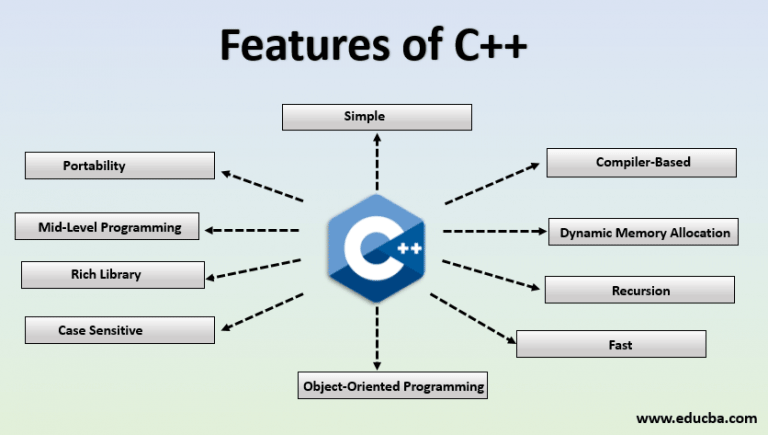
A common question is why choose C over its descendant, C++. While C++ offers object-oriented features and additional abstractions, it also introduces complexity and potential performance penalties. For simple, performance-critical tasks, C is often preferred due to its simplicity and smaller footprint. In embedded systems, the overhead of C++ features like exception handling or virtual functions can be unacceptable. C remains the simpler, more predictable choice for these specific scenarios.
Learning C: A Foundation for All Developers
Beyond its practical applications, learning C is often recommended for aspiring programmers. It forces you to understand concepts that are hidden in higher-level languages. You learn how memory is managed, how pointers work, and how functions interact with the stack and heap. This foundational knowledge makes it easier to learn other languages later. Many experienced developers view C as a rite of passage. It teaches you to think like the computer, rather than just giving it instructions in a simplified format.
The discipline required to write safe C code is rigorous. You must be mindful of buffer overflows and memory leaks. These challenges, while frustrating, build strong programming habits. They teach you to anticipate edge cases and manage resources carefully. These skills are transferable and valuable in any programming context.
Is C Still Relevant Today?
In the age of AI and high-level scripting languages, some wonder if C is a relic of the past. The truth is quite the opposite. As devices become more numerous and demanding, the need for efficient, low-level programming grows. The Internet of Things, autonomous vehicles, and supercomputing all rely heavily on C. It is not dying; it is evolving. New standards and compiler optimizations keep it modern and effective.
C remains indispensable because it offers a level of control that is unmatched. It is the language that bridges the gap between hardware and software. While you may not write your next web app in C, the infrastructure that supports that web app likely does. Understanding what C is used for reveals its quiet, ubiquitous presence in the digital world. It is not the flashiest language, but without it, our modern technological landscape would look very different indeed.
Frequently Asked Questions
Is C difficult to learn?
C can be challenging for beginners because it requires manual memory management. However, it is often considered a great first language because it teaches fundamental concepts clearly. The syntax is relatively simple, and there are no hidden abstractions to confuse the learner.
Can C be used for web development?
Not directly for frontend code. However, C is used to build high-performance web servers and backend services. It is also the foundation for many libraries that web developers use indirectly.
What is the difference between C and C++?
C is a procedural language, while C++ adds object-oriented features. C is generally simpler and faster for low-level tasks, whereas C++ offers more abstraction and features for complex application development.