Conservatism vs. Liberalism: Core Ideological Differences
When people talk about politics in the United States, the phrase “conservatives vs. liberals” instantly evokes images of sharp policy divides and heated debates. Yet, the two camps are more than just labels—they represent distinct ways of thinking about society, the economy, and the role of government. Understanding these ideological frameworks helps demystify why certain policies gain traction and why electoral battles are so intense.
What Conservative and Liberal Views Really Mean
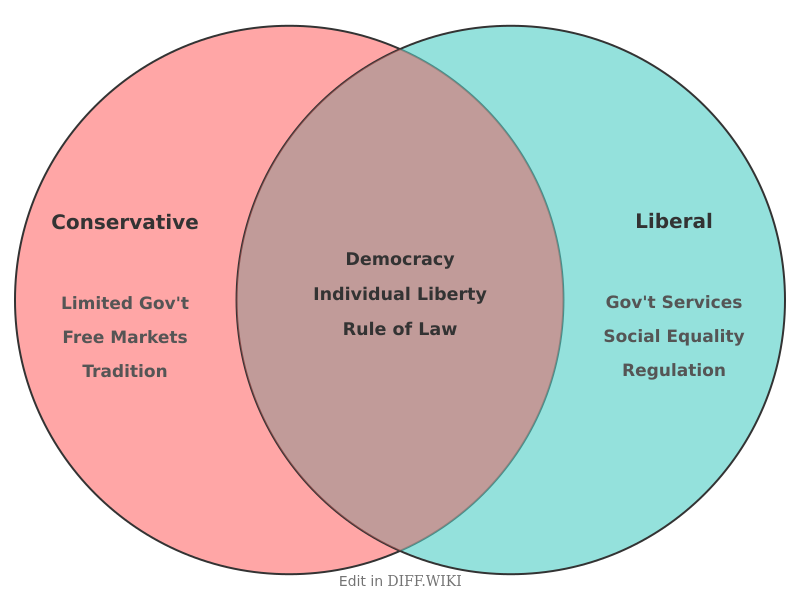
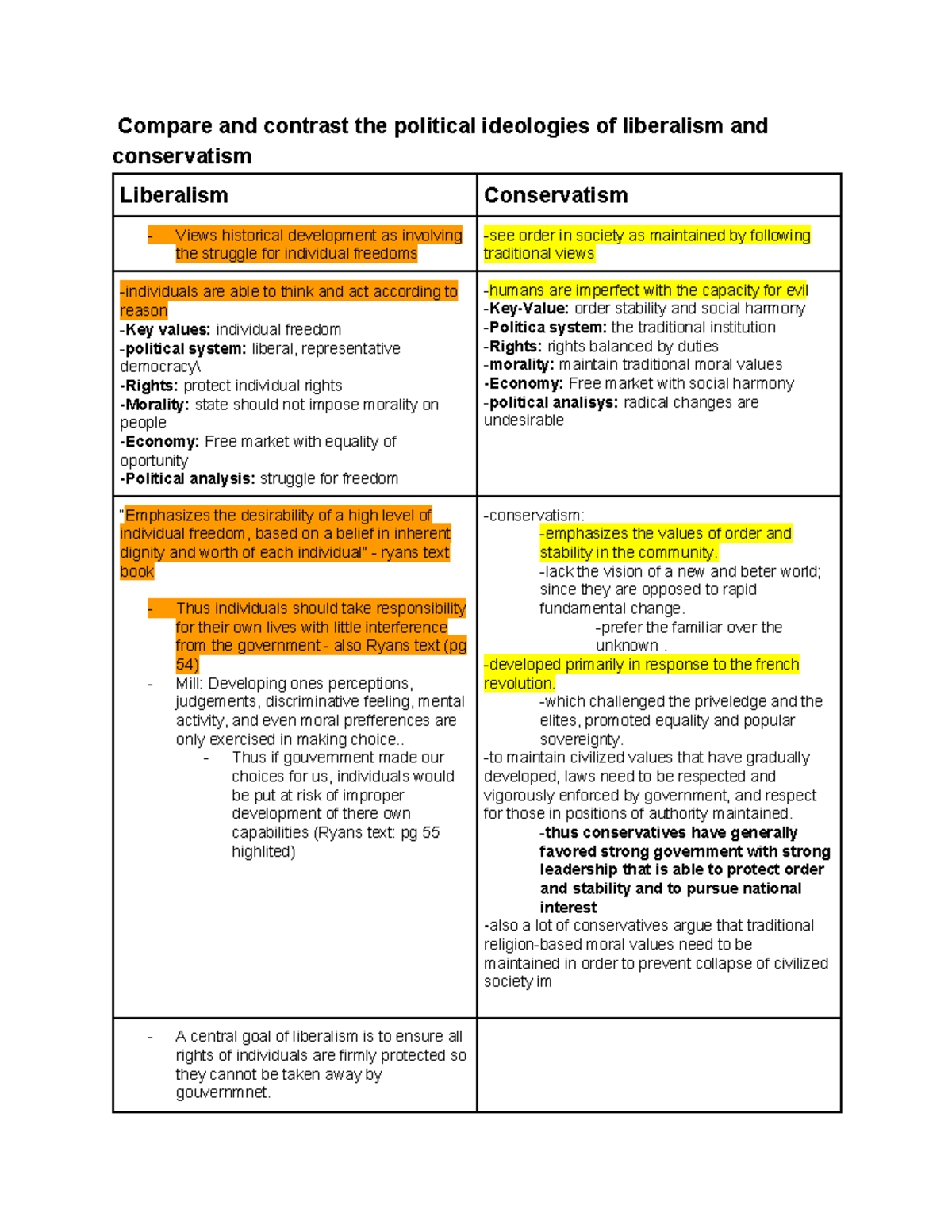
Conservatives tend to emphasize tradition, individual responsibility, and a cautious approach to change. They often argue that strong institutions and a limited government create a stable environment where people can thrive. Liberals, in contrast, prioritize equality, social progress, and a more proactive role for the state in correcting systemic imbalances. While both sides claim to promote the common good, their paths diverge in key assumptions about how society works.
Conservative Tenets
- Limited Government: Conservatives believe the state should intervene only to protect property, enforce contracts, and maintain public order.
- Free‑Market Economics: A deregulated market is seen as the engine for innovation and prosperity.
- Individual Liberty: Personal choice and self‑reliance are paramount, even when social consequences arise.
Liberal Tenets
- Active Governance: Liberals view the state as a necessary tool for addressing inequalities and providing public goods.
- Regulated Market: While markets are valuable, they need safeguards to prevent abuse and ensure fairness.
- Collective Responsibility: Social outcomes matter; policies should aim to uplift the most vulnerable.
Core Principles: Economy, Social Policy, and Government Role
Economy
Conservatives champion low taxes, minimal regulation, and free trade as engines of growth. Liberals, meanwhile, support progressive taxation and targeted regulations to promote economic justice. The debate often centers on how best to balance prosperity with fairness.
Social Policy
On issues like marriage, abortion, and criminal justice, conservatives usually uphold traditional values, favoring personal choice and stringent law enforcement. Liberals lean toward inclusive policies that protect minority rights, support reproductive freedom, and advocate criminal‑justice reform.
Government Role
Conservatives argue that a smaller, less intrusive state preserves individual liberty and fosters innovation. Liberals contend that a stronger governmental presence is essential to address systemic gaps, deliver public services, and create equitable opportunities.
Historical Roots and Evolution
19th‑Century Foundations
The modern conservative movement emerged from a reaction against rapid industrialization and perceived moral decline, championing order and hierarchy. Liberalism traces back to Enlightenment thinkers who championed reason, individual rights, and democratic governance.
Modern Interpretations
In the late 20th century, conservatism embraced supply‑side economics and a globalized market, while liberalism expanded to encompass civil‑rights movements, environmental stewardship, and social safety nets. Today, both ideologies are further divided by sub‑schools—neoconservatives, fiscal conservatives, progressive liberals, and libertarians—each adding nuance to the overarching labels.
Contemporary Debates and Common Misconceptions
Climate policy is a prime example of divergent thinking. Conservatives often view environmental regulation as a threat to economic growth, while liberals see it as essential to long‑term survival. On immigration, conservatives stress border security and the rule of law, whereas liberals emphasize human rights and integration.
Another frequent misconception is that conservatives are uniformly opposed to science, or that liberals are uniformly anti‑traditional. In reality, both camps contain a spectrum of positions on science, technology, and cultural norms, shaped by regional, generational, and economic factors.
How These Ideologies Influence Policy
Legislation on healthcare illustrates these differences vividly. Conservative proposals tend to favor market‑based solutions, such as private insurance exchanges, whereas liberal proposals often include public options or single‑payer systems to guarantee universal coverage. On taxation, conservatives push for lower rates to stimulate investment, while liberals propose higher rates on the wealthy to fund social programs.
The Spectrum and Its Nuances
- Moderate Conservatives: Support gradual reforms, cautious fiscal policies, and bipartisan cooperation.
- Progressive Liberals: Push for bold reforms on climate change, criminal‑justice overhaul, and expansive social programs.
- Libertarians: Combine conservative economic principles with liberal civil‑rights stances, advocating minimal state involvement across the board.
Understanding these sub‑groups is essential, especially when analyzing electoral outcomes or predicting the trajectory of national debates. Voters often align with a mix of positions that do not fit neatly into either label, underscoring the fluidity of modern politics.
FAQ
- Q: Do conservatives and liberals represent opposing sides of the same spectrum?
A: Yes, but the spectrum is broader; many voters blend elements from both to form their own stance. - Q: Is libertarianism more conservative or liberal?
A: Libertarians blend conservative economic policies with liberal social values, focusing on individual freedom over state control. - Q: How have recent elections shaped the conservative‑liberal dynamic?
A: Electoral victories often shift the focus of policy discussions, with conservatives emphasizing deregulation after a win and liberals pushing for expanded social programs when they gain influence.