Decoding The Russian Economy: News And Insights
Trying to understand the Russian economy today is less like reading a standard financial report and more like deciphering a coded message sent from a war zone. The sanctions, the pivot to Asia, and the sheer scale of military spending have created a system that defies many traditional economic logic models. For investors, policymakers, and curious observers, the initial shock of 2022 has faded into a complex, gritty reality where survival contradicts collapse.
The Surprise of Resilience
When the sanctions regime hit in earnest following the invasion of Ukraine, the consensus among Western economists was grim. Predictions of a deep recession and potential systemic failure were everywhere. Yet, the data tells a much stranger story. The Russian gross domestic product did not collapse; in fact, it has shown surprising growth rates in recent quarters. This resilience is certainly not a sign of health in the traditional sense, but rather a testament to the sheer size of the economy and its ability to absorb shocks.
The primary driver here is the massive mobilization of state resources. The government has injected billions into the military-industrial complex, raising wages and stimulating demand in specific sectors. This Keynesian-style stimulus, backed by rich natural resources, has kept consumer spending afloat in major cities like Moscow and St. Petersburg. However, it is crucial to recognize that this growth is overheated. It is driven by inflation, labor shortages, and a single-minded focus on wartime production, rather than broad-based productivity or innovation.
The Great Financial Decoupling
Perhaps the most significant structural change in the Russian economy is the financial decoupling from the West. The freezing of central bank assets and the exclusion from SWIFT for major banks created an immediate crisis. The response was to accelerate the integration with alternative financial systems, particularly those aligned with China, India, and other major commodity buyers.
Rupee and Yuan payments have surged, replacing the dollar and euro in many trade transactions. This shift has complicated the life of Russian importers. They now face a fragmented banking environment where correspondent banks in third countries are hesitant to process payments due to the risk of secondary sanctions. This creates inefficiencies and higher transaction costs, which ultimately filter down to prices for consumers. It also means that Russia is losing a layer of financial connectivity that once allowed for easier global commerce.
The Labor Market Paradox
If there is one acute bottleneck in the current Russian economy, it is the acute lack of workers. This shortage stems from several converging factors: the mobilization of soldiers, the emigration of hundreds of thousands of young, skilled professionals since 2022, and a demographic decline that was already a long-term trend. The unemployment rate has hit historic lows, which sounds positive on paper, but it is actually a sign of severe strain.
Companies are struggling to find staff, leading to wage inflation. Wages are rising, but not necessarily because productivity is increasing. Instead, employers are bidding up wages to attract scarce talent. This wage-price spiral contributes to inflationary pressures. The state has responded by directing labor migrants from Central Asia to fill gaps, but this introduces its own set of social and logistical challenges. The labor market is no longer a place of surplus; it is a premium-priced auction of human capital.
Inflation And The Central Bank’s Dilemma
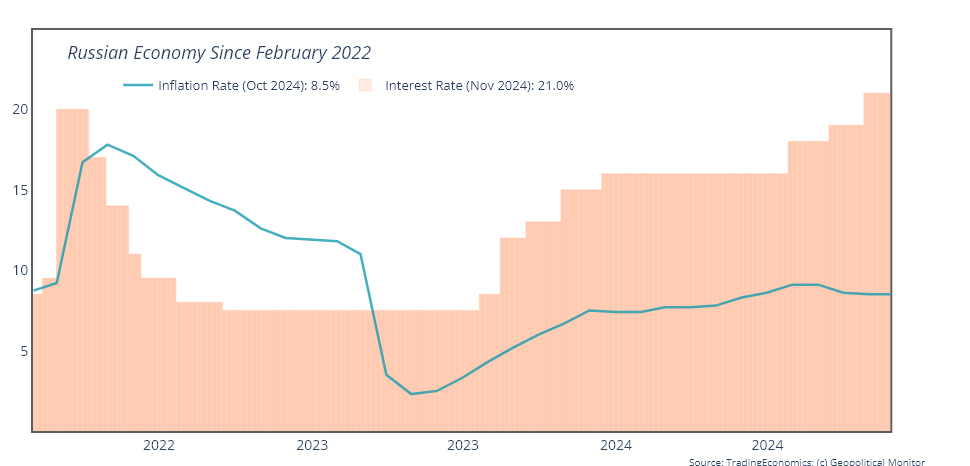
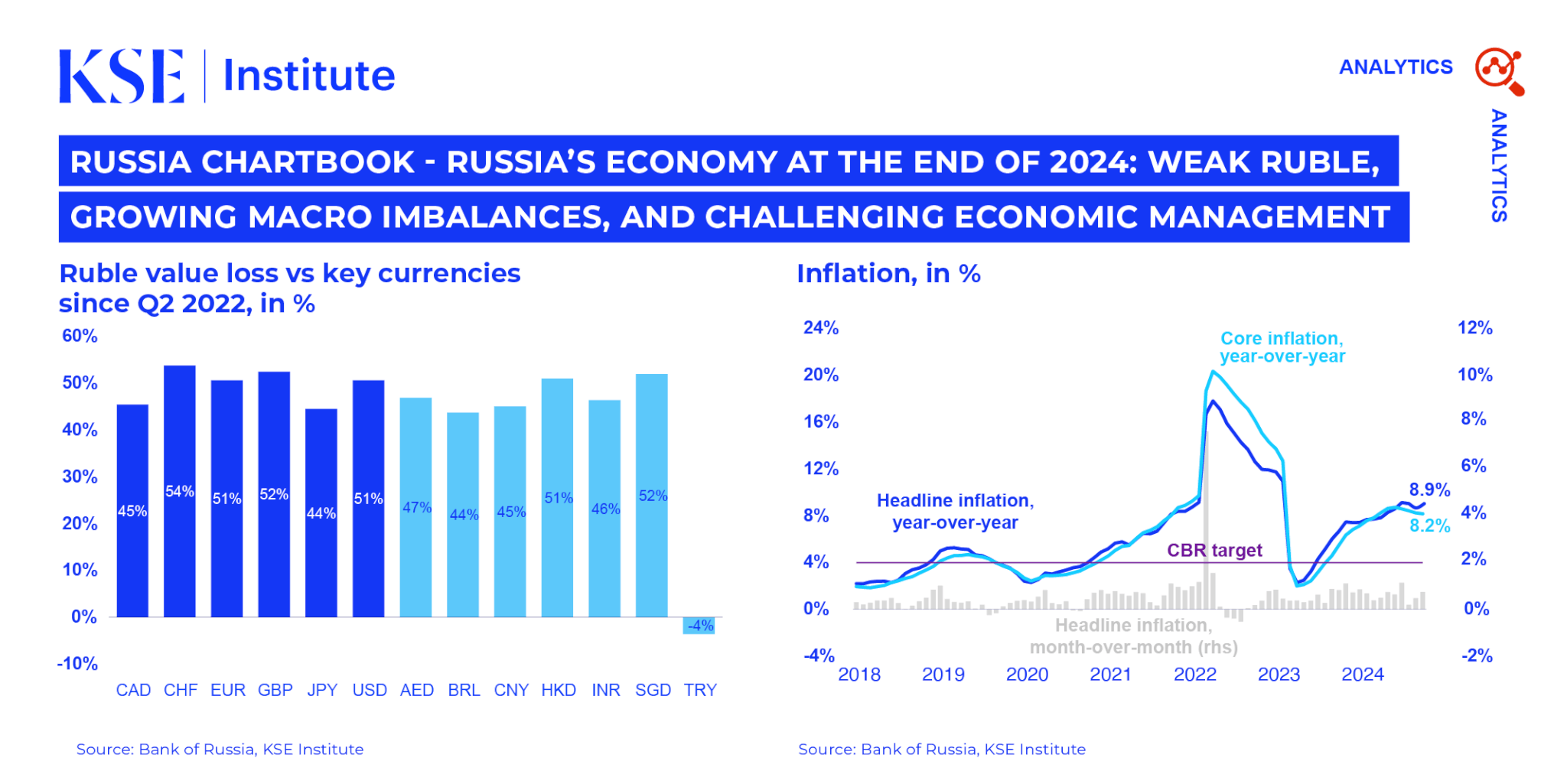
The Bank of Russia has faced a near-impossible task. Its mandate to control inflation clashes with the government’s need to fund the war and stimulate production. For a time, the central bank kept rates relatively low to support the economy, which allowed inflation to run hot. As prices for food, services, and goods climbed, purchasing power began to erode for the lower and middle classes.
Recently, the central bank has begun to tighten significantly, raising interest rates to curb these pressures. This is a necessary but painful move. High interest rates make borrowing expensive, which could dampen investment and slow down the very growth the government is trying to sustain. The challenge is to cool the economy enough to stop inflation without causing a recession that could destabilize the fragile social contract.
Looking Ahead: Structural Weaknesses
The long-term outlook remains fraught with difficulties. The economy is becoming increasingly militarized and dependent on state subsidies. Productive, non-military sectors are suffering from a lack of technology and components, leading to inefficiencies. The brain drain continues, with many skilled engineers, programmers, and managers leaving the country.
Furthermore, the reliance on energy revenues remains high, even as the global energy landscape shifts. While oil and gas still generate substantial income, the ability to sell at premium prices has diminished due to price caps and the need to offer discounts to Asian buyers. This reduces the fiscal buffer available to the government.
Frequently Asked Questions
Is the Russian economy collapsing?
Not in the traditional sense of a total system failure. The economy has proven surprisingly resilient due to high energy revenues and massive state spending on the military. However, it faces severe long-term structural weaknesses, including inflation and labor shortages.
How have sanctions affected daily consumption?
Sanctions have made imports more expensive and complex. While luxury goods from the West have largely disappeared, many essential goods are still imported through third countries. This has led to higher prices and occasional shortages in specific categories.
What is the role of China in the Russian economy?
China has become Russia’s primary trading partner and a key source of technology, automobiles, and machinery. For Russia, China is a vital lifeline that helps bypass Western sanctions, though this dependency alters Russia’s geopolitical leverage.