Deconstructing the Alias: How to Master-Augment Your Forehand Like Felix
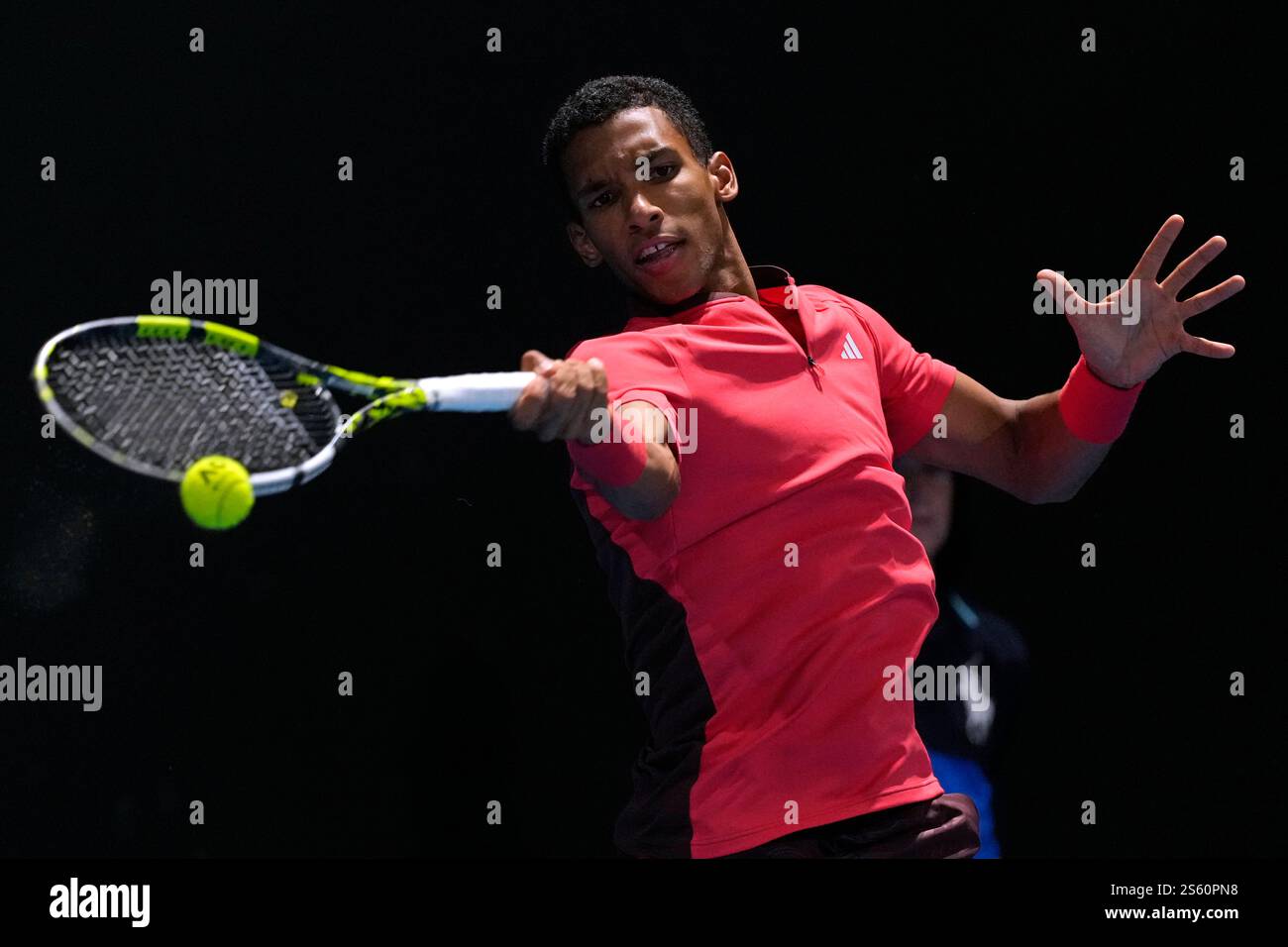
There is a distinct sound that travels up ATP courts these days. It’s not just the crisp *tick* of the ball leaving the strings; it’s the visceral, violent acceleration that follows. When you watch Felix Auger-Aliassime play his forehand, you’re not just seeing a shot. You are watching a kinetic chain that looks less like tennis and more like a coiled spring exploding outward. For many amateur players, replicating this fluidity feels impossible. We tend to think it’s all about raw talent or freakish height. But if you break down the mechanics, you’ll find that mastering the Auger-Aliassime forehand isn’t about being six-foot-six. It’s about timing, tension, and a specific type of aggressive geometry.
The Illusion of Power
At first glance, FA’s forehand looks effortless. He swings through the ball with a relaxed wrist, yet the output is punishing. The secret lies in what happens before contact. Most players tense up too early, locking their arms and shoulders in an attempt to generate force. This kills speed. Auger-Aliassime does the opposite. He stays loose until the very last millisecond.
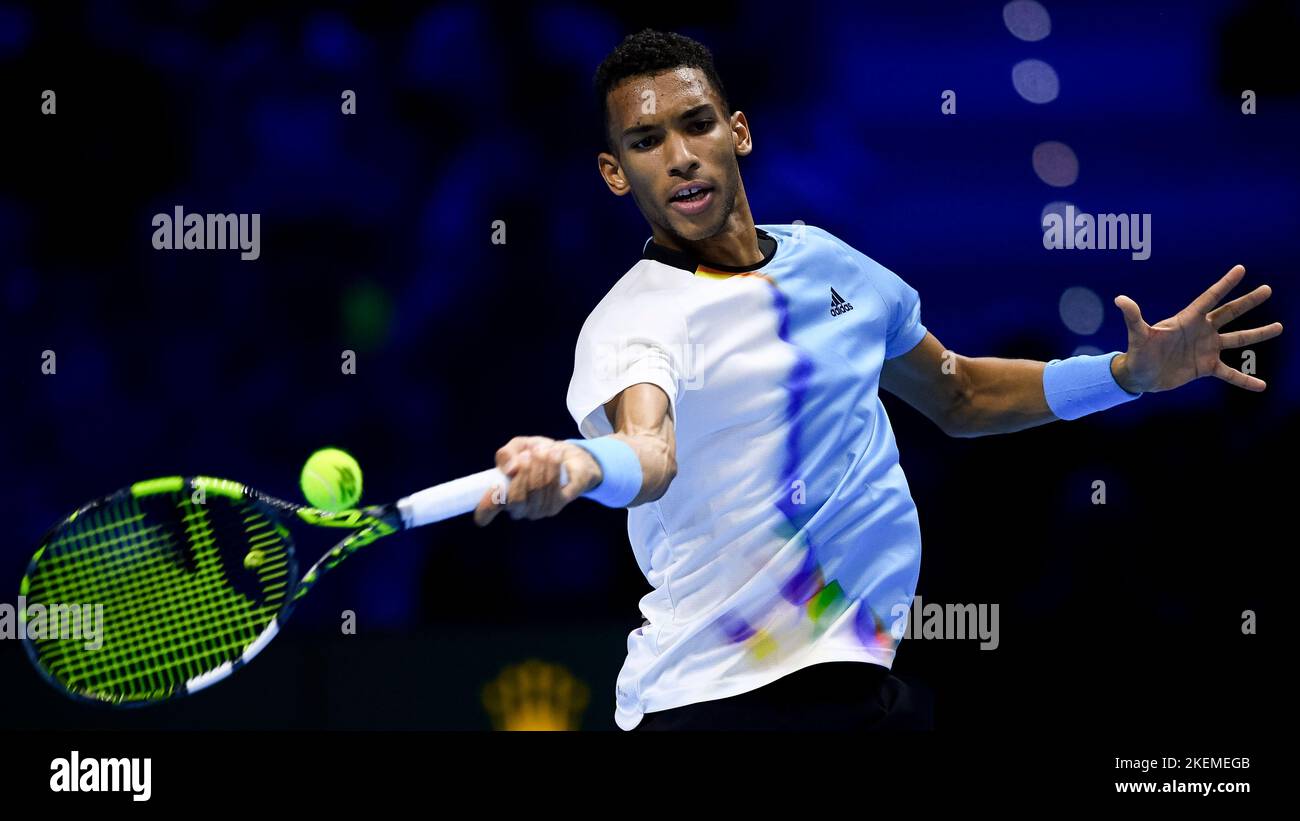
This concept is often called "late loading." Watch his non-racket arm. It stays high and stable, acting as a stabilizer for the torso rotation. He doesn’t rush the backswing. In fact, his preparation can look almost lazy until the moment he steps into the strike zone. Then, the explosion happens. The hips rotate forward, pulling the shoulders, which finally allow the racket arm to whip through. If you are tightening your grip or bracing your shoulder before the ball even arrives, you’ve already lost the battle. You need to trust your body’s ability to generate power at the last second, not beforehand.
Low-to-High, But With Intent
We are all taught to brush up through the ball to generate topspin. That advice hasn’t changed. But look at where Felix applies that motion relative to his body. He doesn’t just swing "up." He swings up and through.
The distinction is subtle but critical. Pure vertical ramping creates heavy spin but low penetration. Pure through-the-ball swings create power but risk hitting the net. Auger-Aliassime combines them. He starts his racket head below the contact point (the "slot") and accelerates upward, but his body transfer drives horizontally through the court. This creates a flatter trajectory with enough spin to bite into the court. The ball doesn’t just kick up; it bites and splashes forward.
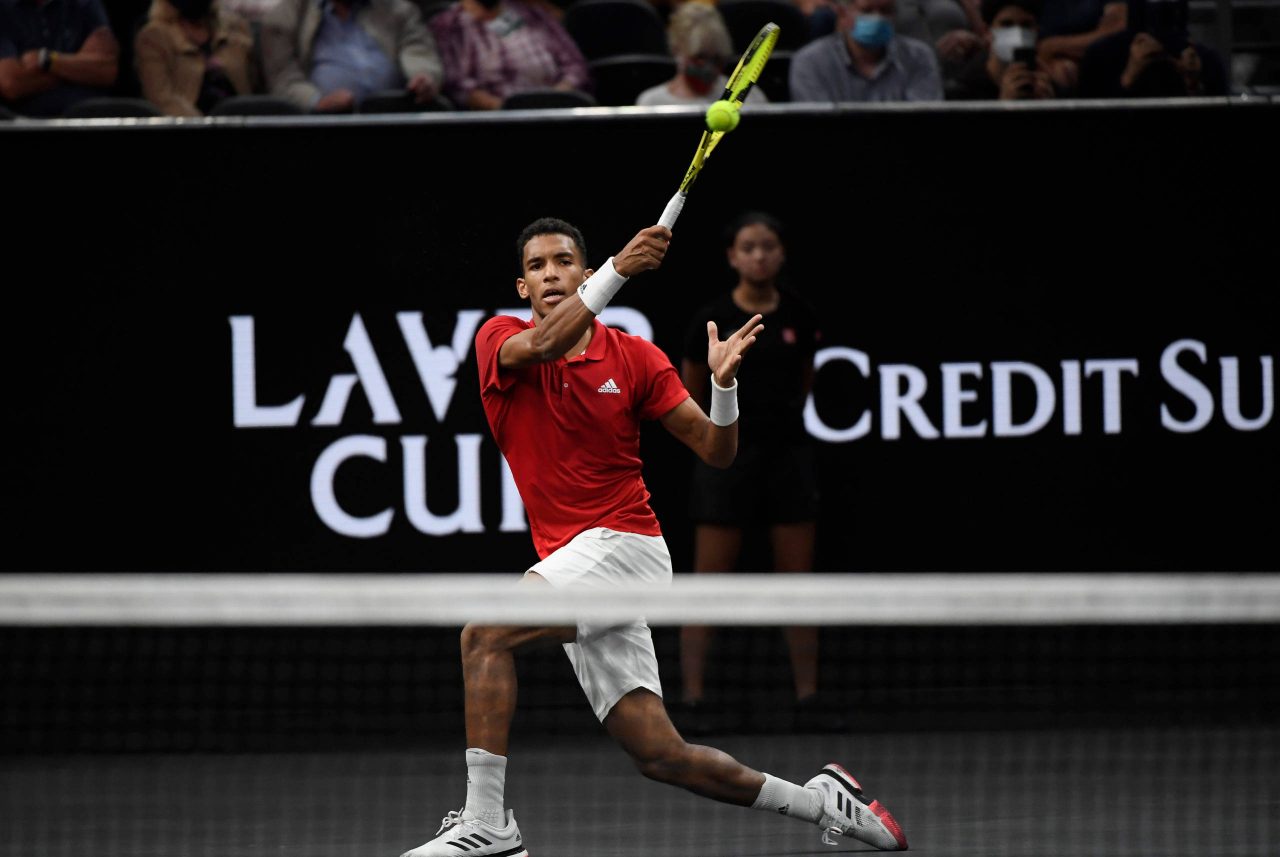
- Strike Point: He takes it early, ideally in front of the body. This gives him more time to accelerate.
- Knee Bend: Notice how his knees stay bent right through the follow-through. He doesn't stand up too early. Falling into the shot prevents the "steering wheel" effect where you lift the racket too soon.
- The Finish: His follow-through often ends across his body, sometimes even touching his opposite shoulder. This ensures he has committed to the swing path.
The Role of the Non-Dominant Hand
Here is a detail many casual observers miss: the left hand. For a right-handed player, the left hand isn't just there for balance. It’s a steering mechanism. In Auger-Aliassime’s game, his left hand tracks the ball almost all the way to contact. It points at the target, guiding the torso rotation.
If you watch him on a wide ball to his forehand, his left hand swings across his chest, pulling his right shoulder open. This opens up the entire back side of his body. Without this leading action, you’re swinging from your arm. With it, you’re swinging from your core. It’s the difference between a pistol whip and a sledgehammer. If your non-dominant hand drops too early, your rotation stalls, and the power leaks out of the shot. Keep it high. Keep it active.
Adapting to the Ball
One reason this forehand is so effective is its versatility. Because the mechanics are clean, Felix can adjust the shape of the shot without changing his entire technique. Need depth? He channels more energy forward. Need to hit over a shorter ball? He adds a fraction more wrist snap and vertical angle.
This adaptability comes from confidence in the basic swing shape. Amateurs often change their technique for every ball type. They try to "muscle" through a heavy topspin ball instead of compacting the swing slightly. They try to slice a ball that needs to be driven. Mastery means having one core motion—the Auger-Aliassime motion—and adjusting the intensity and angle rather than the structure.
Practical Steps for the Armchair Player
You can’t buy a new racket to fix this. You have to change how you move. Start by focusing on your preparation. Is your racket head up? Is your non-racket hand pointing at the incoming ball? Next, focus on your legs. Are you loading your legs and sliding into the shot, or are you swinging from a static standing position?
Finally, relax. It sounds cliché, but it’s the hardest part. Try hitting balls while consciously keeping your shoulders loose. Feel the weight of the racket. Let it do the work. The power comes from the transfer of energy from the ground, through the hips, to the racket head. If you are tense, that chain is broken.
Common Mistakes to Avoid
Don't fall into the trap of trying to lift the ball excessively. Yes, FA hits with spin, but it’s not a lob-like trajectory. Keep the flight manageable. Also, avoid the "chicken wing" follow-through, where the elbow bends up and stops the momentum. Finish the swing. Let the racket wrap around your back. This ensures you’ve fully unloaded your body’s energy into the ball.
Mastering this style takes time. It requires unlearning the habit of arm-dominated tennis. But when it clicks, you’ll feel it. The ball will leave your strings with a punch you didn't think you possessed. It’s not magic. It’s physics, applied with timing.
Frequently Asked Questions
What racket grip does Felix Auger-Aliassime use?
Auger-Aliassime typically uses a semi-western grip on his forehand. This allows for a high contact point and natural topspin generation while still providing enough control to hit flatter, penetrating shots when needed. It’s a versatile grip that suits his aggressive baseline style.
Can shorter players replicate this forehand?
Absolutely. While Felix’s height gives him a high contact point, the mechanics of loading the legs, rotating the hips, and delaying acceleration are universal. Shorter players may need to focus more on footwork to get to the optimal strike zone, but the kinetic chain remains the same.
Why is the non-dominant hand so important?
The non-dominant hand acts as a counterbalance and a guide for torso rotation. By keeping it up and pointing at the ball, it helps open the shoulders and hips properly. This ensures that power comes from the core rotation rather than just arm strength, leading to a more consistent and powerful shot.
How can I improve my timing?
Timing is largely about preparation. Start your backswing earlier, so you aren't rushing when the ball arrives. Focus on watching the ball into your strings. Additionally, practicing with a ball machine at consistent speeds can help ingrain the rhythmic timing of the load-and-explode motion.