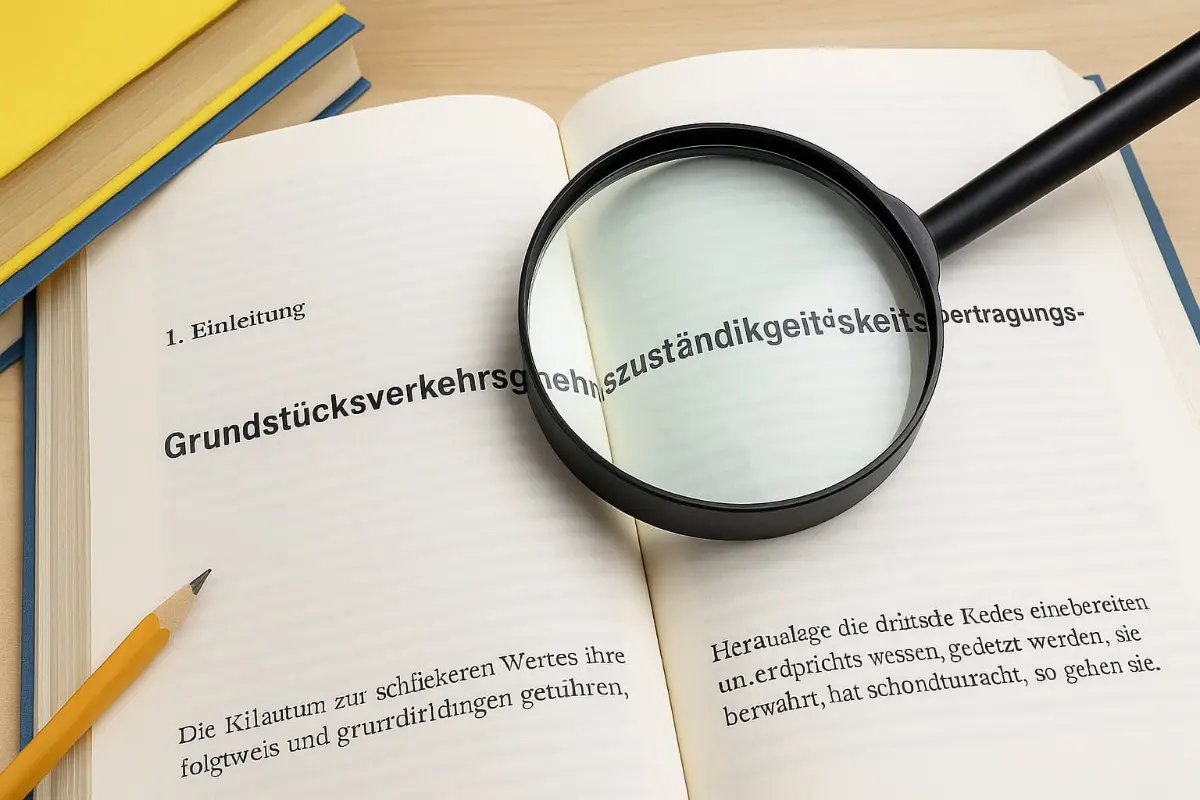
Discover the Surprising Length of the Longest German Word
When you hear “German word,” the first thing that probably pops into your mind is a marathon of consonants and a handful of vowels stitched together. Yet most of us never pause to wonder just how far that linguistic marathon can stretch. The answer isn’t just a trivia tidbit—it’s a glimpse into German’s knack for building meaning, one lexical block at a time.
Why German Loves Long Words
German isn’t shy about piling concepts together. Its grammar permits nouns to be compounded indefinitely, creating a single term that in English would require a full sentence. This habit isn’t a quirky accident; it stems from a practical desire to be precise. When engineers, lawyers, or bureaucrats need to label a very specific process, they simply glue the relevant words together. The result? A word that can stretch over 60 letters.
The Legendary Contender
For years the crown belonged to Rindfleischetikettierungsüberwachungsaufgabenübertragungsgesetz. Translated loosely, it refers to “the law governing the delegation of beef labeling supervision duties.” At 63 letters, the word was a staple of classroom jokes and tongue‑twisters alike.
- Rindfleisch – beef
- Etikettierung – labeling
- Überwachung – supervision
- Aufgaben – tasks
- Übertragung – delegation
- Gesetz – law
The term emerged in 1999 as part of a very specific piece of legislation concerning meat export standards. It survived for a while in legal texts, but the law was repealed in 2013, which technically retired the word from everyday usage.
The Current Heavyweight
Enter the newer challenger: Grundstücksverkehrsgenehmigungszuständigkeitsübertragungsverordnung. Clocking in at 67 letters, this behemoth translates to “regulation on the transfer of authority for real‑estate transaction approvals.” While it’s not a household term, it appears in official documents dealing with property law in certain German states.
Why does it matter that such a word exists? Apart from being a linguistic curiosity, it reflects a legal system that prefers specificity over brevity. Each component of the word signals a distinct administrative step, leaving little room for ambiguity.
When Do These Monsters Appear?
Long German words typically surface in three arenas:
- Legal Texts: Laws and regulations love compound nouns because they need to define narrow scopes.
- Technical Manuals: Engineers describe intricate mechanisms with compound descriptors.
- Scientific Papers: Specialized terminology, especially in chemistry and biology, often condenses multi‑word phrases.
In everyday conversation, Germans tend to break such words into smaller, more manageable chunks—or simply use abbreviations. No one expects you to recite the full Grundstücksverkehrsgenehmigungszuständigkeitsübertragungsverordnung at a dinner party.
Practical Tips for Tackling the Length
If you ever stumble upon a monstrous German noun, here’s a quick cheat‑sheet:
- Spot the Core: Identify the main noun—often the last element (e.g., Gesetz or Verordnung).
- Break It Down: Look for familiar roots (e.g., Rindfleisch, Etikettierung).
- Translate Piece by Piece: Assemble a rough English meaning from the individual parts.
Does Orthography Tame the Titans?
German spelling reforms over the past century have introduced hyphens and simplified certain constructions, but they haven’t eliminated the possibility of long words. The language’s structural allowance for compounds remains intact. In fact, the very ability to create new terms on the fly means that, whenever a novel administrative or technological concept appears, a fresh long word might follow.
Beyond the Lexicon: What It Says About German Culture
Some critics argue that the penchant for verbosity reflects an overly bureaucratic mindset. Others counter that it showcases a respect for clarity—why use a vague phrase when you can encode exact meaning in a single term? The answer likely lies somewhere in the middle. German speakers often value precision, especially in fields where misinterpretation can have legal or safety consequences.
Moreover, the existence of these huge words hasn’t stopped Germans from embracing concise communication in other contexts. Text messages, social media, and everyday speech still favor brevity. The long words sit comfortably in a niche reserved for formal documentation.
Try It Yourself
Curious how a German speaker would handle a new, complex concept? Pick a modern tech buzzword—say “artificial intelligence ethics committee”—and try to combine the German equivalents:
Künstliche‑Intelligenz‑Ethik‑Ausschuss. Not a record‑breaker, but it illustrates the process. Add more qualifiers and you’ll climb the letter ladder quite quickly.
Wrapping Up the Lengthy Journey
German’s ability to stretch a single word into a 60‑plus‑letter marvel is less a gimmick and more a functional feature of the language. Whether you’re deciphering a legal statute or marveling at a tongue‑twisting linguistic novelty, the longest German words are reminders that language can be both playful and purpose‑driven. Next time you encounter a monster of a noun, remember: each segment carries a piece of the puzzle, and together they spell out an exact, if admittedly lengthy, idea.