Envisioning a Democratic Iran: Pathways to True Freedom
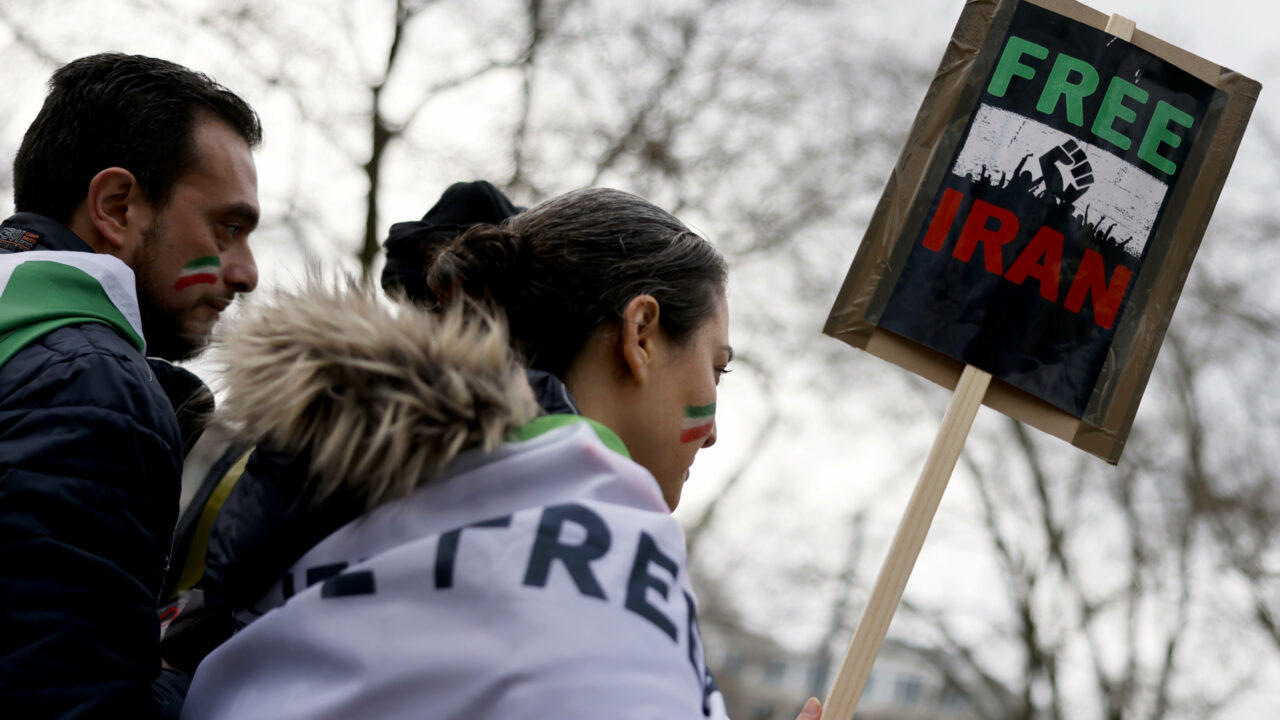
When the word “freedom” surfaces in conversations about Iran, most people picture protest chants echoing through Tehran’s streets. Yet freedom is more than a momentary outcry; it is a structural promise that a society can uphold for generations. Imagining a democratic Iran means asking how institutions, culture, and foreign ties could evolve together to make that promise concrete.
Iran’s modern history is a tapestry of revolutionary zeal, authoritarian consolidation, and intermittent reform attempts. Each thread reveals both the depth of popular yearning for participation and the formidable barriers that have kept a full democracy at arm’s length. Understanding those layers is essential before sketching any realistic roadmap.
From Revolution to the Republic: A Brief Historical Lens
The 1979 revolution toppled a monarchy that many saw as a symbol of Western domination. The resulting Islamic Republic fused religious authority with state power, creating a hybrid that defies classic Western classifications. While the rhetoric promised “government of the people,” the constitution embedded the velayat-e faqih—guardianship of the jurist—as a non‑elected check on all branches.
Subsequent decades saw a tug‑of‑war between reformist presidents and hard‑line institutions. Presidents like Mohammad Khatami and Hassan Rouhani opened limited spaces for civil discourse, but the Guardian Council and the Supreme Leader retained decisive veto power. Those periods left a lingering belief that change is possible, yet they also exposed how entrenched mechanisms can stall even well‑intentioned reforms.
Current Obstacles: Institutional and Societal Hurdles
The most visible barrier remains the dual‑track governance system, where elected bodies coexist with unelected religious overseers. This arrangement produces chronic dead‑locks: parliamentary bills can be nullified before they reach the president, and the judiciary operates under a different set of rules than the legislature.
Beyond the constitutional maze, economic sanctions and internal mismanagement have eroded public trust. Inflation, unemployment, and a struggling oil sector fuel disillusionment, making it harder for any democratic movement to rally broad-based support when daily survival dominates the public agenda.
Socially, Iran is not monolithic. Urban centers like Tehran and Isfahan host vibrant artistic and intellectual circles that push for openness, while more conservative rural regions cling to traditional values. Bridging that divide demands a narrative that respects cultural diversity without sacrificing universal rights.
Blueprint for Democratic Institutions
A genuine democratic Iran would first need to recalibrate the balance of power. This could involve redefining the Supreme Leader’s role from a veto authority to a purely symbolic figurehead, akin to constitutional monarchies elsewhere. Such a shift would require both legal amendments and a cultural re‑imagining of religious authority in politics.
Second, the Guardian Council’s composition must become more transparent and accountable. Introducing elected representatives alongside religious scholars could dilute its unilateral power while preserving a nod to Iran’s Islamic identity. This hybrid model would echo the way some European countries blend secular law with historic church influence.
Third, the electoral system itself needs safeguards against manipulation. Implementing robust, independent electoral commissions and adopting digital verification tools could restore faith in vote counting. When citizens trust that their ballots matter, voter turnout—a historically volatile metric in Iran—would likely rise.
Culture, Civil Society, and the Quest for Freedom
Democracy thrives on a vibrant civil society, and Iran already boasts a network of NGOs, literary circles, and independent media operating under tight constraints. Legalizing and protecting these groups would unleash a reservoir of civic expertise that could fill gaps left by an over‑centralized state.
Education also plays a pivotal role. Universities that encourage critical thinking, rather than rote memorization of ideological texts, can cultivate a generation comfortable with debate and dissent. Small reforms—like allowing student unions to elect their leaders—could act as incubators for broader democratic habits.
Women’s participation is another cornerstone. While Iranian women have made strides in higher education and professional fields, their representation in politics remains limited. Quotas for female candidates in parliamentary lists, coupled with campaigns that challenge patriarchal narratives, would signal a commitment to gender equity as a democratic value.
Reimagining Iran’s Place on the World Stage
Internationally, a democratic Iran would need to navigate a delicate balance between asserting sovereignty and engaging constructively with the West and its regional neighbors. Normalizing diplomatic ties could lift sanctions, providing much‑needed economic relief that fuels internal reforms.
However, the process must avoid being perceived as capitulation to external pressures. A transparent foreign‑policy framework—perhaps overseen by a bipartisan parliamentary committee—could assure both domestic constituencies and global partners that Iran’s decisions reflect the will of its people, not the whims of a single ruler.
Pathways Forward: Concrete Steps and Strategic Choices
- Constitutional Dialogue: Convene a representative constitutional assembly, mixing reformist politicians, religious scholars, and civil‑society leaders, to draft amendments that incrementally reduce unelected power.
- Judicial Independence: Establish an autonomous judicial council whose members are appointed through a transparent, merit‑based process, reducing political interference in courts.
- Media Liberalization: Grant licenses to independent broadcasters and protect journalists under new press‑freedom statutes, fostering a healthier public sphere.
- Economic Transparency: Create an anti‑corruption body with the authority to audit state enterprises and publish findings, restoring public confidence in government stewardship.
Each of these steps carries risk, but taken together they form a mosaic that could gradually erode the monolithic grip of the current system. Importantly, reforms need not occur all at once; incremental victories can build momentum, showing citizens that change is tangible.
Another strategic lever is leveraging Iran’s youthful demographic. Over 60 % of the population is under 30, a cohort that grew up with internet access and global cultural currents. Engaging this group through digital platforms—while respecting privacy and avoiding state surveillance—can amplify calls for participation and accountability.
Lastly, diaspora networks offer both resources and advocacy power. Iranian expatriates can lobby foreign governments for supportive policies, fund grassroots initiatives, and serve as bridges for knowledge exchange, all without dictating the internal pace of reform.
The road to a democratic Iran will be neither swift nor linear, but envisioning it compels us to ask what kind of freedom is truly worth striving for. It is a freedom that embeds rule of law, respects cultural plurality, empowers women, and places the citizenry at the heart of decision‑making. By mapping out institutional tweaks, cultural investments, and diplomatic strategies, the vision becomes a workable blueprint rather than a distant dream.