External Sources of Information: What You Need to Know
When you’ve exhausted what’s inside your own organization, the world outside becomes a goldmine of insights. Yet tapping into that external pool isn’t as simple as scrolling a few websites; it requires a bit of strategy, a dash of skepticism, and a clear sense of purpose.
Why Look Beyond Your Own Walls?
First, external data offers perspectives you can’t fabricate internally. Market trends, competitor moves, and regulatory updates often surface far earlier outside your inbox. Second, it fills blind spots. A product team may overlook a user‑experience flaw that shows up in public reviews or industry forums. Finally, leveraging third‑party research can accelerate decision‑making, saving both time and money.
Common Types of External Sources
Not all outside information is created equal. Below are the categories you’ll encounter most often:
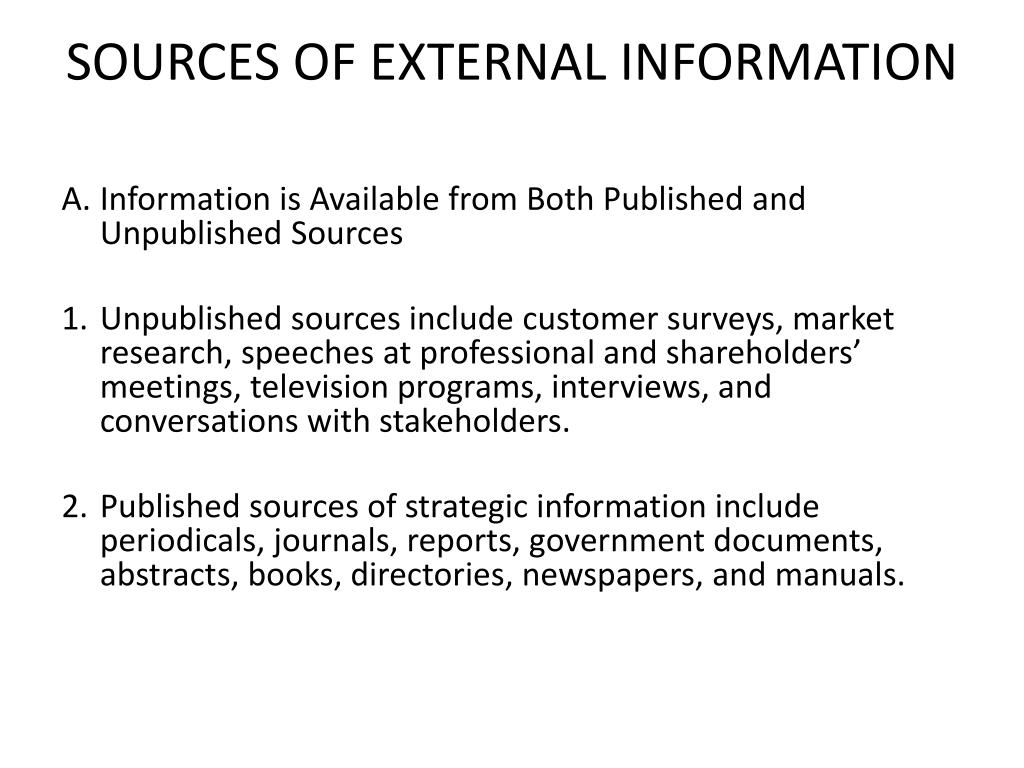
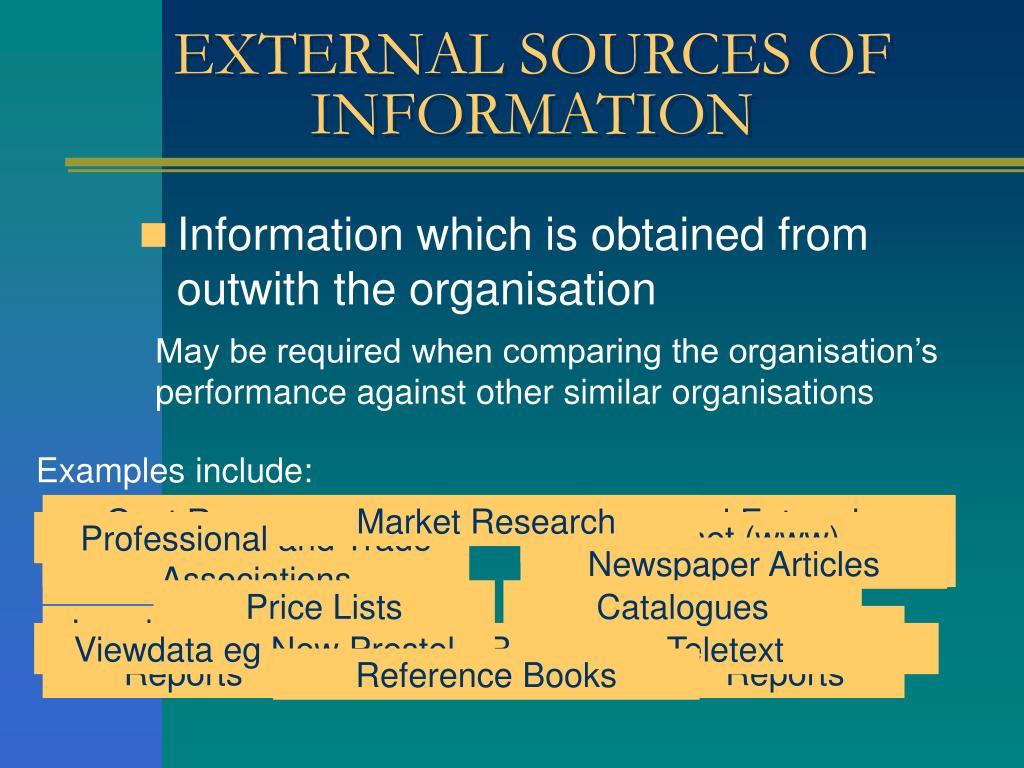
- Public Records – government databases, court filings, census data.
- Industry Reports – market analyses from firms like Gartner or Statista.
- Academic Publications – peer‑reviewed journals, conference proceedings.
- Media Coverage – news articles, press releases, podcasts.
- Social Listening – tweets, Reddit threads, LinkedIn discussions.
- Commercial Databases – subscription services that aggregate financial or demographic data.
Public Records: The Baseline
These are usually free and highly reliable, but they’re also dense. Think of them as the skeleton of your research – you still need to add the muscles.
Industry Reports: The Shortcut
They condense months of market observation into a tidy PDF. The trade‑off? They can be pricey, and the methodology isn’t always transparent.
How to Gauge Credibility
Even reputable sources can harbor bias. Before you cite anything, run a quick mental checklist.
- Who authored the piece? Look for credentials or institutional affiliation.
- When was it published? Outdated data can mislead, especially in fast‑moving sectors.
- What methodology was used? Surveys with a small sample size deserve skepticism.
- Is there a conflict of interest? Sponsored content often veers toward the sponsor’s agenda.
When in doubt, cross‑reference at least two independent sources. Consistency across the board is a good sign that you’ve got solid ground.
Integrating External Data Into Your Workflow
Finding great information is only half the battle; you need a process to turn it into actionable insight.
- Tag and Archive – Use a reference manager or cloud folder with clear naming conventions.
- Summarize Key Points – A short bullet list saved alongside the source makes future retrieval painless.
- Map to Internal Metrics – Connect external findings to your own KPIs; that’s where the value appears.
- Share Strategically – Not everyone needs every piece of data. Tailor the distribution to the relevant stakeholders.
Common Pitfalls and How to Avoid Them
Even seasoned researchers stumble. Recognizing the traps early can save you a lot of headaches.
- Information overload – Set clear objectives before you start searching; otherwise you’ll drown in irrelevant data.
- Over‑reliance on a single source – Diversify your inputs; a single viewpoint rarely tells the whole story.
- Neglecting Legal Constraints – Some data sets carry licensing restrictions. Always check the terms before repurposing.
- Assuming Timeliness – A study from five years ago might have been groundbreaking then, but the landscape could have shifted dramatically.
Tools That Make the Hunt Easier
A few digital assistants can cut the grunt work. For public records, try Data.gov or your country’s official portal. Academic papers are searchable via Google Scholar and Semantic Scholar. When you need market intel fast, platforms like Crunchbase or PitchBook deliver snapshots of company activity.
When to Trust Your Instincts
Data can be messy, contradictory, and occasionally outright wrong. After you’ve vetted sources, ask yourself: does the information align with what you already know? If it feels too perfect or wildly out of step, dig deeper. Your gut, honed by experience, remains a surprisingly reliable filter.
Keeping these guidelines in mind will help you turn the vast sea of external information into a navigable, value‑adding resource.