FortiCloud Key Explained: What It Is and How to Use It
The FortiCloud Key is a small but powerful piece of the Fortinet ecosystem. If you’ve ever set up a FortiGate firewall or subscribed to FortiGuard services, you’ve probably encountered this alphanumeric token. It acts as a bridge between your on‑premises device and FortiCloud, allowing the firewall to register, pull updates, and verify licenses without manual intervention.
What Is the FortiCloud Key?
At its core, the FortiCloud Key is a unique identifier generated by FortiCloud for each device that you register. Think of it as a digital passport: it tells FortiCloud, “Hey, this is a legitimate FortiGate, and here’s the account it belongs to.” The key is tied to the device’s serial number and the FortiCloud account, so it can’t be reused on another firewall without re‑registration.
There are two common flavors of the key:
- Device‑specific key – Assigned when you first register a FortiGate in the FortiCloud portal.
- Enterprise‑wide key – Used by larger deployments to simplify management across multiple firewalls.
Both serve the same purpose: enabling automated licensing, firmware upgrades, and cloud‑based analytics. Without a valid key, the firewall will fall back to a limited “stand‑alone” mode, losing out on many of FortiCloud’s conveniences.
How to Obtain Your FortiCloud Key
Getting the key is straightforward, but the exact steps differ slightly depending on whether you’re using the web UI or the command line. Here’s a quick rundown of the most common path:
- Log in to the FortiCloud portal with your account credentials.
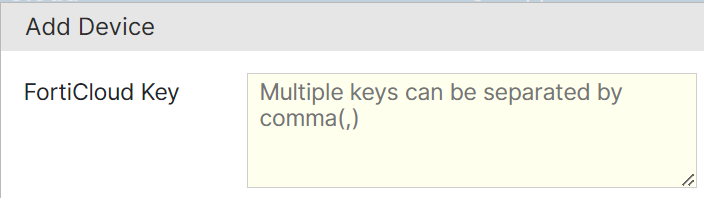
- Navigate to My Devices and click Add Device.
- Enter the firewall’s serial number (found on the device label or under
get system statuson the CLI). - FortiCloud will generate a key and display it on the screen. Copy it exactly as shown.
If you prefer the CLI, you can pull the key directly from the FortiGate after registration:
- Enter global configuration mode:
config system global - Run
get system forticloud-keyto reveal the key.
Make sure to store the key securely—treat it like a password. Unauthorized access could let an attacker impersonate your device in FortiCloud, potentially exposing configuration data.
Configuring the FortiCloud Key on a FortiGate
Once you have the key, you’ll need to bind it to your firewall. The process is almost identical whether you’re using the GUI or the CLI; pick the one you’re most comfortable with.
Using the Web GUI
- Log in to the FortiGate’s management interface.
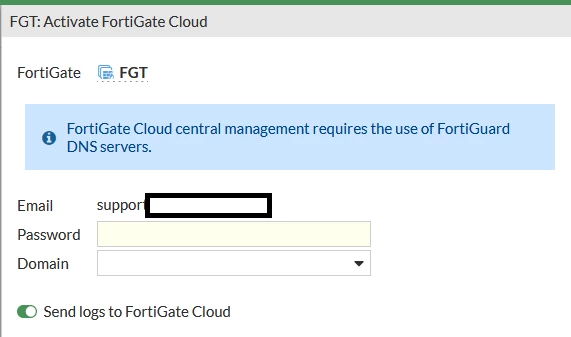
- Go to System > FortiCloud.
- Paste the key into the FortiCloud Registration Key field.
- Click Apply. The device will attempt to contact FortiCloud and confirm the registration.
Using the CLI
- Enter configuration mode:
config system forticloud - Set the key:
set registration-key YOUR_KEY_HERE - Save and exit:
end - Verify the status with
diagnose forticloud status.
After a successful registration, you should see a green indicator in the portal, and the firewall will start pulling license updates and security feeds automatically.
Typical Use Cases for the FortiCloud Key
Understanding when the key adds real value helps you decide whether to invest time in setting it up.
- License Management – FortiGuard subscriptions (IPS, AV, Web Filtering) are tied to the key, ensuring they stay active even after hardware changes.
- Centralized Logging – With FortiCloud logging enabled, logs from multiple firewalls flow into a single cloud store for easy analysis.
- Zero‑Touch Provisioning – In large enterprises, the key can be embedded in a device template, allowing new firewalls to self‑register as soon as they boot.
- Remote Management – The key enables the FortiCloud console to push configuration changes to firewalls behind NAT without a VPN.
Best Practices and Security Tips
Because the FortiCloud Key grants significant access, treat it with the same care you would a privileged credential.
- Rotate Keys Periodically – If an employee leaves or a device is decommissioned, revoke the old key in the portal and generate a new one.
- Restrict Portal Access – Only administrators who need to manage licenses should have FortiCloud console rights.
- Enable Two‑Factor Authentication on the FortiCloud account to add an extra barrier against compromise.
- Backup the Key Securely – Store it in an encrypted password manager; don’t rely on plain‑text notes or email.
Troubleshooting Common Issues
If the firewall refuses to register, consider these checkpoints:
- Ensure the device’s firmware is up to date; older versions sometimes have bugs in the registration API.
- Check outbound connectivity on ports 443 (HTTPS) and 53 (DNS). A firewall rule or proxy could be blocking the call to
forticloud.com. - Verify the key was copied without extra spaces or line breaks. Even a stray character will invalidate the token.
- Look at the CLI output of
diagnose debug enablefollowed bydiagnose debug application forticloud -1for detailed error messages.
Most registration hiccups resolve within a few minutes once the network path is cleared.
FAQ
Do I need a FortiCloud Key for every FortiGate in my network?
Yes, each device requires its own key unless you’re using an enterprise‑wide key that’s explicitly configured for multi‑device scenarios. The key ensures that licenses are correctly assigned to each firewall.
Can I use the same FortiCloud Key on a replacement firewall?
Only after you deregister the original unit. The portal ties the key to a specific serial number, so you must first delete the old device from My Devices and then register the new one to generate a fresh key.
What happens if my FortiCloud Key expires?
The key itself doesn’t expire, but the associated FortiGuard subscriptions do. When a subscription lapses, the firewall will continue to function but lose premium security updates until the license is renewed.
Is the FortiCloud Key encrypted during transmission?
All communication between the firewall and FortiCloud uses TLS (HTTPS), so the key is protected in transit. However, it’s still wise to keep the key out of unsecured files on the local network.