Hang Seng Index October 2022 Performance & Key Analysis
If you were watching the Asian markets back in the fall of 2022, you likely felt a sense of déjà vu. The Hang Seng Index, the benchmark for Hong Kong’s stock market, continued its relentless downward spiral. October 2022 wasn’t just a bad month; it was a brutal confirmation of the broader macroeconomic headwinds gripping global equities. For investors, it was a period defined by rising rates, geopolitical tension, and lingering uncertainty about China’s economic recovery.
To truly understand this period, we have to look beyond the red candles on the chart. We need to dissect the forces at play, from the Federal Reserve’s aggressive stance to the local stressors affecting Hong Kong specifically. Let’s break down why October 2022 was such a pivotal—and painful—chapter for HS Index traders.
The Macro backdrop: A Perfect Storm
You couldn’t trade the Hang Seng Index in October 2022 without acknowledging the elephant in the room: inflation. The global fight against rising prices was in full swing, and the Federal Reserve wasn’t pulling any punches. Hawkish rhetoric from Wall Street sent shockwaves through emerging markets, with Hong Kong being a prime target.
As the US Dollar Index surged to multi-year highs, capital flowed out of riskier assets and back into the safety of US Treasuries. This liquidity drain hit the HS Index hard. The currency effect also played a role. While the Hong Kong dollar is pegged to the US dollar, the relative strength of the greenback made Chinese assets less attractive to international investors. It’s a classic emerging market dilemma—the stronger the dollar, the harder the pressure on local equities.
Then there was the geopolitical layer. Russia’s invasion of Ukraine was still fresh, leading to ongoing supply chain disruptions and energy price volatility. These factors created an environment of extreme caution. Investors weren’t just looking for stability; they were running for the exits.
China’s Economic Woes: The Local Headwind
While global factors set the stage, domestic issues in China provided the script. By October 2022, the Chinese economy was struggling to find its footing post-pandemic. The real estate sector, a massive component of China’s GDP, was in the midst of a severe downturn. Developers like Evergrande were grappling with massive debt crises, casting a shadow of doubt over the entire financial system.
This wasn’t just about property stocks. The distress in the real estate market rippled out to banks, consumer goods, and construction firms. Investors began to price in a potential "hard landing" for the Chinese economy. The Hang Seng Index, being heavily weighted towards financials and tech, reflected this anxiety perfectly.
The "zero-COVID" policy remained another wildcard. While international markets were reopening and surge in travel and spending, China locked down major cities like Shanghai and Beijing. Each new lockdown announcement sent the HS Index dipping further, as traders feared a resurgence would delay any meaningful economic rebound.
Performance Metrics: Just How Bad Was It?
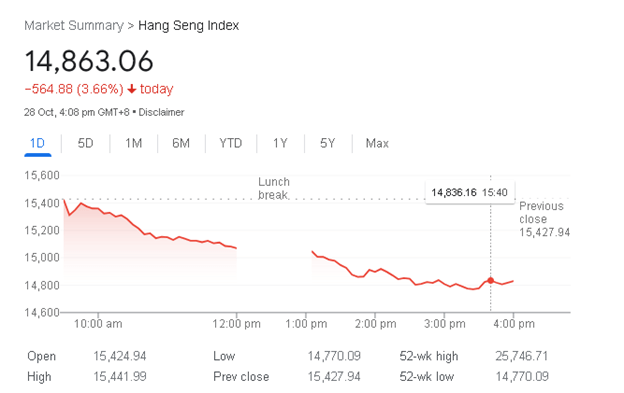
The numbers paint a grim picture. Throughout October 2022, the Hang Seng Index fell significantly. It didn’t just trade sideways; it broke support levels that had held firm in previous months. The index closed the month well below its year-to-date average, signaling a deepening bear market.
- Price Action: The index saw consistent selling pressure, with few genuine rallies.
- Volume: Trading volumes remained subdued, indicating a lack of buyer appetite.
- VIX Equivalent: Fear gauges in Asian markets stayed elevated, reflecting heightened volatility expectations.
It wasn’t just a bad day or a bad week. It was a sustained period of erosion. For long-term holders, it was a test of patience. For short-term traders, it was a minefield where profits vanished quickly if positions weren’t managed with extreme precision.
Sector Breakdown: Who Got Hit Hardest?
Not all sectors bled equally. Financials, which are heavily exposed to China’s economic health, took a significant beating. Banks faced concerns over non-performing loans from the real estate sector. Tech giants, once the darlings of the global market, continued their slide amidst regulatory crackdowns and slowing consumer demand in China.
Interestingly, some defensive sectors showed relative resilience, though "resilience" is a relative term in a bear market. Utilities and consumer staples held up slightly better than growth stocks, but even they weren’t immune to the broader sell-off. Safe haven assets like gold and sovereign bonds saw inflows as investors scrambled to preserve capital.
Policy Responses and Market Sentiment
So, what did policymakers do? The Hong Kong Monetary Authority (HKMA) and the central bank of China (PBOC) had mixed signals. While there were hints of easing measures, nothing drastic was announced to immediately counter the gloom. The disconnect between policy promises and market reality created skepticism.
Market sentiment turned deeply pessimistic. Retail investors pulled back, and institutional funds rotated into safer jurisdictions. The narrative shifted from "dip-buying" to "risk management." Few analysts were calling for a bottom, and those who did were often skeptical of its durability.
Lessons from October 2022
Looking back, October 2022 serves as a case study in macroeconomic risks. It highlights how vulnerable emerging markets are to global liquidity shifts. It also underscores the importance of diversification. Investors heavily concentrated in Asian equities faced significant drawdowns without adequate hedging strategies.
For those navigating similar markets today, the key takeaway is clear: watch the Fed, monitor China’s economic data closely, and be cautious of geopolitical shocks. The Hang Seng Index doesn’t move in a vacuum. It’s a proxy for global risk appetite and China’s economic fate. Understanding this dynamic is crucial for anyone looking to invest or trade in this region.
The pain of October 2022 wasn’t forgotten. It shaped the market’s psyche for months to come, reminding everyone that in tough macro environments, even the most promising stocks can’t fight the tide.
Frequently Asked Questions
Why did the Hang Seng Index fall so much in October 2022?
The decline was driven by a combination of rising US interest rates, a strong US Dollar, geopolitical tensions, and fading hopes for a strong post-pandemic recovery in China due to strict lockdowns and the real estate crisis.
Which sectors were most affected?
Financials and technology sectors saw the steepest declines, as they were most exposed to China’s economic slowdown and regulatory pressures. Defensive sectors like utilities fared relatively better but still faced headwinds.
How did the US Dollar impact the HS Index?
A strong US Dollar caused capital outflows from emerging markets like Hong Kong. Investors moved funds to safer, higher-yielding US assets, reducing demand for HK-listed equities and putting downward pressure on the index.
Was there any positive news during this period?
There were hopes that China’s easing measures would stabilize the economy, but these were overshadowed by new lockdown announcements and persistent stress in the property sector, limiting any meaningful market recovery.


_candlestick_with_ema_1_year.png)
