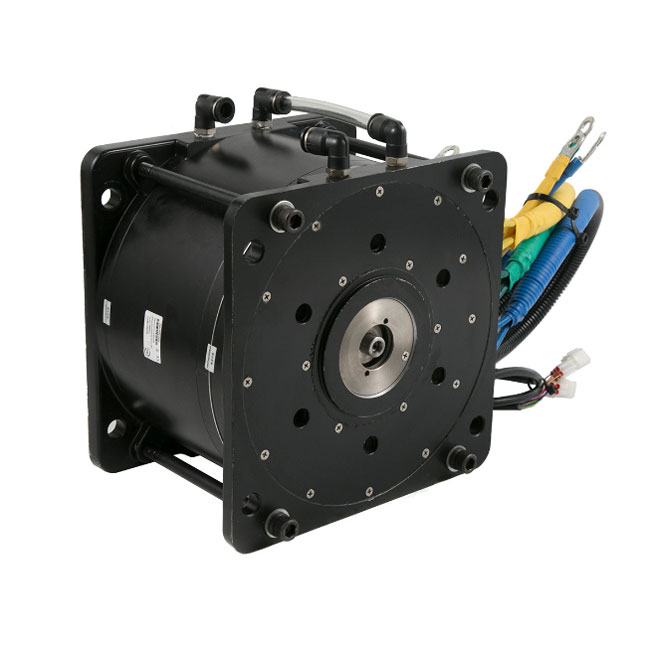
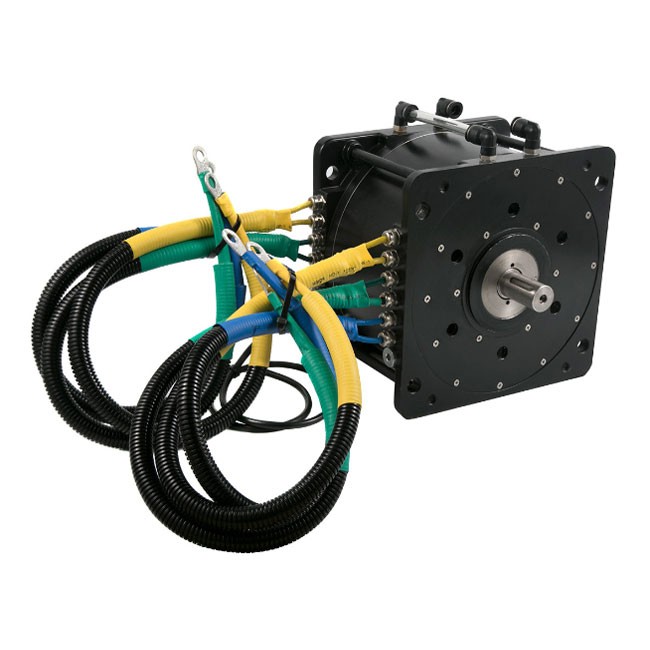
How a 20 kW BLDC Motor Powers an Electric Car Efficiently
When you hear “20 kW BLDC motor,” you might picture a compact powerhouse tucked under the hood of a modern electric vehicle. In practice, that modest‑looking figure can deliver surprisingly lively performance, especially when paired with the right controller and battery pack. Let’s break down why a 20 kW brushless DC motor is often a sweet spot for city‑focused EVs, how it interacts with the car’s drivetrain, and what owners can expect in day‑to‑day driving.
What Makes a BLDC Motor Different?
Brushless DC (BLDC) motors differ from their brushed counterparts in two key ways:
- No brushes. Eliminating physical contacts reduces wear, lowers maintenance, and improves efficiency.
- Electronic commutation. A controller switches the current through the windings in precise steps, delivering smooth torque across a wide speed range.
These attributes translate into higher power density—meaning more watts per kilogram—which is exactly what space‑constrained EV designers crave.
Why 20 kW Is a Practical Choice for Urban EVs
At first glance, 20 kW (about 27 horsepower) sounds modest compared to the 100 kW+ motors found in many highway‑capable models. Yet for stop‑and‑go traffic, the numbers work out nicely:
- Acceleration. A well‑tuned 20 kW motor can launch a 1,200‑kg (2,650‑lb) hatchback from 0 to 30 mph in under 8 seconds—more than enough for city merging.
- Range. Lower power output means the controller draws less current for the same speed, extending the real‑world mileage on a modest battery pack.
- Cost. Smaller motors and lighter gearboxes reduce both component cost and vehicle weight, keeping the sticker price competitive.
How the Motor Connects to the Wheels
Most 20 kW BLDC setups use a single‑speed reduction gear, often a planetary gearbox with a ratio between 5:1 and 10:1. The gearbox serves two purposes:
- Torque multiplication. Multiplying the motor’s output torque makes low‑speed hill climbing feasible.
- Speed matching. It brings the motor’s high RPM (often 10,000–15,000) down to a wheel‑friendly range (around 1,500–3,000 rpm).
The result is a drivetrain that feels responsive without the whine of high‑revving engines.
Battery Compatibility and Management
Because a BLDC motor’s efficiency can exceed 90 % at its sweet spot, the battery doesn’t have to work overtime. A typical 20 kW system pairs with a 20–30 kWh lithium‑ion pack, delivering:
- Continuous discharge rates around 1C (20–30 A), which most pack chemistries handle comfortably.
- Regenerative braking that recovers up to 40 % of kinetic energy during city stops, feeding the pack without extra hardware.
Smart battery‑management systems monitor temperature and state‑of‑charge, ensuring the motor never starves for power while also protecting the cells from over‑discharge.
Performance Nuances You Might Notice
Driving a car equipped with a 20 kW BLDC motor feels a bit different from a gasoline car or a high‑performance EV:
- Silent acceleration. The absence of combustion noise makes each pedal press feel immediate, but the lack of engine roar can be disorienting at first.
- Linear power delivery. Because torque is available from zero RPM, you get a smooth pull rather than a sudden surge.
- Limited top speed. Most designs cap at 70–80 mph, which is perfectly adequate for most urban and suburban commutes.
Maintenance Tips to Keep the Motor Healthy
Even though BLDC motors are low‑maintenance, a few simple habits go a long way:
- Check connector tightness during routine service; vibration can loosen screw terminals over time.
- Keep the motor’s cooling fins free of dust, especially in hot climates.
- Run a brief “warm‑up” cycle after long idle periods—just a minute of gentle throttle—to circulate lubricant inside the bearings.
Follow the manufacturer’s interval for controller firmware updates; software tweaks can improve efficiency or add new diagnostic features.
Future Trends: Scaling the 20 kW Platform
Manufacturers are experimenting with modular motor families. A 20 kW unit can serve as a building block for larger setups:
- Two motors in a dual‑motor layout provide all‑wheel drive while keeping each motor in its optimal power band.
- Upscaling the same core design to 30 kW or 40 kW only requires modest changes to the winding and cooling system, preserving tooling costs.
These approaches hint at a future where the same basic motor architecture powers everything from city micro‑cars to compact SUVs.
Bottom Line
If you’re looking for an electric drivetrain that balances cost, efficiency, and everyday usability, a 20 kW BLDC motor checks the boxes. Its high efficiency, low noise, and straightforward integration make it a solid choice for urban commuters who value range and simplicity over outright speed. With proper battery pairing and regular, minimal upkeep, the motor can provide reliable propulsion for years—quietly, efficiently, and with just enough punch to keep city streets moving.