How a Letter of Credit at Sight Works: Complete Guide
When international trade feels like navigating a maze, a letter of credit at sight can be the lantern that steadies the path. It’s a financing tool that gives exporters confidence they’ll be paid, while reassuring importers that funds are only released once documents are verified. Below, we break down the mechanics, the players, and the practical steps you’ll need to use this instrument effectively.
What Is a Letter of Credit at Sight?
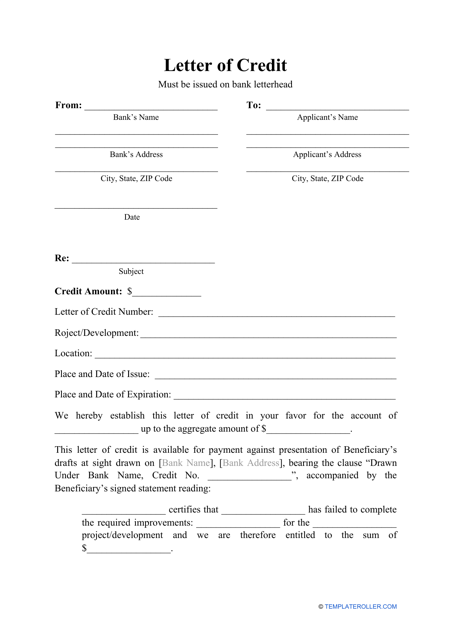
A letter of credit at sight, often simply called a sight LC, is a written commitment from a bank to pay the seller as soon as the required documents are presented and found in order. Unlike a term or deferred credit, the payment isn’t delayed; it’s immediate—hence “at sight.” This immediacy helps both sides move faster: the exporter gets cash promptly, and the importer avoids a prolonged financing lag.
Key Parties and Their Roles
- Applicant (Importer): The buyer who asks their bank to issue the LC.
- Issuing Bank: The applicant’s bank that creates the credit and guarantees payment.
- Beneficiary (Exporter): The seller who will receive the funds once documents are approved.
- Advising Bank: Usually located in the seller’s country, this bank forwards the LC to the beneficiary and may verify its authenticity.
- Negotiating Bank (optional): May advance funds to the beneficiary before the issuing bank clears the documents.
How the Process Unfolds
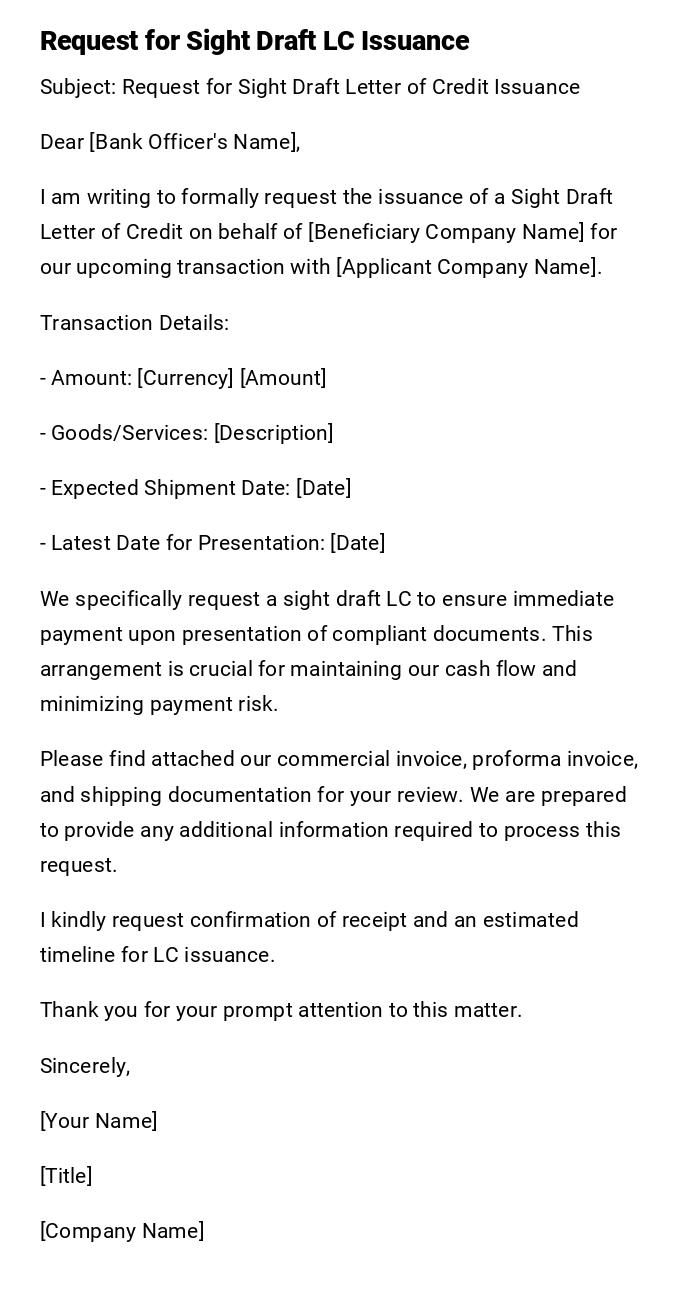
First, the importer and exporter negotiate the sales contract and agree to use a sight LC. The importer then applies to their bank, providing details such as the amount, currency, shipment date, and the exact documents required—typically a commercial invoice, bill of lading, packing list, and insurance certificate.
Once the issuing bank drafts the LC, it sends it through the advising bank to the exporter. The exporter reviews the terms; if anything looks off, they can request amendments before shipping the goods.
After the goods leave the port, the exporter gathers the stipulated documents and presents them to the advising (or negotiating) bank. That bank checks the paperwork against the LC’s conditions. If everything matches, the bank pays the exporter on the spot, and the documents travel back to the issuing bank for final verification.
The issuing bank then releases the documents to the importer, who uses them to take possession of the cargo. The importer settles the amount with their bank—often through a pre‑arranged credit line or by debiting their account.
Advantages for Both Sides
For Exporters: Immediate payment reduces cash‑flow worries and eliminates the risk of the buyer defaulting after shipment. It also offers a level of credibility; a bank’s guarantee can be more reassuring than a private promise.
For Importers: The sight LC protects against premature payment. Funds are only released after the exporter provides the exact documents, ensuring that the goods have been shipped as agreed. Moreover, because the transaction is bank‑mediated, it can improve a buyer’s standing with new suppliers.
Potential Drawbacks to Consider
While the instrument is powerful, it isn’t without cost. Banks charge issuance fees, amendment fees, and sometimes a percentage of the credit amount as a handling charge. Those expenses can add up, especially for smaller deals.
Another subtle risk lies in the documentary compliance requirement. If any document deviates—even by a minor detail—the bank can refuse payment, leaving the exporter to correct the issue and possibly delay the shipment. This strictness means both parties must be meticulous about paperwork.
Step‑by‑Step Guide to Using a Sight LC
- Negotiate Terms: Agree on price, shipment date, and which documents will be required.
- Apply for the LC: The importer submits a formal request to their bank, attaching the sales contract.
- Bank Issues the LC: The issuing bank drafts the credit and sends it through an advising bank.
- Review and Amend: The exporter checks the LC; any needed changes are communicated back to the issuing bank.
- Ship the Goods: Once satisfied, the exporter ships the cargo and gathers the required documents.
- Present Documents: The exporter hands the paperwork to the advising/negotiating bank.
- Bank Pays at Sight: After verification, the bank releases payment immediately to the exporter.
- Documents Reach Importer: The issuing bank forwards the documents, allowing the importer to claim the cargo.
- Settle the Invoice: The importer pays the issuing bank, completing the cycle.
Common Pitfalls and How to Avoid Them
Missing a single required document—say, an unsigned commercial invoice—can stall payment. To sidestep this, create a checklist based on the LC’s terms and double‑check each item before submission.
Another frequent issue is mismatched details, such as a discrepancy between the invoice amount and the amount stated on the LC. Aligning every figure and description early in the negotiation stage reduces the chance of costly amendments.
Finally, don’t overlook the expiration date. An LC that lapses before the documents are presented renders the entire arrangement void, forcing both parties back to the negotiating table. Time‑boxing each step helps keep the process on schedule.
When a Sight LC Is the Right Choice
If you’re dealing with a new overseas partner and need a secure, quick‑payment method, a sight LC often beats open account terms. It’s also ideal for high‑value shipments where the risk of non‑payment would be financially damaging. Conversely, for low‑value, repeat transactions with trusted partners, the fees might outweigh the benefits.
Frequently Asked Questions
Can a sight LC be used for partial shipments?
Yes, as long as the LC explicitly allows multiple drawings. Each partial shipment must be accompanied by the full set of required documents for that draw.
What happens if the documents are rejected?
The bank will notify the exporter of the discrepancies. The exporter can then correct the documents and resubmit, but payment will be delayed until the bank is satisfied.
Are there alternatives to a sight LC?
Other trade finance tools include documentary collections, open accounts, and standby letters of credit. Each offers a different balance of risk and cost; the best choice depends on the parties’ trust level and the transaction’s size.
Do I need a specific type of bank to issue a sight LC?
Typically, any reputable commercial bank with an international trade department can issue a sight LC, though larger global banks may provide smoother coordination across borders.
![Sight LCs – Sight Letter of Credit [UPDATED 2024]](https://tradefinanceglobal.com/wp-content/uploads/2020/08/sight-LC-1.jpg)