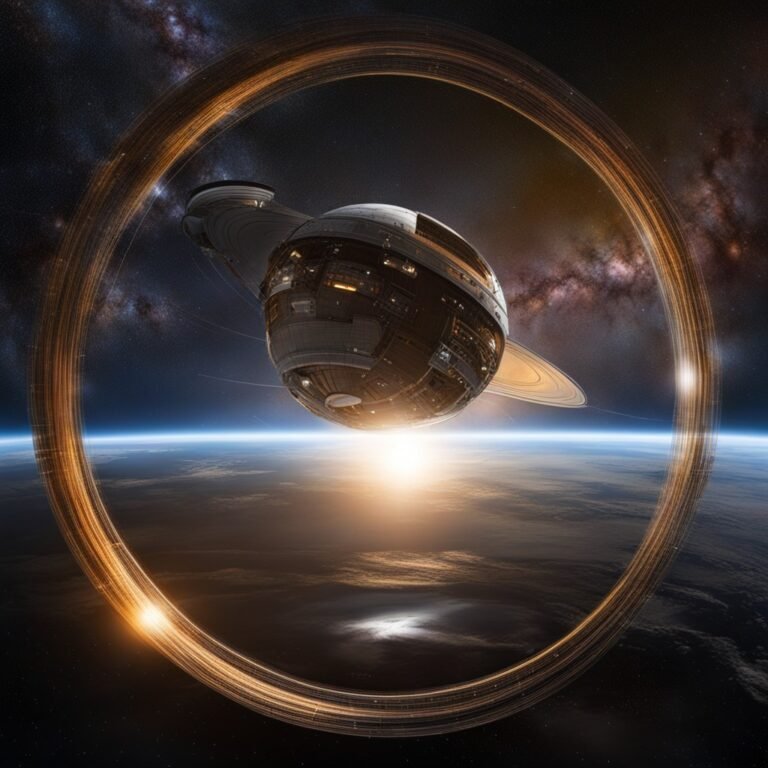
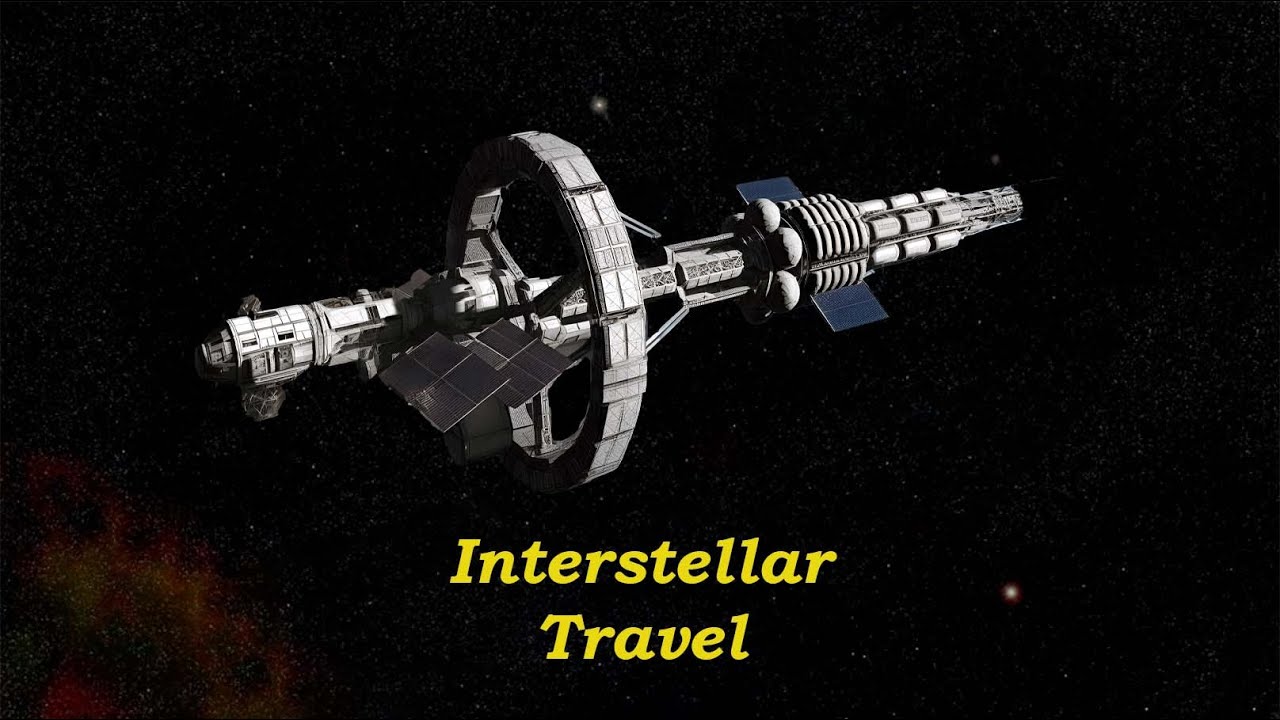
How Cutting‑Edge Tech Is Shaping the Future of Interstellar Travel
When we look up at the night sky, the idea of hopping from one star system to another feels almost mythical. Yet engineers and physicists are turning that myth into a list of very real possibilities. Below, we unpack the most promising breakthroughs that could one day carry a spacecraft across light‑years.
Solar Sails: Harnessing Light for Gentle Push
Imagine a gigantic, ultra‑thin mirror catching photons from a star and using their tiny momentum to accelerate. That’s the principle behind solar sails. Recent test flights—like LightSail‑2—have proved that a lightweight sail can be steered and even decelerated using Earth’s reflected sunlight.
- Materials matter: Graphene and nanocarbon composites are pushing tensile strength to new heights while keeping weight down.
- Scalability: A sail spanning several kilometers could, over decades, reach speeds approaching 10% of light speed without any onboard fuel.
Nuclear Propulsion: Powering the Long Haul
When sunlight isn’t enough, nuclear reactions step in. Two main concepts dominate the conversation:
1. Nuclear Thermal Rockets (NTR)
These engines heat hydrogen propellant with a reactor core, delivering higher exhaust velocities than chemical rockets. NASA’s Project Prometheus showed that an NTR could cut travel time to Mars in half—and the same physics scales up for interstellar missions.
2. Fusion Drives
Fusion promises orders of magnitude more energy per kilogram of fuel. Projects like Daedalus and the more recent Direct Fusion Drive envision compact reactors that could push a spacecraft to 5% of light speed, all while carrying a relatively modest fuel load.
Antimatter Propulsion: The Ultimate Energy Density
Antimatter annihilation releases the most energy we know of—E=mc² at its fullest. While producing and storing antimatter remains an astronomical challenge, prototypes such as the Antiproton Decelerator have demonstrated controlled handling of tiny amounts.
- Even micrograms could power a probe to Proxima Centauri in under a decade.
- Safety concerns keep the concept in the “future research” box for now.
Warp‑Field Concepts: Bending Space‑Time
The idea of a warp bubble—compressing space ahead of a ship while expanding it behind—stems from solutions to Einstein’s field equations. Though still speculative, recent papers suggest that exotic matter with negative energy density might not be as unattainable as once thought.
What’s encouraging is the shift from “impossible” to “theoretically permissible,” prompting labs to explore quantum vacuum fluctuations as a potential source of the required energy.
Quantum Propulsion: Riding the Vacuum
Quantum vacuum thrust (QVT) leverages fluctuations in empty space to generate minuscule thrust without propellant. While the force produced today is tiny, engineers are optimistic that nanostructured emitters could amplify the effect.
If successful, a QVT engine would be ideal for long‑duration cruises, essentially “coasting” on the fabric of space itself.
Artificial Intelligence and Autonomous Navigation
Traveling beyond our solar system means losing real‑time communication with Earth. AI isn’t just a convenience; it’s a survival tool. Machine‑learning algorithms can:
- Detect and avoid hazards—micrometeoroids, radiation bursts—in seconds.
- Optimize propulsion curves on the fly, shaving precious months off a journey.
- Perform diagnostics and self‑repair tasks without human intervention.
Cryogenic Sleep: Preserving Crew for the Long Run
If humans ever make the leap, staying awake for decades is impractical. Cryogenic suspension—slowing metabolism to a crawl—offers a way to bridge the gap.
Current research into ultra‑low temperature preservation of organs provides a glimpse of what might be possible for whole bodies. The biggest hurdle remains ensuring safe revival after years in stasis.
Putting It All Together: A Sample Mission Architecture
A plausible interstellar probe could combine several of these technologies:
- Launch with a conventional heavy‑lift rocket.
- Deploy a solar sail to gain initial velocity.
- Engage a fusion drive for the mid‑course boost.
- Switch to quantum vacuum thrust for fine‑tuning near the destination.
- Rely on AI for autonomous navigation throughout the journey.
This layered approach mitigates the weaknesses of any single system while capitalizing on their strengths.
Looking Ahead
While none of these breakthroughs will materialize overnight, the pace of progress is unmistakable. Universities, private firms, and space agencies worldwide are filing patents, building testbeds, and even crowdsourcing ideas. The next decade may well see the first crewless interstellar flyby—an achievement that would rewrite our place in the cosmos.