How Echoes Reveal the Secrets of Sound Reflection
When you shout into a canyon or clap your hands in a bathroom, the lingering reverberation isn’t just a curious quirk—it’s physics in action. The phenomenon we call an echo offers a window into how sound waves bounce off surfaces, how they lose energy, and how we can harness those principles in technology ranging from sonar to concert hall design.
What Exactly Is an Echo?
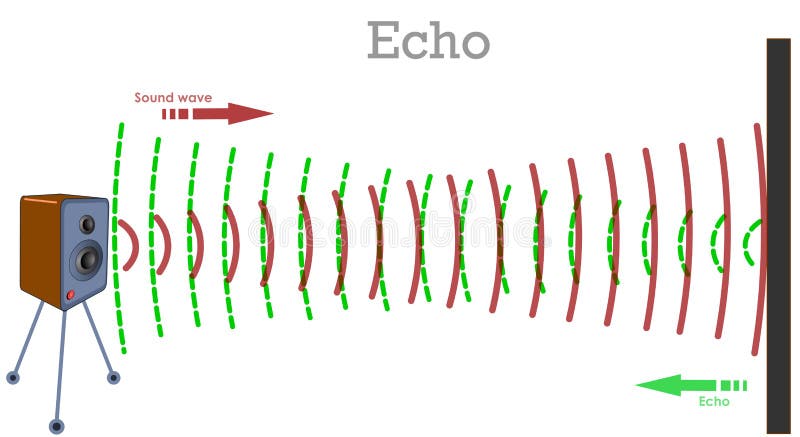
An echo occurs when a sound wave travels to a surface, reflects, and returns to the listener with enough intensity to be heard as a distinct repetition of the original sound. The key factors are distance and timing: the reflecting surface must be far enough away that the brain can separate the original signal from the reflected one—typically a delay of at least 0.1 seconds, which translates to roughly 34 metres of travel for air‑borne sound.
The Physics Behind the Reflection
Sound is a mechanical wave that propagates by compressing and rarefying the particles of the medium it travels through. When this wave encounters a boundary—say, a wall or a cliff—the particles at the interface cannot move past the barrier, so the wave’s energy is redirected.
- Impedance mismatch: Different materials resist sound motion to varying degrees. A large mismatch (air to concrete) results in a strong reflection.
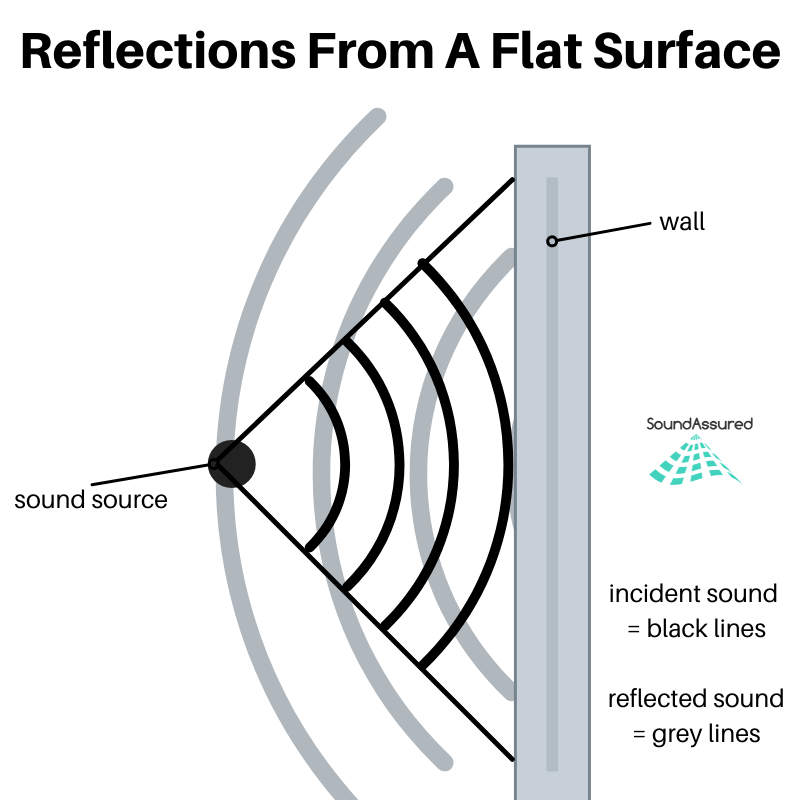
- Angle of incidence: Like light, sound obeys the law of reflection: the angle at which it hits a surface equals the angle at which it leaves.
- Surface texture: Rough surfaces scatter sound in many directions (diffuse reflection), while smooth ones produce a clearer, specular echo.
Why Some Sounds Echo While Others Don’t
If you whisper in a carpeted room, you might notice no echo at all. That’s because soft, porous materials absorb rather than reflect acoustic energy. Conversely, hard, flat surfaces like stone or glass preserve most of the wave’s intensity, allowing the reflected sound to stay audible.
Temperature and humidity also play subtle roles. Warm air carries sound faster, slightly altering the travel time, while humidity affects attenuation—though the effect is usually minor compared to surface properties.
Practical Example: The Classic Canyon Test
Stand at the base of a limestone canyon, shout “Hello!” and listen. The canyon walls, being smooth and massive, act as near‑perfect mirrors for the sound wave. The echo returns after traveling down the canyon, bouncing off the opposite wall, and climbing back up—often multiple times, creating a series of diminishing repeats.
Applications That Rely on Echoes
Beyond the amusement park trick of shouting into a tunnel, echo principles underpin several high‑tech fields:
- Sonar: Submarines emit sound pulses, then listen for the echo to gauge distance, shape, and even composition of underwater objects.
- Medical Ultrasound: High‑frequency sound waves reflect off tissues; the timing of those echoes creates detailed internal images.
- Architectural Acoustics: Designers use echo analysis to avoid unwanted reverberation in concert halls, ensuring clear sound for every seat.
- Seismic Surveying: Explosions generate acoustic waves that echo off geological layers, helping locate oil reserves.
Measuring Echoes: Simple Experiments
If you fancy a hands‑on test, try this at home:
- Find a long hallway with a hard floor and wall.
- Stand at one end and clap sharply.
- Use a stopwatch to time the interval between the clap and the faint repeat you hear.
- Multiply the time by the speed of sound in air (≈ 343 m/s) and then divide by two—to estimate the distance to the reflecting wall.
This straightforward method mirrors how scientists calculate ranges in sonar systems, just on a much smaller scale.
Common Misconceptions
Many assume that any reflected sound qualifies as an echo. In reality, “reverberation” describes a rapid succession of tiny reflections that merge into a continuous decay, whereas an echo is a discrete, recognizable repeat. The distinction hinges on the listener’s ability to separate the two sounds.
Another myth is that echoes only happen outdoors. Indoor environments with large, hard surfaces—think gymnasiums or empty warehouses—can produce striking echoes, especially when the room’s dimensions exceed the 34‑metre threshold mentioned earlier.
Designing Spaces With Echo Control in Mind
Architects often employ a mix of absorptive and diffusive materials to tailor a room’s acoustic fingerprint. Acoustic panels, thick curtains, and even strategically placed bookshelves can break up reflections, reducing echo without deadening the overall sound.
In performance venues, the goal is a balanced reverberation time: enough to enrich music, but not so much that speech becomes unintelligible. Engineers use computer modeling to predict how sound will bounce, then adjust surfaces accordingly—a modern echo‑management craft.
Future Directions: Echoes in Emerging Tech
Researchers are exploring “acoustic holography,” where arrays of speakers and microphones create three‑dimensional sound fields by precisely controlling echoes. Such technology could enable immersive audio experiences that feel as real as visual VR.
Another frontier is bio‑inspired sonar: certain bats emit ultrasonic clicks and interpret the returning echoes to navigate cluttered environments. Mimicking this natural echo processing could lead to more efficient, compact sensing devices for autonomous robots.
In all these cases, the humble echo remains a fundamental clue—one that tells us where objects are, what they’re made of, and how sound behaves in the spaces we inhabit.