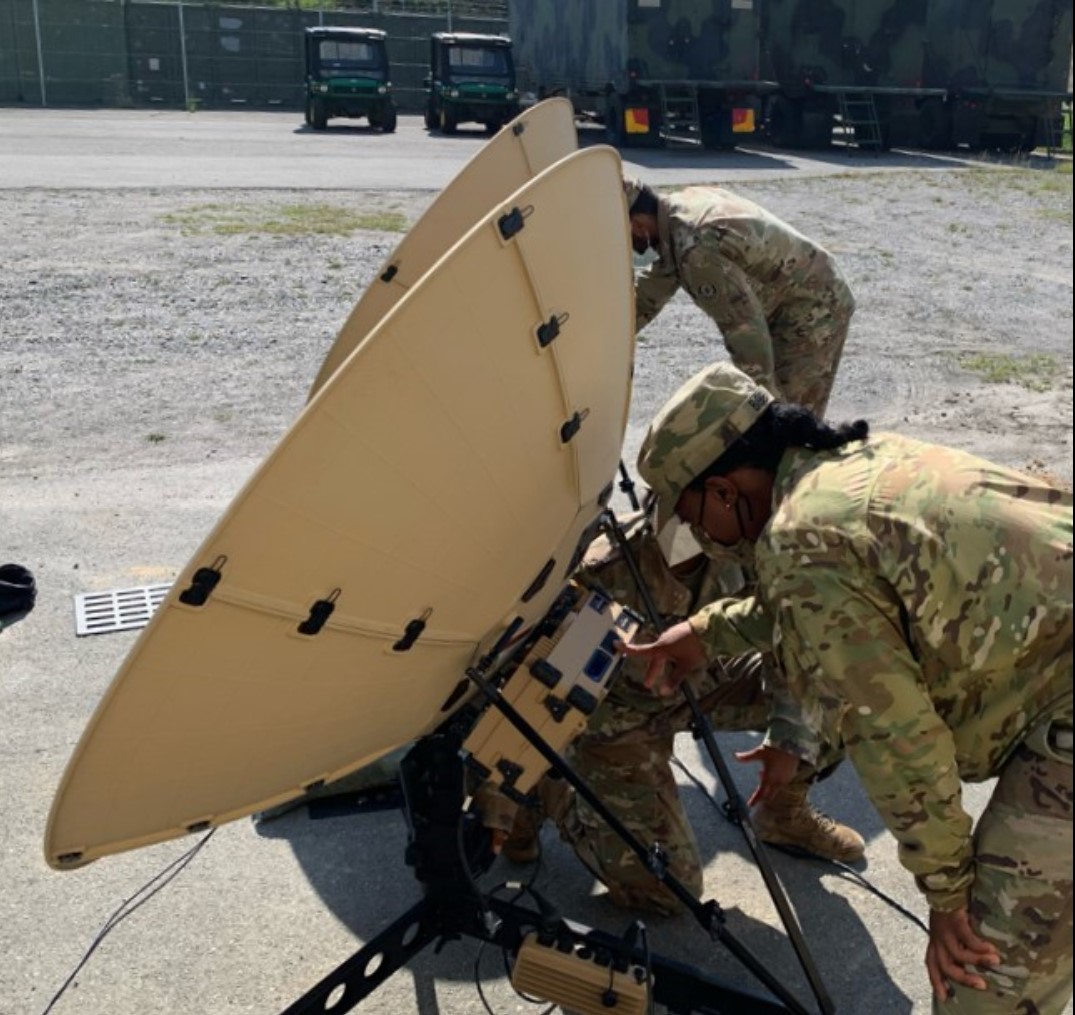
How Military SATCOM Terminals Enable Secure Global Communications
When armies need to talk across oceans, deserts, or mountain ranges, they turn to satellite communications (SATCOM) terminals. These rugged devices are the backbone of modern battlefield connectivity, linking troops, command posts, and support units with a speed and reliability that traditional radios simply can't match. Below we’ll walk through what makes a military SATCOM terminal tick, explore the main types in use today, and explain how they keep the conversation both fast and protected.
What Sets Military SATCOM Terminals Apart?
At first glance a SATCOM terminal looks like a box with a dish or antenna, but the technology inside is anything but ordinary. Three core features distinguish the military‑grade versions from their commercial cousins:
- Rugged Design: Built to survive drops, extreme temperatures, and even water immersion.
- Encrypted Links: Built‑in cryptographic modules scramble data so adversaries can’t eavesdrop.
- Adaptive Beam Steering: Smart antennas lock onto the strongest satellite signal, even while the unit is on the move.
These capabilities allow commanders to coordinate operations in real time, no matter how remote the theater.
Key Components of a SATCOM Terminal
A typical field terminal comprises several interchangeable parts. Understanding each helps you see why the whole system is so versatile.
1. Antenna Assembly
From compact, low‑profile patches to larger parabolic dishes, the antenna determines how well the terminal can “see” the satellite. Modern units often feature electronically scanned arrays that can pivot in milliseconds without moving parts—a huge advantage for vehicles rattling over rough terrain.
2. Modem & Signal Processor
The modem translates digital data into radio‑frequency signals and vice versa. In a military context, it also handles error correction and manages multiple data streams, ensuring voice, video, and telemetry all arrive intact.
3. Power Management
Battery life is critical. Many terminals incorporate high‑efficiency power converters and can tap into vehicle generators, solar panels, or even tactical fuel cells when needed.
4. Security Module
Built‑in cryptographic chips perform key exchange, encryption, and authentication on the fly. The result is a seamless, end‑to‑end secure link without the user having to fiddle with separate encryption devices.
Common Types of Military SATCOM Terminals
Not every mission requires the same kit. Below is a quick guide to the most prevalent families of terminals and where they shine.
- Man‑Portable Units (MPUs): Light enough for a single soldier to carry, these are ideal for special forces or forward observers who need a “talk‑anywhere” solution.
- Vehicle‑Mounted Systems: Integrated onto trucks, armored personnel carriers, or aircraft. They often feature larger antennas for higher bandwidth.
- Shipboard Terminals: Designed to withstand salt spray and constant motion; they support both narrowband voice and broadband data for fleet coordination.
- Fixed Base Stations: Larger, more powerful setups used at forward operating bases or command headquarters, delivering gigabit‑class connections.
How a SATCOM Terminal Connects to a Satellite
Think of the process as a three‑step handshake:
- Acquisition: The terminal scans the sky, identifies the configured satellite’s beacon, and locks onto it.
- Tracking: Once locked, the antenna continuously adjusts to maintain the optimal angle as the satellite moves or the platform shifts.
- Demodulation & Encryption: Incoming signals are decrypted and turned back into data, while outgoing traffic undergoes the opposite treatment.
If any step fails—say, a sudden storm blocks the line‑of‑sight—the terminal will automatically attempt to reacquire the signal, often within a few seconds.
Ensuring Secure Communications
Security isn’t an afterthought; it’s baked into the hardware. Here are the main layers protecting the data flow:
- Physical Tamper Resistance: Sensors trigger zero‑ization (erasing keys) if the unit is opened without authorization.
- Network‑Level Encryption: Typically AES‑256 or comparable algorithms, rotating keys every session.
- Frequency Hopping: Rapidly switches carrier frequencies to evade jamming and interception.
- Secure Key Management: Keys are stored in hardened modules that comply with NATO and US DISA standards.
The combination of these safeguards makes it extremely hard for an adversary to intercept or corrupt the traffic without being noticed.
Operational Considerations for Field Deployments
Even the best terminal can fall short if operators overlook practical details. A few tips from seasoned signal officers:
- Site Selection: Clear line‑of‑sight to the satellite horizon—avoid dense foliage or tall structures.
- Power Planning: Keep spare batteries and a portable generator; a sudden loss of power can cripple the entire network.
- Weather Monitoring: Heavy rain or snow attenuates Ku‑band signals; have a backup L‑band option if possible.
- Training: Regular drills keep crews familiar with fast‑recovery procedures when a link drops.
The Future of Military SATCOM Terminals
Rapid advances in miniaturization and software‑defined radios hint at a next generation of terminals that are lighter, faster, and more modular. Expect to see:
- Integration with 5G/6G mesh networks for hybrid terrestrial‑satellite links.
- AI‑assisted beamforming that predicts satellite movement and pre‑emptively adjusts the antenna.
- Open‑architecture firmware allowing easy upgrades without swapping hardware.
These trends suggest that tomorrow’s terminals will not just be communication tools but adaptable nodes in a broader battlefield information ecosystem.