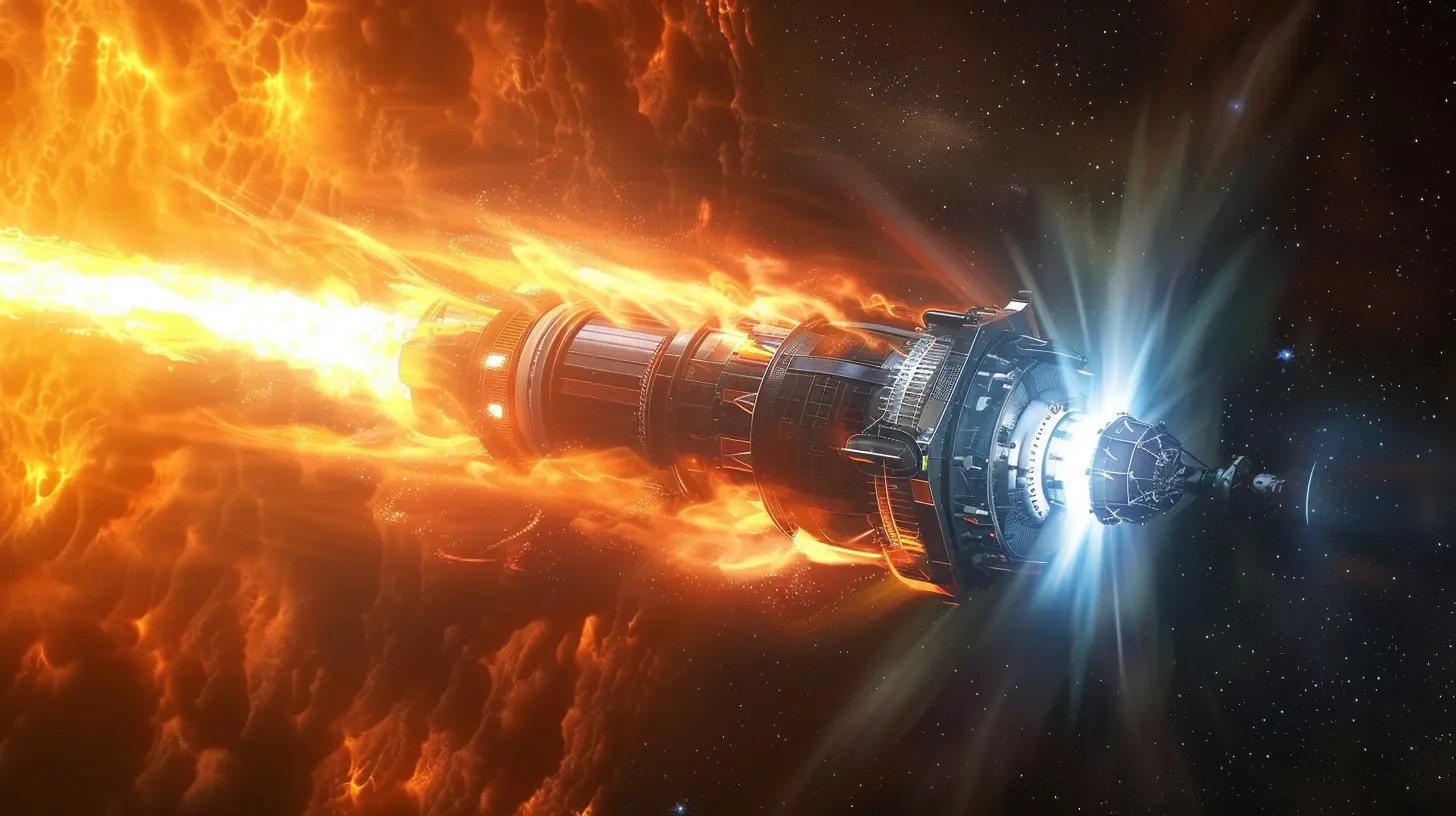
How New Propulsion Technologies Are Redefining Space Travel
When we picture the next generation of rockets, it’s easy to imagine bigger boosters or sleeker spacecraft. The real game‑changer, however, lies in the engines that push those vehicles forward. Over the past few years, researchers have rolled out a suite of propulsion concepts that promise faster trips, lower costs, and missions that were once pure science‑fiction.
Why Propulsion Still Holds the Biggest Bottleneck
Even with advances in materials and avionics, the amount of thrust you can generate per kilogram of fuel remains the limiting factor for deep‑space exploration. A modest improvement in specific impulse—a measure of efficiency—can translate into hundreds of extra kilograms of payload for a Mars mission, or cut travel time to the outer planets by months.
In short, better engines mean more science, more commercial opportunities, and less reliance on massive launch windows.
Breakthroughs in Electric Thrusters
Electric propulsion isn’t new, but recent iterations are far more practical for a range of missions:
- Hall‑Effect Thrusters (HETs) – refined magnetic field designs now deliver 30% more thrust without a proportional increase in power consumption.
- Ion Engines – NASA’s NEXT (NASA Evolutionary Xenon Ion Source) prototype achieved a record‑setting 7 kW specific impulse, opening the door for long‑duration cargo flights to lunar orbit.
- Plasma‑based concepts – the emerging ‘VASIMR’ (Variable Specific Impulse Magnetoplasma Rocket) is being tested on a 20‑kW bench, showing promising throttling capabilities that could adjust thrust on the fly.
These systems excel where precision matters more than raw power, such as station‑keeping for satellites or gradual spirals to distant asteroids.
The Rise of Nuclear Thermal Engines
Heat a propellant with a nuclear reactor, and you get a thrust source that dwarfs chemical rockets in efficiency. The latest designs focus on safety and reusability:
- Demonstration of a compact fission core that can be shut down within seconds, addressing long‑standing crew‑safety concerns.
- High‑temperature ceramic fuel elements – they survive temperatures above 3,000 °C, pushing specific impulse past 900 seconds.
- Integration with modular launch systems that allow the same reactor to power multiple missions, reducing overall program cost.
If the upcoming DARPA “DRACO” project succeeds, we could see cargo missions to Mars shaving off a full month of travel time.
Hybrid and Exotic Concepts Gaining Traction
Not everything fits neatly into “electric” or “nuclear.” A handful of hybrid ideas are now moving from the lab into testing phases:
- Photonic sails – using powerful Earth‑based lasers to accelerate ultra‑lightweight membranes. The Breakthrough Starshot team recently demonstrated a 5‑gram sail reaching 20 km/s in a vacuum chamber.
- Fusion‑based pulse propulsion – a small-scale deuterium‑helium‑3 system produced short, high‑energy bursts capable of delivering thrust comparable to a small chemical rocket, but with far less propellant.
- Electrodynamic tethers – by running current through a long conductive wire, spacecraft can generate drag or thrust against Earth’s magnetic field, useful for orbital adjustments without fuel.
While these ideas are still early‑stage, they illustrate a willingness in the community to chase unconventional routes rather than rely solely on incremental upgrades.
Implications for Commercial and Scientific Missions
What does all this mean for the next wave of space activity?
For commercial operators, lower‑cost electric thrust could make in‑orbit manufacturing more viable, allowing factories to relocate to higher orbits without the expense of frequent propulsion burns. Meanwhile, firms eyeing asteroid mining stand to benefit from higher‑efficiency engines that can ferry heavy payloads over long distances with minimal fuel.
From a scientific perspective, the ability to send probes on faster trajectories opens up time‑critical observations—think of a Europa lander that reaches the icy moon before a solar storm disrupts communications.
Challenges Still on the Horizon
No technology advances in a vacuum. Power supply remains a crucial hurdle for high‑performance electric thrusters; solar arrays become less effective the farther you travel from the Sun, and compact nuclear reactors demand rigorous safety certification.
Moreover, integrating these engines into existing launch architectures requires redesigning structures, thermal protection, and even mission timelines. Regulators and insurers, still accustomed to traditional chemical rockets, are cautiously evaluating the risk profiles of these newer systems.
Looking Ahead
It’s tempting to declare a clear winner among these propulsion candidates, but the reality is more nuanced. Different missions will likely pair the most suitable engine with the specific objectives, budget, and risk tolerance at hand.
What’s certain, though, is that the era of “one‑size‑fits‑all” chemical boosters is winding down. As developers iterate on electric, nuclear, and hybrid concepts, the sky—really, the whole solar system—will feel a little more reachable.