How Perpetuity Works: Definition and Real‑World Examples
When you hear the term “perpetuity,” it often sounds like finance jargon reserved for accountants or investment analysts. In reality, the concept is relatively straightforward: it’s a stream of cash flows that continues forever. Understanding how perpetuities are defined, why they matter, and where you might encounter them can demystify a topic that otherwise feels abstract.
What Exactly Is a Perpetuity?
A perpetuity is a series of equal payments made at regular intervals that, in theory, never ends. Think of it as an infinite annuity. The classic textbook example is a bond that pays a fixed coupon forever, though such securities are rare in practice.
The mathematical definition hinges on two components:
- Payment amount (C): the constant cash flow received each period.
- Discount rate (r): the required rate of return or interest rate used to value the stream.
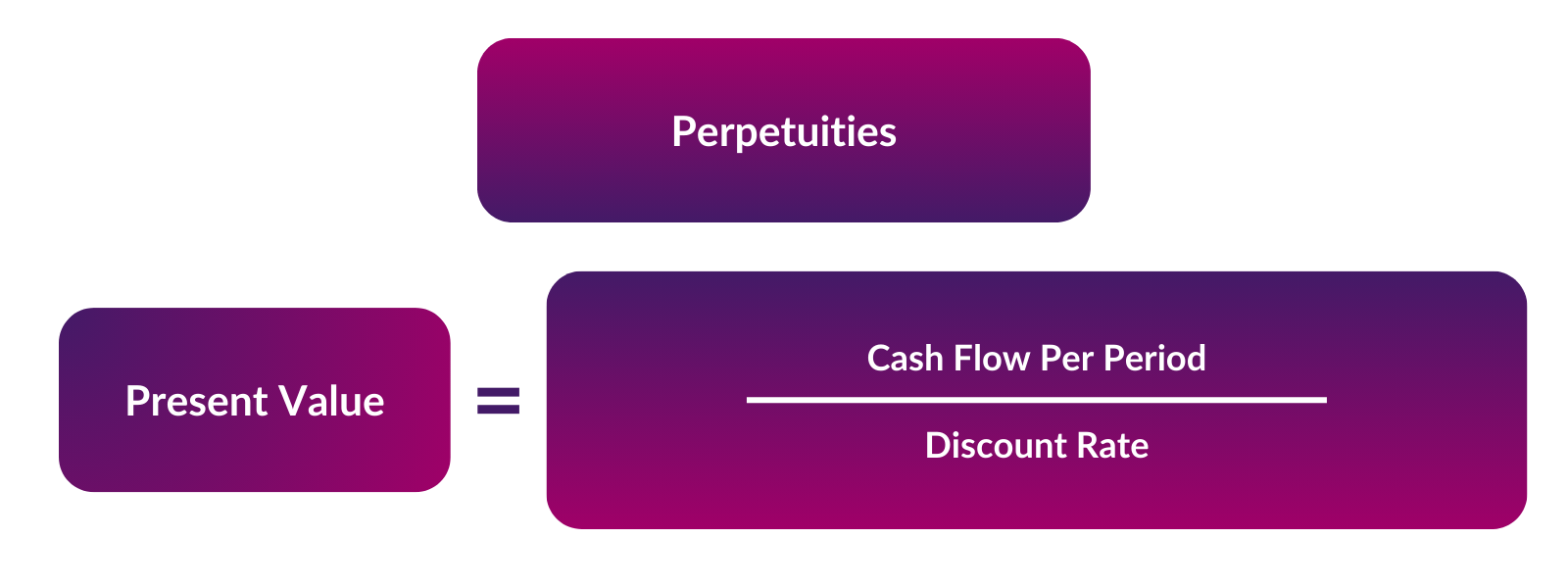
Given those, the present value (PV) of a perpetuity is simply:
PV = C ÷ r
This formula assumes payments occur at the end of each period and that the discount rate remains constant—a useful simplification for most introductory analyses.
Why Do Perpetuities Matter?
Even though true infinite cash flows are rare, the perpetuity model serves several practical purposes:
- Valuing preferred stock: Many preferred shares promise a fixed dividend for as long as the company exists, fitting the perpetuity framework.
- Estimating terminal value: In discounted cash flow (DCF) models, analysts often project cash flows far into the future and then apply a perpetuity growth model to capture value beyond the explicit forecast horizon.
- Understanding real‑world contracts: Certain royalties, leases, or licensing agreements are structured to last indefinitely, making perpetuity calculations relevant.
Simple Example: A $100 Perpetuity
Imagine you are offered a financial instrument that pays $100 at the end of each year, forever. If your desired rate of return is 5% (0.05), the present value becomes:
PV = $100 ÷ 0.05 = $2,000
In other words, paying $2,000 today would be equivalent to receiving $100 each year forever, assuming a steady 5% discount rate.
What If the Discount Rate Changes?
Real markets rarely stay static. If the rate rises to 6%, the same $100 perpetuity drops in value:
PV = $100 ÷ 0.06 ≈ $1,667
This sensitivity illustrates why the chosen discount rate is critical—slight shifts can dramatically alter valuation.
Growing Perpetuity: Adding a Twist
Sometimes cash flows aren’t constant; they grow at a fixed rate (g) each period. The formula adjusts to:
PV = C ÷ (r – g)
For example, a dividend that starts at $50 and grows 2% annually, discounted at 7%, yields:
PV = $50 ÷ (0.07 – 0.02) = $1,000
This version is especially handy when valuing companies with stable, long‑term growth prospects.
Real‑World Applications
- Preferred shares: A company issues preferred stock that pays a $5 quarterly dividend. Investors often treat this as a perpetuity, discounting the dividend at their required return.
- Real estate trusts (REITs): Some REITs aim to distribute a predictable portion of earnings indefinitely, making perpetuity calculations a benchmark for yield expectations.
- Pension obligations: When a pension plan promises a lifetime annuity to retirees, actuaries model the remaining payments using perpetuity concepts, adjusting for mortality and interest assumptions.
Limitations to Keep in Mind
While the perpetuity model is elegant, it’s not a cure‑all. Here are common pitfalls:
- Infinite assumption: No cash flow truly lasts forever; most models truncate at a very distant horizon.
- Constant discount rate: Markets experience volatility, so a single r may oversimplify reality.
- Ignoring taxes and inflation: Real cash flows are eroded over time, which the basic formula doesn’t capture.
To mitigate these issues, analysts often combine a finite forecast period with a terminal value calculated via a growing perpetuity, then adjust for taxes, inflation, and risk premiums.
Quick Checklist for Evaluating a Perpetuity
- Identify the regular payment amount and its frequency.
- Confirm whether payments are truly constant or expected to grow.
- Select an appropriate discount rate—consider risk, market conditions, and inflation.
- Apply the correct formula (simple or growing).
- Run sensitivity analyses to see how changes in r or g affect value.
Wrapping Up the Core Idea
Perpetuities may sound like a theoretical curiosity, but they underpin many everyday financial decisions—from assessing the attractiveness of preferred stock to projecting the long‑run value of a business. By grasping the basic definition, the simple PV = C ÷ r equation, and the nuances of growth and discount rates, you’ll have a solid tool in your analytical toolbox. The next time you encounter a “forever” payment stream, you’ll be ready to break it down, value it, and understand its impact on the bigger financial picture.