How Postal Codes Differ Around the World and Why They Matter
Ever wondered why a letter sent from New York lands in a tiny village in the French Alps without a hitch? The secret lies in the postal code—a tiny string of numbers or letters that carries a lot of geographic intelligence. From six‑digit numbers in China to alphanumeric combos in the United Kingdom, each system reflects local history, logistics, and sometimes a dash of creativity. Below is a quick tour of the most common formats, the quirks that make them unique, and a few handy pointers for anyone who needs to navigate this global maze.
What Exactly Is a Postal Code?
At its core, a postal code (sometimes called a ZIP code, postcode, or PIN) is a shorthand for a delivery area. It tells postal workers which route to take, which sorting facility to use, and often even which side of the street a piece of mail belongs to. While the basic idea is universal, the way codes are structured can tell you a lot about a country’s mailing infrastructure.
Regional Variations in Structure
Most nations opt for one of three broad patterns:
- Numeric only: Simple, sequential numbers—think United States ZIP codes (e.g., 10001) or Japan’s seven‑digit system (100-0001).
- Alphanumeric: A mix of letters and numbers, common in the United Kingdom (e.g., SW1A 1AA) and Canada (K1A 0B1).
- Hybrid with separators: Some countries add dashes or spaces for readability, like Germany’s five‑digit code plus a four‑digit extension (10115‑1234).
Why the differences? In densely populated areas, more characters mean finer granularity. Conversely, nations with sprawling rural zones can get away with fewer digits.
Spotlight on Notable Systems
United States – The ZIP Code
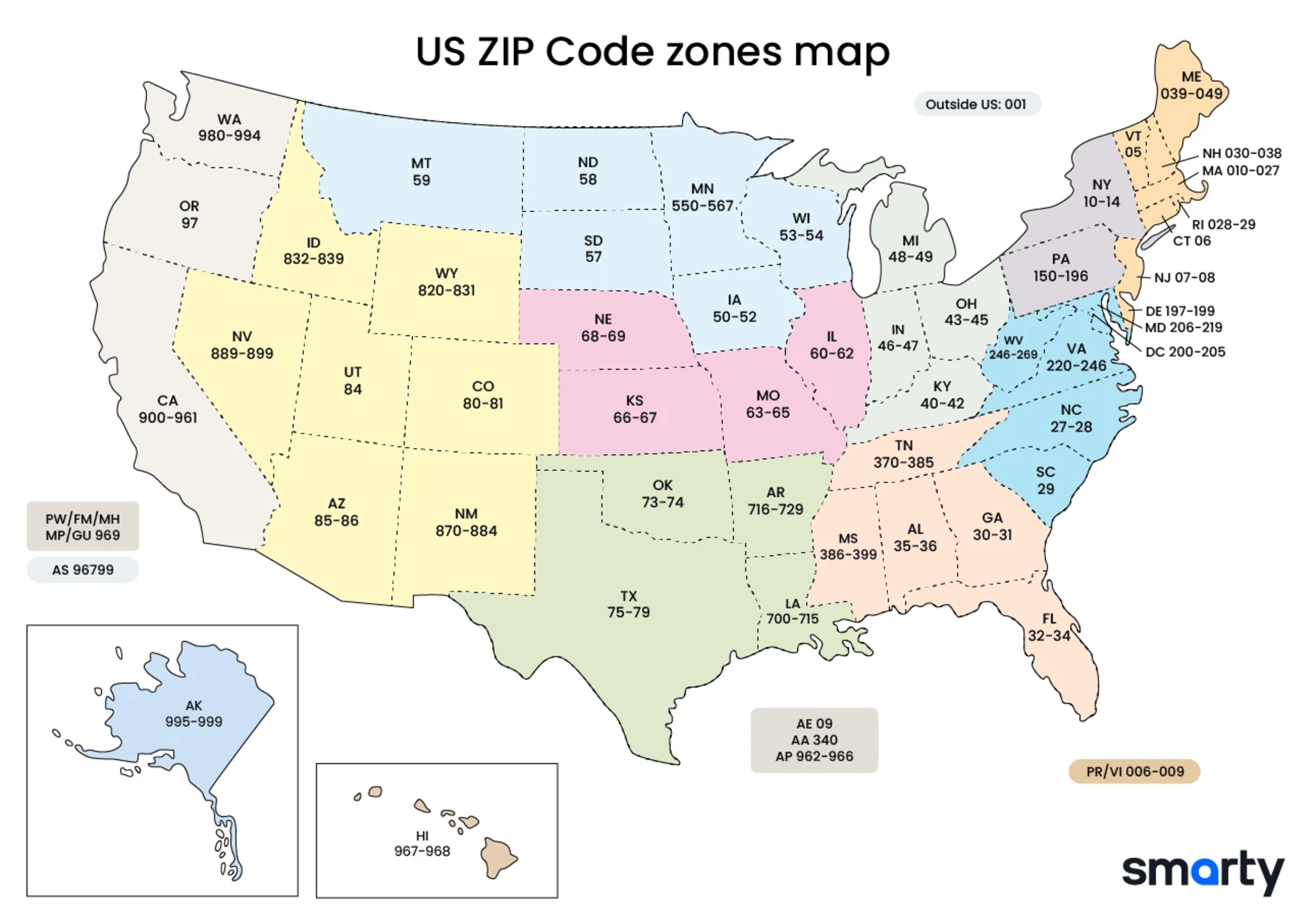
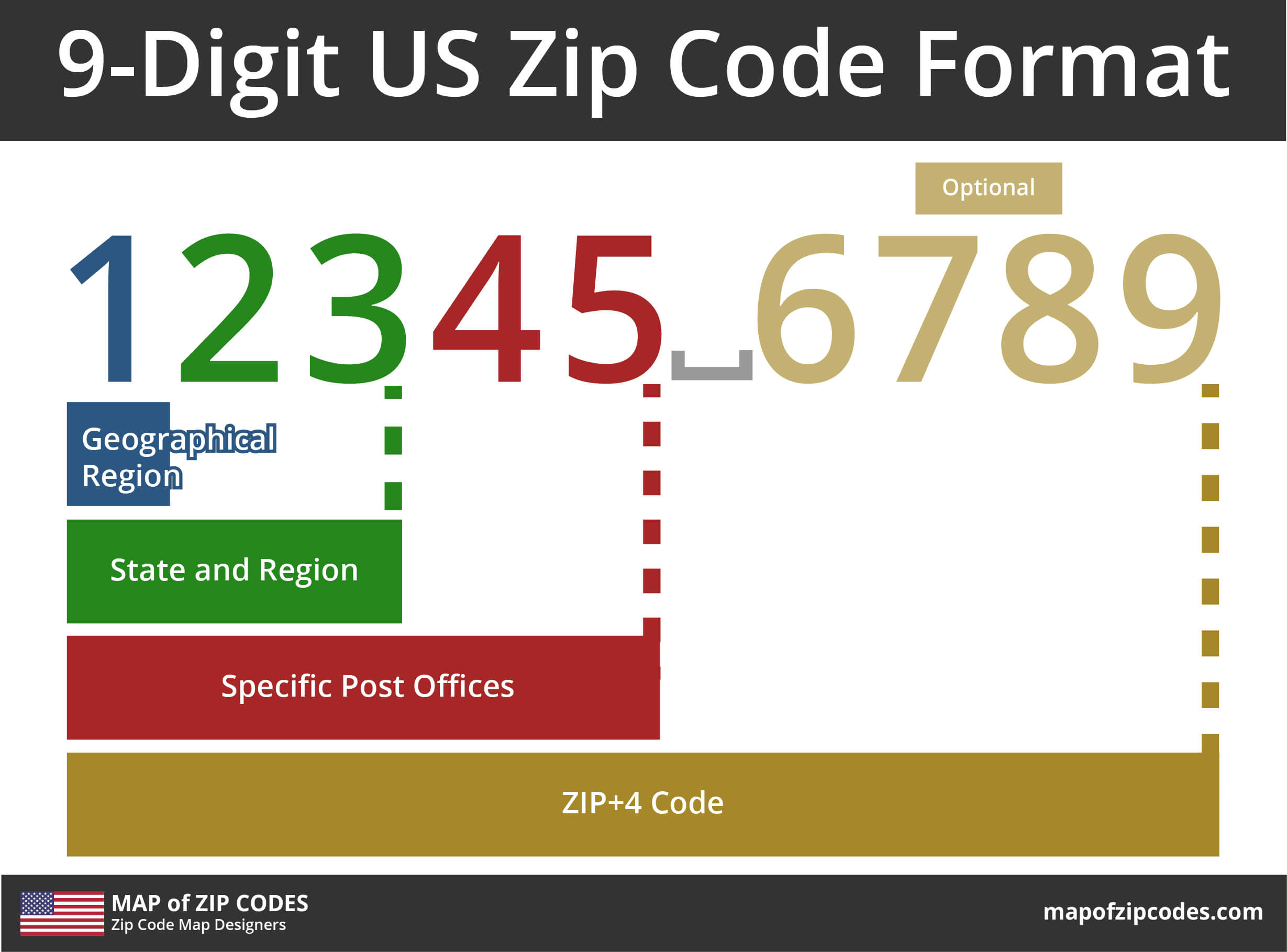
The term “ZIP” (Zone Improvement Plan) was coined in 1963. A standard five‑digit code pinpoints a city or region, while the optional “ZIP+4” adds a hyphen and four extra digits for block‑level precision. Example: 30303‑1234 narrows the destination to a specific building or floor.
United Kingdom – Alphanumeric Elegance
UK postcodes are famously specific. The outward code (SW1A) identifies the town or district, and the inward code (1AA) zeroes in on a street or even a single address. A single postcode can serve just a handful of houses, a university campus, or a massive office block.
Germany – Structured Simplicity
German postcodes consist of five digits, introduced in 1993 after reunification. The first digit denotes a broader region (e.g., “1” for Berlin), while the remaining four narrow the delivery zone. Some large businesses request an extra four‑digit suffix for internal routing.
Japan – Numeric Precision
Japan’s seven‑digit code splits into a three‑digit area and a four‑digit sub‑area, typically written with a hyphen (100‑0001). The system aligns closely with municipal boundaries, making it easy to locate a recipient even without a city name.
Canada – Balanced Alphanumerics
Canadian postcodes follow the pattern A1A 1A1, alternating letters and numbers. The first three characters (the “Forward Sortation Area”) indicate a regional hub, while the last three (the “Local Delivery Unit”) point to a specific block or group of addresses.
How Postal Codes Influence Everyday Life
Beyond mail, these codes have slipped into countless digital services:
- E‑commerce: Shipping calculators use them to estimate delivery times and costs.
- Location‑based apps: Weather, restaurant, and ride‑share services rely on codes to tailor results.
- Data analysis: Marketers segment audiences by postcode to target campaigns more precisely.
Even insurance premiums and real‑estate listings often factor in postcode data, reflecting socioeconomic trends tied to a particular area.
Tips for Finding or Verifying a Postal Code
When you need the right code fast, try these approaches:
- Visit the official postal service website of the destination country; they usually host searchable databases.
- Use reputable mapping services (Google Maps, Apple Maps) – entering an address often reveals the postcode automatically.
- Check the recipient’s recent correspondence; most invoices and bills display the full mailing address.
- For bulk lists, consider a third‑party validation tool that cross‑checks millions of codes against up‑to‑date registries.
Remember that a single postcode can cover multiple streets, especially in rural zones, so double‑checking the street name and house number never hurts.
Common Pitfalls to Avoid
Even seasoned travelers slip up. Here are a few recurring mistakes:
- Leaving out required spaces or hyphens, which some systems treat as invalid (e.g., writing SW1A1AA instead of SW1A 1AA).
- Assuming the first digits always indicate a city; in countries like Brazil, the leading numbers can point to a broader state region.
- Mixing up “postal code” with “area code.” The latter refers to telephone numbers, not mail.
Future Trends: Digital Mailboxes and Beyond
As e‑commerce booms, many postal services are experimenting with digital identifiers that complement traditional codes. QR‑based “smart postcodes” could someday route parcels directly to lockers or curbside drop‑off points, reducing reliance on human sorting. While the classic numeric or alphanumeric strings aren’t disappearing overnight, it’s wise to stay aware of emerging tools that might streamline the process.