How the Mi‑17 Helicopter Shaped Modern Aviation: Specs, Roles, and History
Few rotorcraft have crossed borders and conflict zones as effortlessly as the Mil Mi‑17. Born in the Soviet era, this versatile workhorse has been adapted for everything from troop transport to firefighting, and its design tweaks still pop up in the newest variants. If you’ve ever wondered what makes the Mi‑17 tick, why it remains a favorite for so many operators, and how it got there, you’re in the right place.
What’s Under the Rotor? Core Specifications
The Mi‑17’s DNA is a blend of proven Soviet engineering and incremental upgrades. Below are the numbers that matter most when pilots or planners compare it to other medium‑lift helicopters.
- Engine: Two Klimov VK‑540V turboshafts, each delivering roughly 2,200 hp.
- Maximum Take‑off Weight (MTOW): 13,000 kg (about 28,660 lb), giving it a solid payload margin.
- Passenger Capacity: Up to 24 troops or 4,000 kg of cargo in the rear compartment.
- Range: Approximately 1,150 km (720 mi) with standard fuel tanks; stretchers and auxiliary tanks can push it further.
- Speed: Cruise around 260 km/h; maximum dash near 285 km/h.
- Service Ceiling: 6,000 m (19,685 ft), sufficient for high‑altitude operations in mountainous regions.
- Armament Options: Can mount machine guns, rocket pods, or anti‑armor missiles on hardpoints, depending on mission.
Those figures aren’t just bragging rights. They translate into real‑world flexibility—whether the job is shuttling medics across a war‑torn valley or lifting heavy construction gear to a remote site.
From the Cold War to Today: A Brief History
The story begins in the early 1970s, when the Soviet design bureau Mil set out to improve the aging Mi‑8. The result was the Mi‑17, designated “Hip” by NATO, which first flew in 1975. Its introduction coincided with a period of intense geopolitical tension, and the helicopter quickly found a place in the arsenals of Warsaw Pact nations and their allies.
During the 1980s, the Mi‑17 proved its mettle in Afghanistan, where high‑altitude performance and the ability to carry both troops and supplies in a single sortie saved countless lives. The conflict exposed some shortcomings—primarily in avionics—and spurred the development of upgraded versions like the Mi‑17V-5, which featured a modern glass cockpit and more powerful engines.
After the Soviet Union dissolved, the helicopter’s reputation outgrew its origins. Former Soviet republics, Asian nations, African states, and even some South American air forces placed orders. Today, more than 12,000 Mi‑17s—various sub‑models—are believed to be in service worldwide, making it one of the most produced rotorcraft of its class.
Why Operators Keep Coming Back: Practical Uses
At its heart, the Mi‑17 is a “do‑it‑all” platform. Below are the most common roles it fills, often with only minor modifications.
Military Transport and Assault
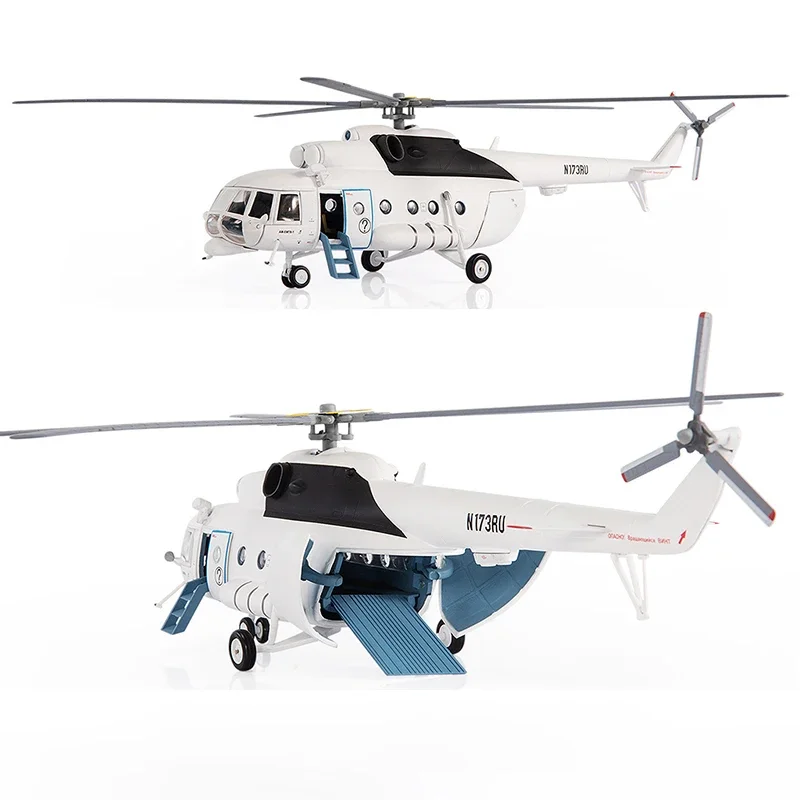
Troop insertion, equipment ferrying, and even limited air‑assault missions are textbook tasks. The rear ramp opens wide enough for a 2‑ton truck, and the helicopter can hover low enough for fast roping operations.
Search and Rescue (SAR)
Equipped with rescue hoists, night‑vision vision, and optional medical kits, the Mi‑17 becomes a lifeline in disaster zones. Its range lets crews cover vast coastlines or mountainous terrain without frequent refueling.
Firefighting and Aerial Work
Specialized tanks can be slung under the fuselage, allowing the Mi‑17 to dump thousands of litres of water onto wildfires. The same airframe also supports tasks like logging, pipeline inspection, and even aerial photography, thanks to its stable flight envelope.
Humanitarian Aid
When earthquakes or floods strike, NGOs often rely on the Mi‑17 to deliver food, water, and shelter kits to otherwise inaccessible villages. Its ability to operate from improvised landing zones makes it a go‑to choice for UN and Red Cross missions.
Modern Upgrades: Keeping the Design Fresh
It would be easy to assume a design that old would be stuck in the past, but the Mi‑17’s evolution tells a different story. Recent upgrades focus on three pillars:
- Avionics: Digital flight displays, GPS‑based navigation, and improved autopilot systems reduce pilot workload.
- Powerplant: Newer VK‑540 engines with better fuel efficiency extend range and lower operating costs.
- Survivability: Enhanced armor plating, self‑sealing fuel tanks, and infrared‑suppression kits improve odds in hostile environments.
These updates are often retrofitted to existing fleets, meaning a helicopter built in the 1970s can still meet 21st‑century standards with a modest investment.
Cost Considerations: Buying and Operating the Mi‑17
Budget is always a factor, especially for emerging economies. The Mi‑17’s acquisition price typically ranges from $12 million to $16 million, depending on configuration. While that sounds high, it’s competitive when stacked against Western counterparts like the UH‑60 Black Hawk, which can edge past $20 million.
Operating costs—fuel, maintenance, crew training—hover around $1,200 per flight hour. The helicopter’s simple mechanical layout and widespread parts network keep downtime low, a crucial advantage for air forces that need aircraft ready day after day.
Common Misconceptions
Some people still see the Mi‑17 as a relic, or assume it can’t handle modern combat. The truth is more nuanced. Yes, its airframe is older, but the modular upgrade path means its sensors and weapons can be swapped to meet contemporary threats. Likewise, while it isn’t as stealthy as newer rotorcraft, its low cost and high payload often outweigh those concerns for many operators.
Final Thoughts
The Mi‑17’s story is less about a single moment in history and more about an enduring ability to adapt. From its humble Soviet roots to its presence on today’s humanitarian missions, the helicopter continues to prove that a solid design—paired with smart upgrades—can stay relevant for decades. Whether you’re a pilot eyeing a new platform, a procurement officer weighing options, or simply an aviation enthusiast, the Mi‑17 offers a compelling mix of power, practicality, and proven performance.