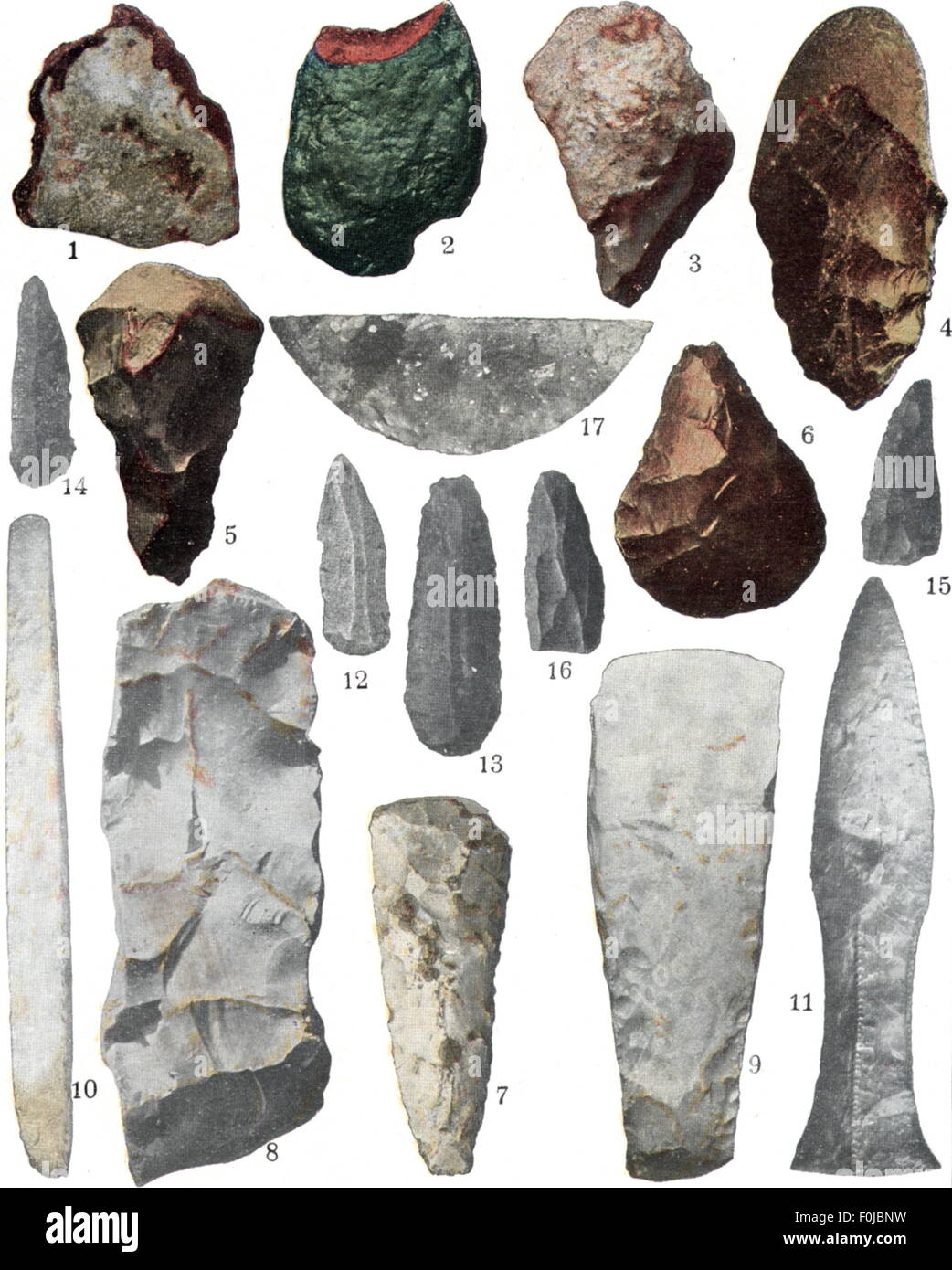
How the Stone Age Was Divided: A Simple Timeline of Key Periods
When you hear “Stone Age,” the mind often jumps straight to cavemen wielding crude tools. Yet the reality is a nuanced tapestry of innovation, climate shifts, and cultural change that unfolded over hundreds of thousands of years. Below is a clear‑cut timeline that breaks the era into its most recognizable phases, highlighting what makes each period distinct.
Why a Timeline Matters
Archaeologists didn’t stumble upon a single, monolithic “Stone Age.” Instead, they pieced together layers of evidence—stone tools, burial sites, ancient hearths—to map out a sequence of developments. Understanding that sequence helps us see how early humans adapted, why certain technologies appeared, and what led to the eventual rise of agriculture.
The Three Core Phases
Scholars traditionally split the Stone Age into three broad epochs, each reflecting a leap in toolmaking and lifestyle.
Paleolithic (Old Stone Age)
Spanning roughly 2.5 million to 12,000 years ago, the Paleolithic is the longest chapter of human prehistory. Early hominins crafted simple choppers and hand axes, while later groups perfected flake tools and eventually invented the first spear points.
- Early Lower Paleolithic: Large, bifacial hand axes dominate the record.
- Middle Paleolithic: The emergence of prepared‑core techniques, such as Levallois, points to more sophisticated planning.
- Upper Paleolithic: Blade technology, bone tools, and the first unmistakable artworks appear.
During this time, humans were nomadic hunters and gatherers, moving with megafauna and exploiting seasonal plant resources.
Mesolithic (Middle Stone Age)
Roughly 12,000–8,000 years ago, the climate warmed after the last glaciation, reshaping ecosystems across Europe, Asia, and Africa. The Mesolithic is a transitional bridge where stone technology became finer, and people began to specialize.
- Microliths—tiny, composite tools—replace bulky hand axes.
- Evidence of semi‑permanent camps emerges, hinting at longer stays in resource‑rich areas.
- Seasonal fish traps and early shell middens illustrate a broader diet.
In many regions, communities started to manipulate their environment, setting the stage for the agricultural revolution.
Neolithic (New Stone Age)
From about 8,000 to 3,000 years ago, the Neolithic marks humanity’s first major shift from foraging to farming. The hallmark is the domestication of plants and animals, which sparked permanent settlements and the birth of pottery.
- Ground‑stone tools—like mortars and pestles—appear for processing grains.
- Clay vessels replace earlier perishable containers, preserving food and water.
- Megastructures such as Göbekli Tepe and stone circles hint at complex social rituals.
By the end of this period, societies were laying the foundations of what we recognize as civilization.
Regional Variations Worth Noting
While the three‑phase model works globally, local timelines can differ dramatically. For instance, in the Indian subcontinent the Neolithic starts earlier, around 9,000 years ago, whereas in parts of sub‑Saharan Africa the transition occurs much later.
Key regional markers include:
- East Asia: The Jiahu site (≈9,000 BP) shows early rice cultivation alongside sophisticated bone flutes.
- Australia: The “Australian Aboriginal Stone Age” never fully embraces a classic Neolithic; tools remain stone‑based but complex hunter‑gatherer societies thrive.
- North America: The Paleo‑Indians’ Clovis culture (≈13,000 BP) sits firmly in the Late Paleolithic, while the later Archaic period mirrors a Mesolithic adaptation.
How Archaeologists Date These Periods
Radiocarbon dating, thermoluminescence, and stratigraphic analysis form the backbone of chronological work. When a stone blade is found alongside charcoal, carbon‑14 can pinpoint when the fire burned, indirectly dating the tool.
However, dates are always presented with a margin of error—often ± 50 to 200 years—so scholars speak in terms of “approximately” rather than absolutes.
Key Takeaways
- The Stone Age isn’t a single era; it unfolds across three main phases—Paleolithic, Mesolithic, Neolithic—each marked by distinct toolkits and lifestyles.
- Environmental shifts, especially post‑glacial warming, drove the move from hunter‑gatherer groups to settled farming communities.
- Regional timelines vary, reflecting local resources, climates, and cultural innovations.
- Dating methods provide approximate ages, reminding us that prehistoric chronology is always a best‑fit model.
Grasping this timeline reshapes the cliché image of “cavemen” into a vivid narrative of human ingenuity, adaptation, and the relentless drive to improve one’s world—stone by stone.

:max_bytes(150000):strip_icc()/france-stone-tools-including-scraper-burin-gimlet-and-bifacial-points-96506325-57a720fa3df78cf459e26849.jpg)