How to Ace AP Government Scotus Cases with Quizlet
When it comes to the AP Government exam, the Supreme Court cases section feels like a mountain most students can’t quite conquer. The good news? Quizlet offers a flexible, interactive way to turn those dense decisions into bite‑size study moments. Below is a practical roadmap that blends proven study habits with the specific tools you’ll find on Quizlet, helping you move from “I don’t get it” to “I know it inside out.”
Why Focus on Supreme Court Cases?
The Supreme Court is the ultimate arbiter of constitutional interpretation, so understanding its landmark rulings is non‑negotiable for a solid AP Gov score. Each case shows how the Constitution lives in the real world, and exam writers love to ask you to apply those principles to new scenarios. Mastery here boosts both multiple‑choice confidence and free‑response depth.
Step 1: Choose the Right Quizlet Sets
Not every set on Quizlet is created equal. Here’s how to spot the gems:
- Recent Updates: Look for sets updated for the 2024‑2025 exam cycle; they’ll include newer cases like Dobbs v. Jackson Women’s Health Organization.
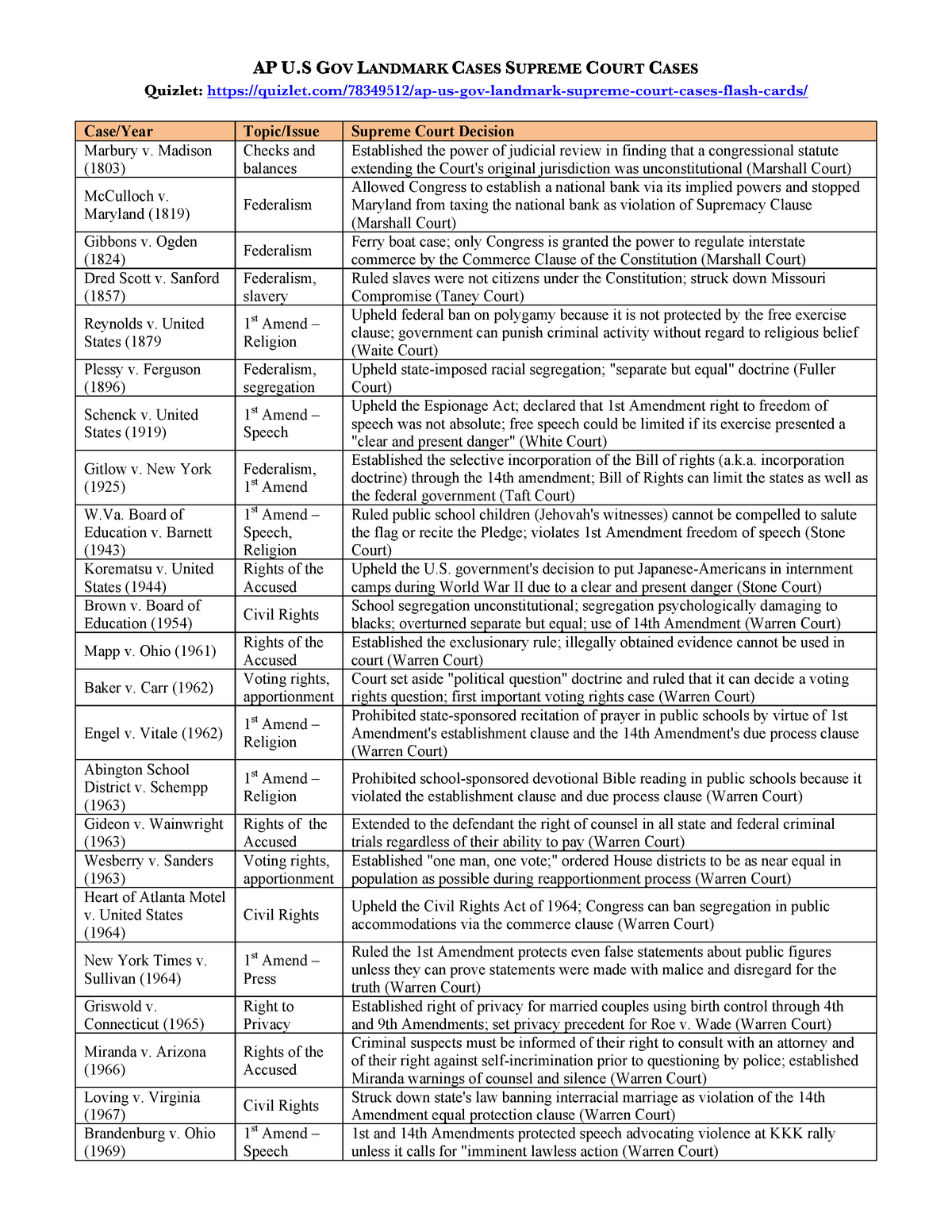
- Comprehensive Coverage: A solid set should list the case name, citation, constitutional question, majority opinion, and a concise holding.
- User Ratings: Sets with 4+ stars from dozens of users usually reflect clear wording and accurate facts.
Once you’ve found a reliable set, save it to a dedicated folder—think of it as your “SCOTUS vault.”
Step 2: Activate Multiple Study Modes
Quizlet isn’t just flashcards. Rotate through these modes to keep your brain engaged:
- Learn Mode – The algorithm spaces repetition based on how well you recall each card, perfect for cementing definitions.
- Match – Drag the case name to its corresponding constitutional principle. This quick game strengthens associative memory.
- Write – Type out the holding or rationale. Typing forces you to retrieve information in your own words, mirroring the free‑response task.
Switching modes every few days prevents the dreaded “just recognizing” trap and forces deeper encoding.
Step 3: Build Your Own Custom Sets
Even the best pre‑made sets miss the personal touch. When you create cards, you’re already processing the material. Follow this template for each case:
- Front: Case name and year (e.g., Roe v. Wade (1973))
- Back: One‑sentence summary of the constitutional issue, the Court’s holding, and the justice who wrote the majority.
Adding a tiny mnemonic or a visual cue on the back can make the difference between “I’ve seen this” and “I truly understand it.”
Step 4: Connect Cases to Core Themes
AP Gov doesn’t ask you to regurgitate isolated facts; it wants you to see patterns. Use Quizlet’s Folders feature to group cases under broader themes such as:
- Freedom of Speech – Texas v. Johnson, Citizens United v. FEC
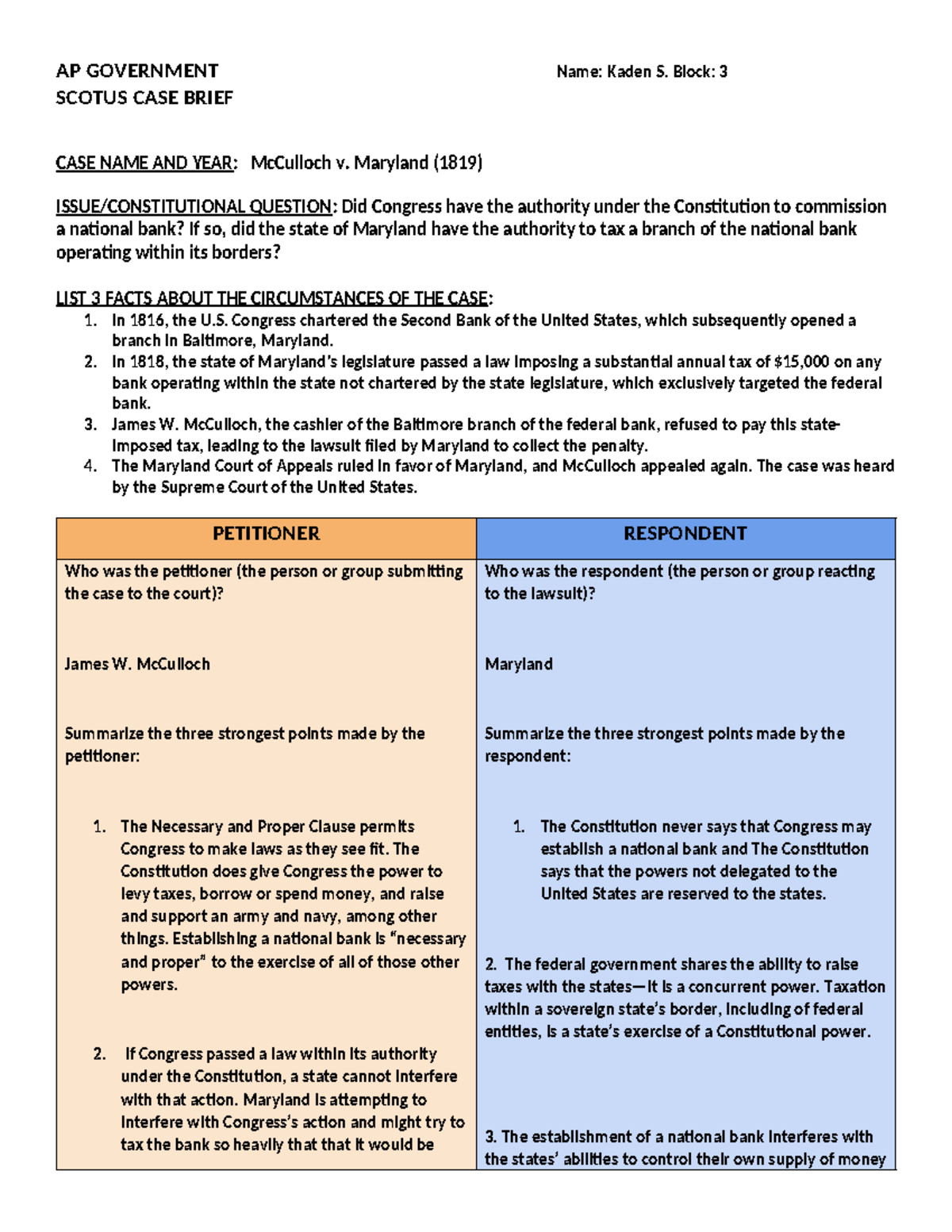
- Federalism – McCulloch v. Maryland, United States v. Lopez
- Equal Protection – Brown v. Board of Education, Obergefell v. Hodges
When you study a folder, you’re rehearsing the “big picture,” which aligns perfectly with the exam’s analytical prompts.
Step 5: Test Yourself with Real‑World Prompts
After you feel comfortable with the flashcards, pull up Quizlet’s Test mode. Instead of just multiple‑choice, select “Write” and “Define” options. Then, simulate an AP free‑response question:
“Explain how the Court’s decision in United States v. Nixon illustrates the limits of executive privilege.”
Write a concise paragraph without looking at your notes. Compare your answer to the official case summary; note any gaps, then revisit the relevant cards.
Step 6: Schedule Smart Review Sessions
Spaced repetition is the secret sauce behind long‑term retention. Here’s a simple timeline:
- Day 1: Initial walkthrough of all cases.
- Day 3: Quick review of the toughest three cases.
- Day 7: Full set review focusing on errors.
- Day 14: Mixed‑theme quiz (e.g., pair a civil liberties case with a federalism case).
- Day 21: Full practice test under timed conditions.
Adjust the intervals if you notice certain cases slipping; the goal is to keep the material fresh without over‑studying.
Bonus: Use Community Features Wisely
Quizlet’s community isn’t just a marketplace for sets; it’s a place to exchange insights. Join a study group, share your custom set, and ask peers for alternate mnemonics. A fresh perspective can turn a stubborn fact into an “aha!” moment.
Putting It All Together
To wrap up, think of your Quizlet workflow as a three‑step loop: absorb → apply → assess. Absorb the cases via flashcards, apply the knowledge through games and custom tests, then assess by writing mini‑essays or timed quizzes. Repeat the loop, and you’ll find the once‑daunting Supreme Court section becoming a familiar, manageable component of your AP Government arsenal.