How to Launch a Small Dairy Business: A Step‑by‑Step Guide
Starting a dairy operation can feel like stepping onto a slippery floor—excitement mixed with uncertainty. Yet with a clear roadmap, the venture becomes manageable, even rewarding. Below we walk through the essentials: from the first spark of an idea to the day‑to‑day routine of milking, processing, and selling.
1. Clarify Your Vision and Niche
Before buying a cow, ask yourself what you truly want to offer. Are you aiming for fresh milk, artisanal cheese, or perhaps a blend of both? Your niche will dictate everything that follows, from herd size to equipment choices.
- Market focus: Local cafés, farmers’ markets, or direct‑to‑consumer subscriptions?
- Product line: Whole milk, low‑fat, flavored yogurts, or specialty cheeses?
- Brand story: Sustainable farming, heritage breeds, or organic certification?
2. Do the Numbers – A Realistic Business Plan
Passion alone won’t keep the lights on. Sketch a concise plan that covers:
- Initial capital (land, livestock, milking equipment)
- Operating costs (feed, veterinary care, labor)
- Projected revenue per product
- Break‑even timeline
Tools like simple spreadsheet templates can spare you a costly accountant in the early stages.
3. Choose the Right Location
Land acquisition often surprises newcomers. A modest 2‑5 acre parcel may suffice for a handful of cows, but consider:
- Proximity to reliable water sources
- Access to road networks for distribution
- Zoning regulations—some municipalities restrict dairy operations.
Sometimes a lease on an existing farm offers a faster start, especially if infrastructure is already in place.
4. Select a Viable Herd
Breed matters. Holsteins excel in volume, while Jerseys deliver richer butterfat—ideal for cheese‑makers. If you’re targeting niche markets, heritage breeds like Guernsey or Brown Swiss can add a story angle.
When buying, prioritize health records: vaccination history, mastitis screenings, and breeding documentation. A healthy cow reduces early‑stage setbacks.
5. Set Up Milking and Storage Facilities
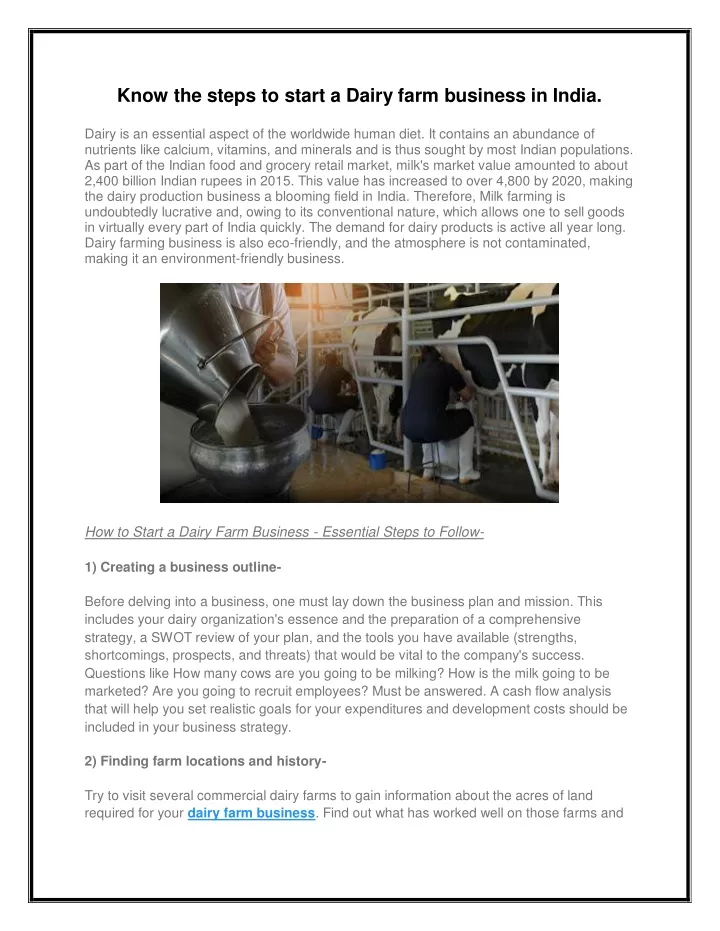
A basic milking parlor can start with a simple back‑yard setup: a clean, insulated stall, a stainless‑steel milk bucket, and a portable cooling tank. As you scale, consider:
- Automated milking systems for labor savings
- Refrigerated bulk tanks (maintaining 4 °C to preserve quality)
- Sanitation stations—chlorine‑based cleaners are a staple.
Remember, hygiene isn’t optional; it’s the backbone of product safety and shelf life.
6. Navigate Legal and Food Safety Requirements
Regulations vary by state, but most jurisdictions mandate:
- Licensing of the dairy facility
- Regular milk testing for bacteria counts
- Record‑keeping of feed, treatments, and milk yields
Contact your local Department of Agriculture early; a missed paperwork step can delay launch by weeks.
7. Build Your Supply Chain
From feed to packaging, each link needs reliability:
- Feed: Blend of pasture grazing and supplemental hay. Local grain producers often offer bulk discounts.
- Packaging: Reusable glass bottles appeal to eco‑conscious buyers, while plastic cartons may lower costs.
- Distribution: Direct deliveries within a 30‑mile radius keep transport costs low and product fresh.
8. Market Your Dairy Products
Even the finest milk won’t sell itself. Simple strategies work wonders for small operations:
- Host farm‑open days—people love seeing where their food comes from.
- Leverage social media with behind‑the‑scenes videos of milking and cheese aging.
- Partner with local chefs who can showcase your cheese on their menus.
Word‑of‑mouth remains the strongest driver in tight‑knit communities.
9. Manage Daily Operations
Consistency is king. A typical day might look like this:
- Early morning milking (2–3 times per day depending on herd size).
- Feed check and health inspection.
- Cleaning of milking equipment and storage tanks.
- Record entry: milk volume, cow health notes, feed usage.
- Afternoon: processing (pasteurization, cheese curd formation) if applicable.
Keeping a simple logbook—paper or digital—helps spot trends before they become problems.
10. Plan for Growth and Diversification
Once you hit a stable profit margin, think about adding value:
- Introduce flavored milks or seasonal cheese varieties.
- Offer farm‑stay experiences for extra revenue.
- Explore wholesale contracts with regional grocery chains.
Each new line should be tested on a small scale first; scaling too quickly can strain resources.
Key Takeaways
- Define a clear niche early; it guides every decision.
- Solid financial planning prevents cash‑flow surprises.
- Invest in hygiene and compliance—these protect both customers and your reputation.
- Local relationships—whether with feed suppliers or culinary partners—are invaluable.
Launching a dairy business isn’t a sprint; it’s a steady trek where each step builds on the last. With thoughtful preparation and a willingness to adapt, your modest herd can become the heart of a thriving, community‑focused brand.