How to Master Minecraft Redstone: Crafting Items and Building Circuits
Why Redstone Matters in Survival and Creative Play
Redstone is the electrical backbone of Minecraft, turning simple blocks into dynamic machines. Whether you want a hidden door, a farm that harvests itself, or a massive calculator, redstone gives you the tools to automate and impress. Learning the basics of redstone crafting items and circuits opens up a whole new layer of gameplay that feels both rewarding and endlessly creative.
Essential Redstone Materials You’ll Need
- Redstone Dust – the conductive “wire” that carries power.
- Redstone Torches – a source of constant power and a basic inverter.
- Repeaters – extend signal range and introduce delay.
- Comparators – read container contents and compare signal strength.
- Sticky Pistons – push and pull blocks for doors, traps, and elevators.
- Observers – detect block updates and instantly output a pulse.
Crafting the Core Items
Redstone Dust
Mine redstone ore with an iron pickaxe or better, then smelt the ore in a furnace to obtain dust. Each ore block yields about four dust pieces, so a single mining trip can stock you for several projects. Place dust on the ground or on the sides of blocks; it will instantly connect adjacent dust lines, forming a continuous circuit.
Repeaters and Comparators
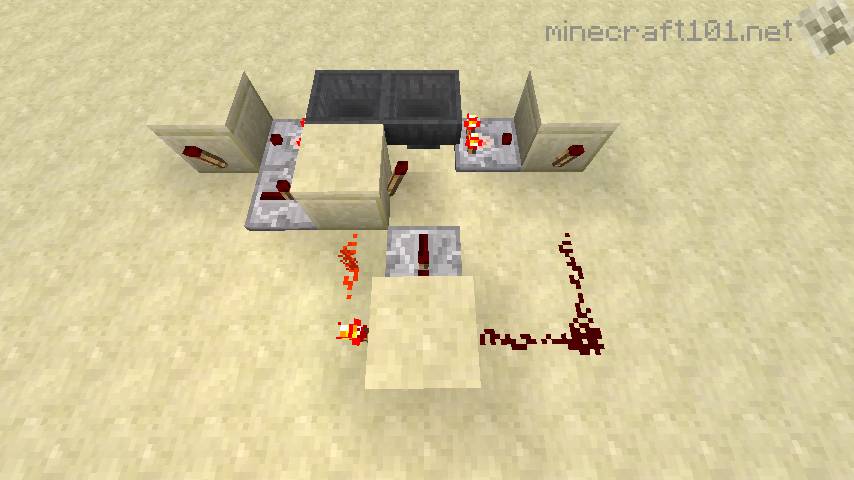
Both devices are crafted in a crafting table using redstone dust, stone, and a redstone torch. A repeater requires three dust, two stone, and one torch, while a comparator adds an extra dust to the recipe. Remember that repeaters face a specific direction – the little arrow on the front shows where the signal will travel.
Other Handy Components
Sticky pistons need a slime ball in addition to a regular piston, which itself is made from wood, cobblestone, iron, and redstone. Observers are a bit trickier: they require three redstone dust, six cobblestones, and a nether quartz. Once crafted, each component has a unique role that, when combined, can solve almost any automation challenge.
Building Simple Circuits: A Step‑by‑Step Approach
Start with a basic door mechanism. Place a line of redstone dust leading to a lever, then attach a sticky piston facing the door block. When the lever flips, power travels through the dust, activates the piston, and the door opens. Adding a repeater between the lever and piston lets you extend the distance without signal loss, while a comparator can detect whether the door is open or closed, feeding that information back into a light indicator.
Scaling Up: From Doors to Automated Farms
Once you’ve mastered the door, try a water‑based crop farm. Use observers to spot when a block of farmland changes from dry to wet, then fire a pulse that opens a gate of pistons, letting water flow over the crops. After a short delay set by repeaters, the water recedes, and a hopper collection system gathers the harvested produce. The same principle can be adapted for sugar‑cane farms, mob grinders, or even an item‑sorting system that routes loot into specific chests.
Troubleshooting Common Redstone Issues
- Signal decay – Redstone dust only carries power eight blocks; use repeaters to boost it.
- Unexpected activation – Ensure torches and pistons aren’t inadvertently receiving power from adjacent circuits.
- Looping signals – A comparator feeding back into its own input can create infinite loops; add a small delay or separate the loop with a block.
- Performance lag – Massive contraptions with thousands of active components can cause FPS drops; simplify designs or use “chunk loading” tricks to keep active areas limited.
FAQ
- Q: Do I need a redstone torch for every circuit?
A: Not always. Torches are great for constant power or inversion, but repeaters and comparators can also provide power in more controlled ways. - Q: How far can a redstone signal travel without repeaters?
A: A line of dust will lose power after eight blocks, so place a repeater before that point to keep the signal strong. - Q: Can I use redstone in the Nether?
A: Yes, redstone works everywhere, but the Nether’s harsh lighting can make dust harder to see, so use glowstone or sea lanterns for visual aid. - Q: What’s the easiest way to test a new circuit?
A: Build a small “test bench” with a lever, a lamp, and a few dust pieces. Activate the lever and watch the lamp; if it lights, the signal is working.
![ACCESS [PDF EBOOK EPUB KINDLE] The Ultimate Guide to Mastering Circuit ...](https://f4.bcbits.com/img/a3507535071_5.jpg)


