How to Quickly Master Precision, Recall, and F1 Score
Ever stared at a confusion matrix and felt a wave of “what now?” You’re not alone. Those three letters – precision, recall, and the ever‑mysterious F1 – are the backbone of any model’s performance story, yet they often hide behind jargon. Let’s pull them into the light, one practical example at a time.
Precision: When False Positives Matter
Think of a spam filter. It’s great if it catches most junk, but what if it starts flagging your mom’s heartfelt emails as spam? That’s a false positive, and precision is the metric that shouts, “How many of the things I called positive were actually right?”
Formula in plain sight:
- Precision = True Positives ÷ (True Positives + False Positives)
In other words, out of everything the model labeled as positive, what fraction truly belongs there? High precision means you’re rarely crying wolf.
Recall: The Counterpart That Values Completeness
If you’re hunting for rare disease cases in medical records, missing a single positive can be disastrous. That’s where recall steps in, asking, “Of all the actual positives, how many did I catch?”
Recall’s math:
- Recall = True Positives ÷ (True Positives + False Negatives)
High recall means you’re scooping up almost every true case, even if a few extra false alarms sneak in.
F1 Score: The Harmonic Balance
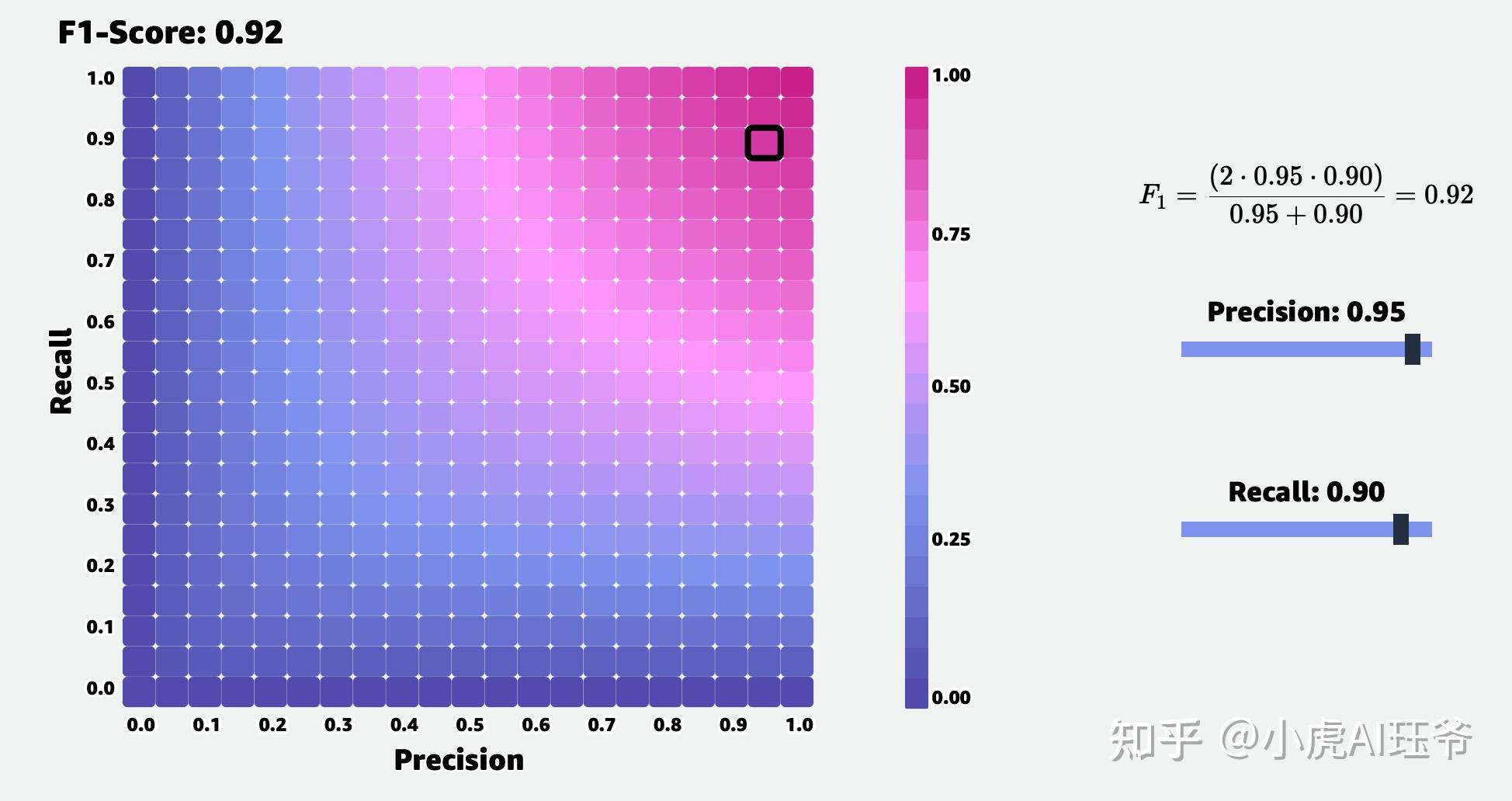
Often you can’t have it all. Boosting precision might shrink recall, and vice‑versa. The F1 score offers a middle ground, rewarding models that keep both numbers reasonably high.
How it’s calculated:
- F1 = 2 × (Precision × Recall) ÷ (Precision + Recall)
Notice the harmonic mean—unlike a simple average, it penalizes extreme swings. A model with 0.9 precision but 0.1 recall ends up with an F1 around 0.18, reminding you that neglecting one side costs you.
When to Lean on Each Metric
- Precision‑first scenarios: Fraud detection, where flagging a legitimate transaction hurts user trust.
- Recall‑first scenarios: Disease screening, where missing a case could be fatal.
- Balanced goals: General‑purpose classifiers, recommendation engines, or any project where both false positives and false negatives carry weight.
Practical Tips for Real‑World Projects
Metrics sound clean on paper, but data rarely behaves. Keep these nuggets in mind:
- Run a threshold sweep. Tweaking the decision cut‑off can slide precision and recall along a curve; the ROC or PR curve visualizes that trade‑off.
- Validate on a representative test set. Skewed class distributions can inflate precision or recall inadvertently.
- Combine metrics. Reporting both precision‑recall pair and F1 gives stakeholders a fuller picture.
Sometimes a single number tells a story, but often you’ll need to narrate the nuances.
Common Pitfalls to Watch Out For
Even seasoned data scientists stumble into traps:
- Ignoring class imbalance. A model that always predicts the majority class can boast 99% accuracy yet have zero recall for the minority.
- Over‑optimizing for F1. In high‑stakes domains, a modest dip in recall might be unacceptable, even if F1 looks healthy.
- Mixing micro and macro averages. For multi‑class problems, micro averages weight each instance equally, while macro treats each class the same. Choose wisely.
One‑line reminder: Metrics are guides, not gospel.
Putting It All Together: A Mini Case Study
Imagine you’ve built a language‑to‑intent classifier for a chatbot. After testing, you get:
- Precision = 0.78
- Recall = 0.62
- F1 ≈ 0.69
What does that mean in practice? The bot is fairly good at not mis‑labeling user intents (precision), but it’s missing about 38% of true intents (recall). If a missed intent leads to a poor user experience, you might decide to push the decision threshold lower, sacrificing a touch of precision to boost recall.
Iterate, measure, and revisit the trade‑off. That’s the cycle that turns raw numbers into actionable improvements.
Now you’ve got the three core metrics in your toolbox, each with its own quirks and ideal use cases. Whether you’re fine‑tuning a spam filter or evaluating a medical diagnostic model, recalling (pun intended) when to prioritize precision, recall, or the balanced F1 will keep your models honest and your stakeholders satisfied.