How to Read the LM741 Onsemi Datasheet Like a Pro
Why the LM741 Still Matters
The LM741 is one of those “classic” operational amplifiers that shows up in textbooks, hobbyist kits, and even a few legacy designs. Its reputation for ruggedness and ease of use makes it a go‑to when you need a simple, low‑cost solution. But the real power of the device hides in the datasheet—the place where specifications, pin configurations, and application notes live.
First Stop: The Overview Page
Open the PDF and scroll to the first page. You’ll see a quick snapshot: supply voltage range, typical gain‑bandwidth product, and a small block diagram. This is the “what‑you‑get” section. Take a moment to match the voltage limits with your project’s supply rails. If you plan to run the amp from ±5 V, note that the LM741’s recommended supply spans ±10 V to ±22 V, so you’ll be operating near the lower edge—something to keep in mind for linearity.
Pinout and Functionality
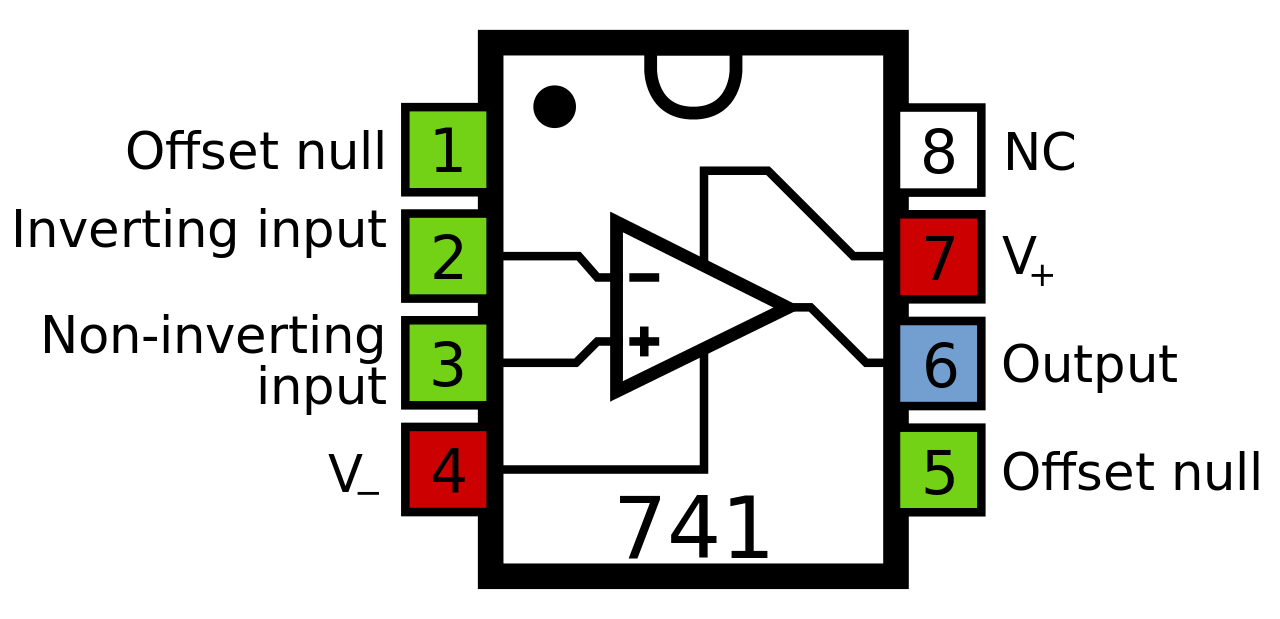
Next, locate the pin configuration diagram. The LM741 has eight pins; each one has a dedicated role:
- Pin 1 – Offset null (connect a potentiometer for fine‑tuning)
- Pin 2 – Inverting input (–)
- Pin 3 – Non‑inverting input (+)
- Pin 4 – V‑ (negative supply)
- Pin 5 – Offset null (paired with Pin 1)
- Pin 6 – Output
- Pin 7 – V+ (positive supply)
- Pin 8 – Compensation (usually left open)
Spotting the offset‑null pins early can save you a headache if you need to trim bias errors later.
Electrical Characteristics at a Glance
The dense table that follows the pinout is where the “numbers” live. Here are the key rows you’ll likely reference most often:
- Supply Voltage (VCC): ±10 V – ±22 V (or 20–44 V total)
- Input Bias Current: 80 nA typical, up to 500 nA max
- Input Offset Voltage: 2 mV typical, 6 mV max
- Gain‑Bandwidth Product: 1 MHz
- Slew Rate: 0.5 V/µs
- Output Swing: Within 2 V of either rail (depends on load)
If you’re designing a precision instrumentation circuit, the input bias current and offset voltage will dominate your error budget. For audio or hobby projects, the slew rate and gain‑bandwidth are often the limiting factors.
Typical Application Circuits
Right after the specs, the datasheet showcases a handful of classic configurations: inverting amplifier, non‑inverting amplifier, voltage follower, and integrator. Each diagram includes schematic symbols, recommended resistor values, and a short note on stability.
For example, the non‑inverting circuit calls for a feedback resistor (Rf) and a gain‑setting resistor (Rg) such that gain = 1 + Rf/Rg. The note warns that using very high resistance (>1 MΩ) can raise noise and offset errors—something you’ll feel in a low‑signal sensor front end.
Thermal and Power‑Dissipation Details
On the “Thermal Characteristics” page you’ll find a graph of junction temperature versus power dissipation. The LM741’s TO‑92 package can handle roughly 250 mW without a heatsink at 25 °C ambient. If you push the supply toward ±22 V, watch the power‑loss equation:
P = (VCC – VEE) × ICC
where ICC is the quiescent current (≈1.7 mA). A quick calculation tells you whether a simple air‑cooled layout suffices or if you need a modest heat sink.
Stability Tips Straight from the Datasheet
The LM741 is notorious for oscillating if you feed it a capacitive load or if the feedback network isn’t properly compensated. The datasheet recommends:
- Adding a 10–20 pF capacitor across the feedback resistor for high‑frequency stability.
- Keeping the load resistance above 2 kΩ.
- Placing a small decoupling capacitor (0.1 µF) close to the supply pins.
Even if your design seems straightforward, a quick glance at these notes can prevent a nightmare of unexplained ringing.
Package Options and Ordering Codes
Onsemi offers the LM741 in several footprints: TO‑92, SOP‑8, and MSOP‑8. Each variant carries a different suffix (e.g., LM741M for the metal‑can version). The ordering guide lists temperature‑grade codes—“A” for commercial, “B” for industrial. Choose the package that matches your board‑space constraints and reliability requirements.
Common Mistakes to Avoid
Reading the datasheet isn’t just about gathering numbers; it’s also about spotting pitfalls. Here are a few you’ll see engineers trip over:
- Ignoring the Input Common‑Mode Range: The LM741’s inputs cannot swing all the way to the supply rails. If your signal edges near +V‑2 V, you may clip.
- Forgetting the Output Saturation: The output typically stays 1–2 V away from the rails under load. Expect a reduced swing in high‑current situations.
- Overlooking Power‑Supply Decoupling: Skipping the 0.1 µF bypass can introduce supply ripple that the amp will amplify.
Quick Reference Cheat Sheet
Copy this table into your design notes for rapid lookup:
| Parameter | Typical | Max |
|---|---|---|
| Supply Voltage | ±10 V – ±22 V | ±30 V |
| Input Bias | 80 nA | 500 nA |
| Offset Voltage | 2 mV | 6 mV |
| GBW | 1 MHz | — |
| Slew Rate | 0.5 V/µs | — |
Putting It All Together
When you finally sit down to design with the LM741, flip through the datasheet with a checklist mindset: confirm supply limits, verify pin connections, read the stability notes, and calculate power dissipation. Treat the spec table as a budget spreadsheet rather than a static list, and you’ll uncover how each parameter interacts with the others.
Where to Find the Latest Version
Onsemi hosts the most recent LM741 datasheet on their official product page. Download the PDF, check the revision date (look for the “Rev A” or “Rev B” stamp), and make sure you have the matching package drawing if you’re ordering the SOP‑8 version. Keeping the file up to date avoids chasing obsolete tolerances that older revisions may list.