How Vanadium Redox Flow Batteries Are Shaping India’s Energy Future
Why Vanadium Redox Flow Batteries Matter
When you think of large‑scale storage, lithium‑ion packs often steal the spotlight. Yet vanadium redox flow batteries (VRFBs) bring a set of quirks that make them surprisingly well‑suited for India’s sprawling grid and renewable ambitions.
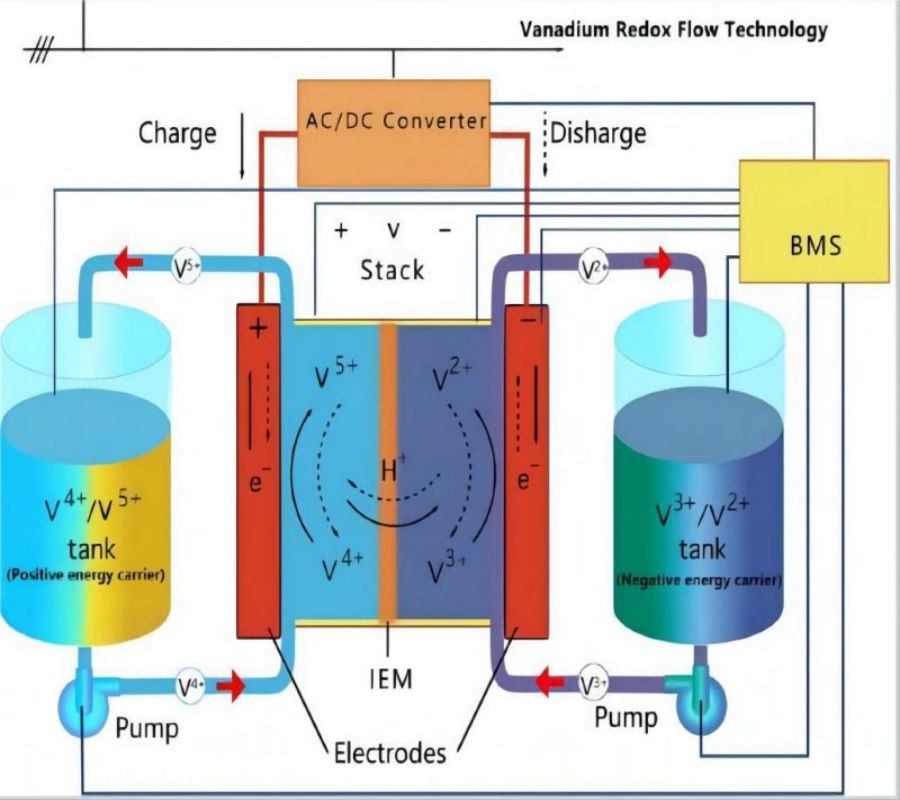
At their core, VRFBs store energy in liquid electrolytes rather than solid electrodes. This design lets you decouple power (how fast you can discharge) from energy capacity (how much you can store) simply by swapping tanks.
Key Advantages for the Indian Context
- Scalability: Adding more storage is as easy as expanding a tank.
- Long Cycle Life: Over 20,000 charge‑discharge cycles are not unheard of, meaning the battery can outlast many traditional alternatives.
- Safety: The electrolytes are aqueous, non‑flammable, and operate at ambient temperature—important for hot, densely populated regions.
- Grid Compatibility: Rapid response times help smooth the intermittency of solar and wind farms across the subcontinent.
Current Projects and Pilot Plants
India’s push toward greener electricity isn’t just talk. A handful of pilot installations already showcase VRFBs in action.
Solar‑PV Coupling in Rajasthan
A 5 MW solar farm near Jodhpur paired with a 10 MWh vanadium flow system. Early data suggest a 15 % reduction in curtailment during peak sun hours.
Industrial Micro‑Grid in Gujarat
One textile hub uses a 2 MWh VRFB to ride through grid outages, keeping machines humming while the main supply recovers.
Economic Considerations
Cost remains the elephant in the room. The upfront capital expense for a VRFB can be 30–40 % higher than a comparable lithium installation. However, the total cost of ownership often evens out because:
- Maintenance is minimal—no solid‑state degradation.
- Electrolyte lifespan can exceed 10 years, with only periodic vanadium regeneration.
- Modular expansion avoids large, one‑time outlays.
For a utility eyeing 100 MWh of storage over a decade, the breakeven point may arrive sooner than expected, especially when factoring in avoided penalties for grid instability.
Challenges Still on the Horizon
Even with the perks, VRFBs face hurdles that can’t be ignored.
- Vanadium Supply: Most vanadium is mined in South Africa and China, making price volatility a real risk for Indian projects.
- Manufacturing Base: Domestic production of stack components and membranes is still in its infancy, leading to reliance on imports.
- Regulatory Framework: Clear guidelines for large‑scale flow‑battery integration are only beginning to appear in state policies.
What Policy Makers Are Doing
The Ministry of New and Renewable Energy has earmarked a modest fund for demonstration projects, and several states have introduced tax incentives for “advanced storage” technologies. These steps signal a willingness to experiment, but a more cohesive national strategy could accelerate adoption.
Future Outlook: Where Might We See VRFBs Next?
Looking ahead, three scenarios feel plausible.
- Hybrid Storage Hubs: Pairing VRFBs with lithium to provide both long‑duration and high‑power bursts, optimizing cost and performance.
- Rural Electrification: Small‑scale flow units could power off‑grid schools or health centers, especially where diesel generators are still common.
- Industrial Symbiosis: Factories with waste heat could use that energy to power the electrolyte pumps, squeezing extra efficiency out of the system.
None of these will happen overnight, yet each reflects a growing comfort with the technology.
Bottom Line
If India’s energy roadmap truly wants to balance affordable renewables with reliable supply, vanadium redox flow batteries deserve a seat at the table. Their unique blend of safety, longevity, and modularity addresses many of the country’s specific grid challenges. While price and supply chains still need ironing out, the early pilots and emerging policy support suggest a slow but steady march toward wider adoption.