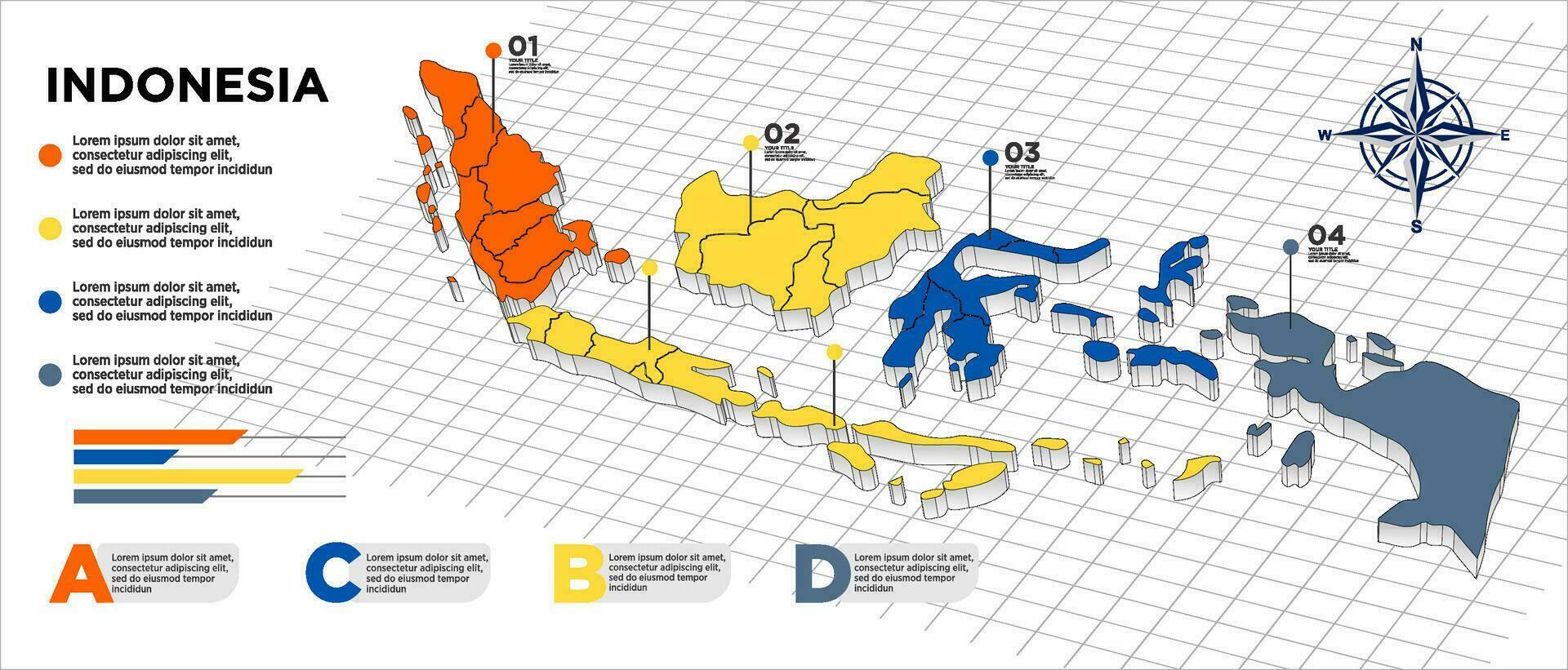
Indonesia’s Regions: A Guide To The Complex Administrative Areas
You might think of Indonesia as simply a country with 1,700+ islands. But administrative reality is far messier and fascinatingly layered. It is an archipelago of archipelagos, governed by a system that shifts from provincial capitals down to villages scattered across mountains and coral atolls. Understanding these regions is key to navigating the country.
Whether you are planning a complex trip, looking to invest in local business, or just curious about how this vast nation holds together, you need more than just a map. The hierarchy is rigid, yet the local identities are deeply distinct. Let’s break down how the zones work.
The Top-Level Hierarchy
At the very top, Indonesia is divided into Provinces (\(Provinsi\)). As of recent years, there are around 38 of them. Some are massive landmasses like Papua or Central Java, while others are tiny clusters of islands, like Bangka Belitung.
Provinces have their own governors. They share power with the central government in Jakarta. This split was part of a major decentralization push in the late 1990s. The idea was to let regions manage their own resources better. It often works. But sometimes, the lines blur, leading to bureaucratic tangles.
Beneath the province, the structure splits into two main types:
- Regencies (\(Kabupaten\)): These cover most of the land mass. They are usually rural or semi-urban areas.
- Cities (\(Kota\)): These are denser, urban centers with different zoning codes and economic focuses.
Both Regencies and Cities are equal in the eyes of the provincial government. You cannot compare them directly by size. A small city can have a far higher budget or population than a sprawling regency.
Drilling Down To The Local Level
If a Regency is like a county, the next step down is the District (\(Kecamatan\)). This is a crucial level for day-to-day administration. Districts handle basic services. They issue local permits and manage smaller health clinics.
In Indonesia, you often hear people say, "I am from the Banyuwangi district," not just the regency. It reflects a tighter local pride. The district head is a government appointee, not an elected official, which keeps the focus on service delivery rather than campaigning.
Below the district lie the smallest units:
- Desa (Village): Traditional rural communities.
- Kelurahan (Urban Village): Subdivisions within city areas.
Here is the rub: They sound the same. Both are populated areas. But \(Desa\) leaders are often elected. They have more autonomy over local land and customary laws. A \(Kelurahan\) head is appointed. They follow stricter city rules. This distinction matters if you are doing legal paperwork or buying property.
Special Administrative Regions
Java is not the only place with special status. The Indonesian constitution allows for "Special Autonomies." These regions get more money and policy leeway from Jakarta. Why? Usually to manage unique challenges or reward historical autonomy.
Papua and West Papua have a massive percentage of the national budget flow to them. It’s an attempt to stabilize the remote east.
Yogyakarta is different. It kept its Sultanate. The Governor is, by law, the Hereditary Sultan. This isn't just ceremony; it’s actual executive power.
Aceh is perhaps the most unique. It practices Sharia law in certain civil codes. It has its own religious police. It is a clear break from the secular management of other provinces. This creates a distinct legal environment for investors and visitors alike.
Why This Structure Matters Now
Many travelers and expats overlook the district level. They book a flight to "Bali" or "Lombok." But Bali is a province. It contains regencies (like Badung) and cities (like Denpasar). The regulatory environment in a city can differ from the neighboring regency regarding business licenses or building codes.
Furthermore, local elections happen every four years. The election in a distant regency can shift local priorities. A new governor might pivot from agriculture to tourism. This changes where the infrastructure money goes.
- Economic Zoning: Cities focus on commerce and high-rises. Regencies focus on farming, mining, and nature reserves.
- Identity: Locals identify strongly with their Regency, not just the Province. Javanese pride is often specific to Surakarta or Yogyakarta.
The Future Of These Zones
There is ongoing debate about splitting more provinces. Sumatra and Kalimantan are huge. Some regions feel neglected by Jakarta-centric planning. Creating new provinces means more local budgets. But it also risks creating silos.
Navigating Indonesia requires understanding that the "nation" is a mosaic. The tiles are not uniform. Some fit together loosely. Others are cemented with deep history. Knowing which tile you are standing on helps you interact with the local reality.
Frequently Asked Questions
Q: How can I tell if a location is a city or a regency?
A: If the name ends in "Kota," it is a city. If it does not, it is typically a regency (Kabupaten). For example, Medan is Kota Medan (city). The surrounding area is Kabupaten Deli Serdang.
Q: Do special regions have different laws?
A: Yes. Aceh specifically implements Sharia law for local civil matters. Papua and West Papua have specific administrative laws regarding investment and resource extraction to encourage development.
Q: Is the village (\(Desa\)) leader elected?
A: Generally, yes. The Head of the \(Desa\) (\(Kepala Desa\)) is elected by the residents. However, the Head of an Urban Village (\(Lurah\) of \(Kelurahan\)) is appointed by the city government.
Q: Why are there so many administrative levels?
A: The multiplicity helps manage a diverse, dispersed population. It decentralizes power, allowing remote islands to handle local issues without waiting for directives from Jakarta, which is thousands of kilometers away.