Inside the Polish Occupation of Moscow (1610): A Deep Historical Dive
When the Polish–Lithuanian Commonwealth’s troops entered Moscow in 1610, the city found itself under foreign rule for more than two tumultuous years. This episode, known as the Polish occupation of Moscow, sits at the heart of Russia’s “Time of Troubles” and reshaped the nation’s sense of sovereignty. Below we unpack the political tinder that sparked the invasion, daily life under the occupiers, and the daring uprising that finally drove them out.
Background: The Time of Troubles
The death of Tsar Feodor I in 1598 ended the Rurikid dynasty, leaving a power vacuum that invited claimants, impostors, and foreign powers alike. Several pretenders—most famously the “False Dmitriys”—vied for the throne, while the Russian nobility fractured into rival factions. Amid this chaos, the Polish–Lithuanian Commonwealth saw an opportunity to extend its influence eastward.
Sigismund III Vasa, the Polish king, was eager to secure a dynastic link to Russia through his son, Prince Władysław. By supporting one of the pretenders and sending an army into Russian lands, he hoped to place Władysław on the Russian throne, effectively creating a personal union between the two states.
The Polish Advance and Capture of Moscow
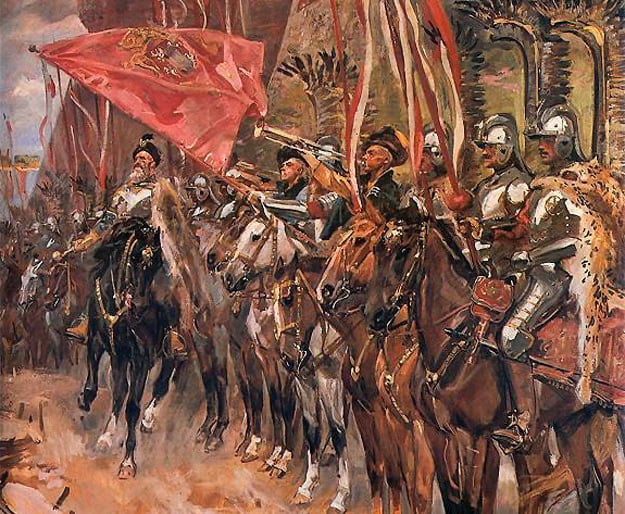
In the summer of 1610, a well‑trained Commonwealth army, commanded by the seasoned Hetman Stanisław Żółkiewski, marched toward Moscow after a decisive victory at the Battle of Klushino. Their numbers, bolstered by mercenaries and Cossack allies, outmatched the disorganized Russian forces.
By early September, Polish troops entered the Kremlin with little resistance. The city’s defenders, weary from months of internal strife and external raids, were unable to mount an effective counter‑offensive. Władysław was proclaimed Tsar by the occupying council, though his coronation never materialized.
- September 1610 – Polish forces take the Kremlin.
- Late 1610 – Władysław’s claim is contested by Russian boyars.
- 1611–1612 – Ongoing guerrilla attacks on supply lines.
Life Under Occupation
For Muscovites, the occupation meant a sudden infusion of foreign customs and a stark shift in power dynamics. Polish officers installed a provisional administration that levied heavy taxes to fund the garrison, while also attempting to introduce Catholic rites in an overwhelmingly Orthodox city.
Many locals resisted openly, sabotaging warehouses and disrupting communications. Yet some merchants saw profit in the new trade routes opened by the Commonwealth, leading to a uneasy coexistence between collaboration and rebellion.
Religious tension was palpable. Churches were occasionally repurposed for Catholic services, and clergy who refused to cooperate faced imprisonment. These measures, however, only deepened popular resentment and fueled the myth of a “foreign yoke” that would later inspire nationalist narratives.
The Liberation: Minin and Pozharsky
In late 1611, the patriotic duo of merchant Kuzma Minin and noble Prince Dmitry Pozharsky began rallying volunteers from across Russia. Their goal was simple yet daring: raise an army capable of expelling the Commonwealth forces from Moscow.
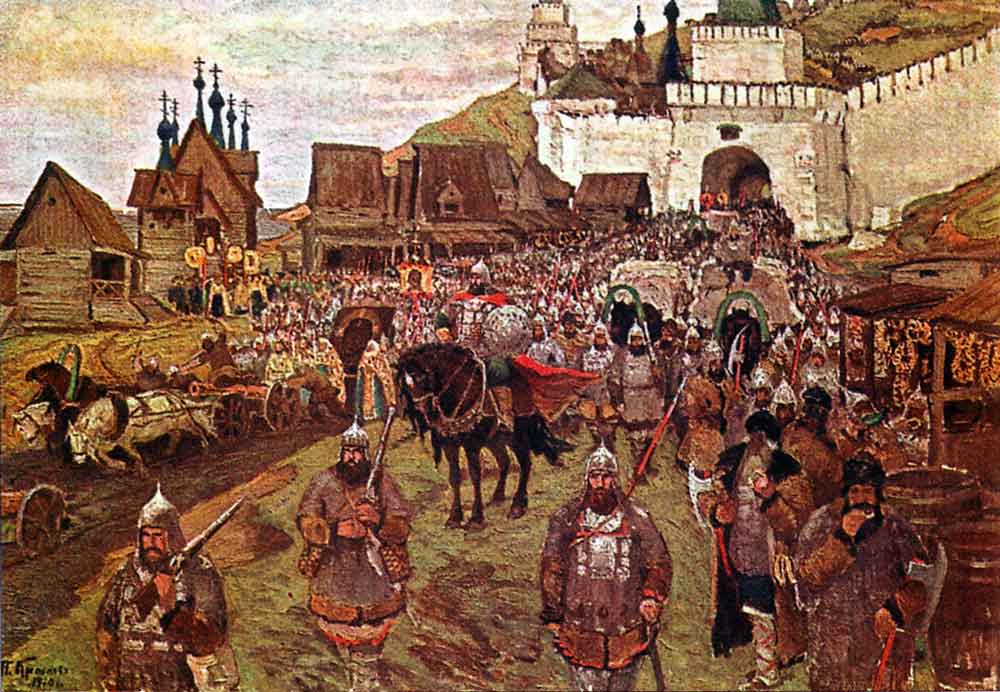
By the spring of 1612, the volunteer army, known as the “People’s Militia,” surrounded the Kremlin. After a series of skirmishes, they launched a coordinated assault that forced the Polish garrison to surrender in October 1612. The city’s liberation was celebrated with the iconic “Trinity Day” procession, cementing Minin and Pozharsky as national heroes.
Legacy of the 1610 Occupation
The brief Polish occupation left a lasting imprint on Russian collective memory. It reinforced the notion of a resilient, unified Russia capable of repelling foreign invaders—a theme that resurfaced throughout later centuries.
Politically, the episode accelerated the rise of the Romanov dynasty. In 1613, Michael Romanov was elected tsar, ushering in a new era of stability that contrasted sharply with the preceding chaos.
From a diplomatic standpoint, the occupation strained Polish‑Russian relations for generations, shaping border disputes and influencing subsequent alliances in Eastern Europe.
Frequently Asked Questions
Why did the Polish forces occupy Moscow in 1610?
The Commonwealth sought to capitalize on Russia’s succession crisis, hoping to install Prince Władysław as tsar and create a political union that would extend Polish influence eastward.
How long did the Polish occupation last?
Polish troops controlled the Kremlin from September 1610 until October 1612, a period of just over two years.
What ended the occupation?
A grassroots militia led by Kuzma Minin and Prince Dmitry Pozharsky successfully besieged the Kremlin, forcing the Polish garrison to surrender and restoring Russian control over Moscow.
![How the Poles Captured Moscow? - Kuryer Polski [en]](https://www.kuryerpolski.us/image/6v2iz2w7hehg6n7eugxsds2bh5)
