Lunar Eclipse Meaning: Unveiling The Celestial Event
There is something almost primal about watching the moon turn a rusty red. It feels ancient, right? Like our ancestors stared up at that same glowing orb and tried to make sense of the shadows playing across its surface. For many, a lunar eclipse is just a cool astronomical show. But for others, it’s a moment loaded with symbolism, intuition, and a strange kind of psychological pressure. If you’ve found yourself searching for the lunar eclipse meaning, you aren’t alone. We are naturally drawn to these celestial alignments because they disrupt the norm. They offer a pause in the constant hum of daily life, inviting us to look upward and, more importantly, look inward.
The Science Behind the Red Moon
Before we dive into the mystical or symbolic interpretations, it helps to ground ourselves in the physics. It keeps the woo-woo factor in check. A lunar eclipse happens when the Earth passes directly between the Sun and the Moon. The Earth casts a shadow, and the Moon moves into it. It’s a cosmic three-body dance.
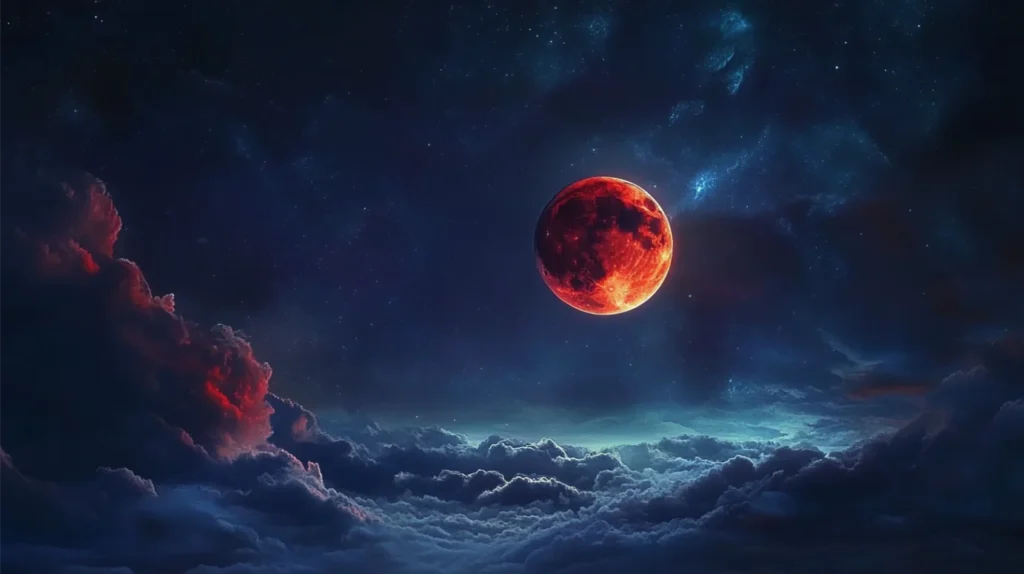
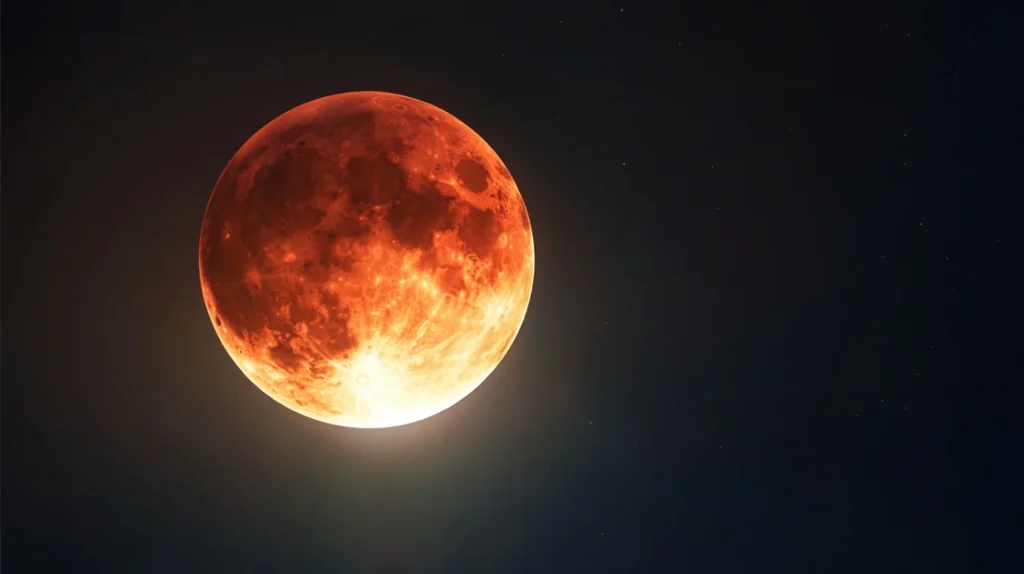
The color is the real kicker. Total eclipses often leave the Moon looking blood-red. This is known as a "Blood Moon." It’s not magic; it’s Rayleigh scattering. The same process that gives us sunsets. As sunlight passes through Earth’s atmosphere, blue light scatters away, and red light bends around the planet to illuminate the lunar surface. Understanding this mechanic doesn’t dismiss the awe. If anything, knowing the precise mechanics of our solar system makes the event feel even more intimate. We are standing on the twilight zone of our own planet, watching its shadow drape over our nearest celestial neighbor.
Symbolism: Release, Revelation, and Reflection
So, if the science checks out, what is the meaning? In astrology and various cultural traditions, eclipses are viewed as transitional points. They are liminal spaces. The Moon represents our emotions, our subconscious, and our intuition. When it is eclipsed, those facets of our psyche are temporarily dimmed.
- Shadow Work: The eclipse brings hidden things to light. Just as the Earth’s shadow reveals the Moon’s color, an eclipse often reveals truths we’ve been ignoring. It’s a time when secrets come out, or when we finally admit what we’ve been avoiding.
- Release: Unlike solar eclipses, which are often about new beginnings, lunar eclipses are typically about ending cycles. It’s a time to let go. What has served its purpose? What emotion needs to be shed?
- Intuition Over Intellect: With the Moon obscured, our emotional radar might feel scrambled or hyper-sensitive. The advice is often to trust your gut rather than over-analyzing with your head.
This doesn’t mean a disaster is coming. It just means the usual emotional baseline is disrupted. If you feel particularly agitated or reflective during an eclipse, you’re reacting to a subtle shift in lunar energy. It’s a cue to slow down.
Cultural Perspectives on the Event
Humanity has always tried to narrate the sky. Different cultures have woven the lunar eclipse into their mythologies in fascinating ways.
In some Hindu traditions, the eclipse is associated with Rahu and Ketu, shadow planets that consume the Moon. It’s seen as an inauspicious time, requiring purification rituals. Conversely, for many Westerners, it’s simply a spectacle. The Aztecs believed a creature was devouring the Moon, leading people to make noise to scare it away. Meanwhile, in China, the "Heavenly Dog" was blamed for biting into the Moon. Noise and clanging pots were used to drive the beast off.
These stories highlight a universal human fear: the unknown. When the familiar light of the Moon vanishes or changes, it triggers a fear of chaos. Today, we might not believe in sky-dogs, but the psychological reaction remains. We feel a bit unsettled. That unease is part of the experience. It’s the mind grappling with the magnitude of the universe.
How to Navigate the Energy
If you want to make the most of the eclipse, rather than just watching it, consider these practical steps. You don’t need a crystal or a candle, though those help if they mean something to you. The core action is mindfulness.
Pause the new beginnings. If you’ve been planning to start a new job, launch a business, or begin a massive diet, an eclipse might not be the best window. The energy is retrospective. It’s better to use this time to review what’s already happening. Ask yourself: Is this working? Do I still want this?
Embrace the quiet. The eclipse can make people feel irritable or unmotivated. If that’s you, don’t fight it. Take a nap. Go for a walk in nature. Avoid high-stakes decisions if possible. Let the emotional waves crash over you without trying to build a seawall.
Reflect on relationships. Since the Moon governs our inner circle, family dynamics or close friendships might feel highlighted. Misunderstandings can flare up. The key is to respond with patience rather than reaction. Remember, the shadow will pass.
Is It Really That Significant?
Here is the honest truth: For many people, a lunar eclipse changes absolutely nothing. They watch it, take a photo, and go back to dinner. And that is perfectly fine. The universe is big, and we are small. There is beauty in both the mystical interpretation and the indifferent observation.
The real meaning of a lunar eclipse is personal. It is a mirror. If you see a crisis, you might be in one. If you see wonder, you are likely in a place of openness. The event itself is neutral. It’s our reaction that defines the experience. So, next time the sky turns red, look up. Take it in. And ask yourself what your heart is telling you that your mind has been too busy to hear.
FAQ
Is a lunar eclipse bad luck?
Scientifically, no. Astrologically, it’s not necessarily "bad," but it is considered a time of transition. It can bring challenges to the surface, but it also offers opportunities for release and healing. It’s more about transformation than纯粹的 misfortune.
Why is the Moon red during an eclipse?
The red color is caused by Earth's atmosphere. As sunlight travels through the atmosphere to reach the Moon, shorter wavelengths (blue) are scattered out, while longer wavelengths (red) pass through. This red light bends around Earth and illuminates the lunar surface.
Can you look at a lunar eclipse without eye protection?
Yes. Unlike solar eclipses, lunar eclipses are safe to view with the naked eye, cameras, or binoculars. The Moon is not creating its own light; it’s reflecting sunlight, and during an eclipse, that light is actually dimmer than usual.
How long does a lunar eclipse last?
The entire process, from start to finish, can last a few hours. However, the total phase, where the Moon is completely in Earth’s shadow and often appears red, usually lasts only a few dozen minutes. It varies depending on your location and the specifics of the alignment.