Master the Offside Rule: Essential Football Drills
The offside rule is notorious for turning even seasoned fans into bewildered onlookers, yet it’s a cornerstone of modern football tactics. Getting comfortable with it isn’t about memorising a textbook definition; it’s about seeing the line move in real‑time and training players to react instinctively. Below, we break down the rule’s core ideas and, more importantly, give you a handful of drills that translate theory into muscle memory on the pitch.
What the Offside Rule Actually Says
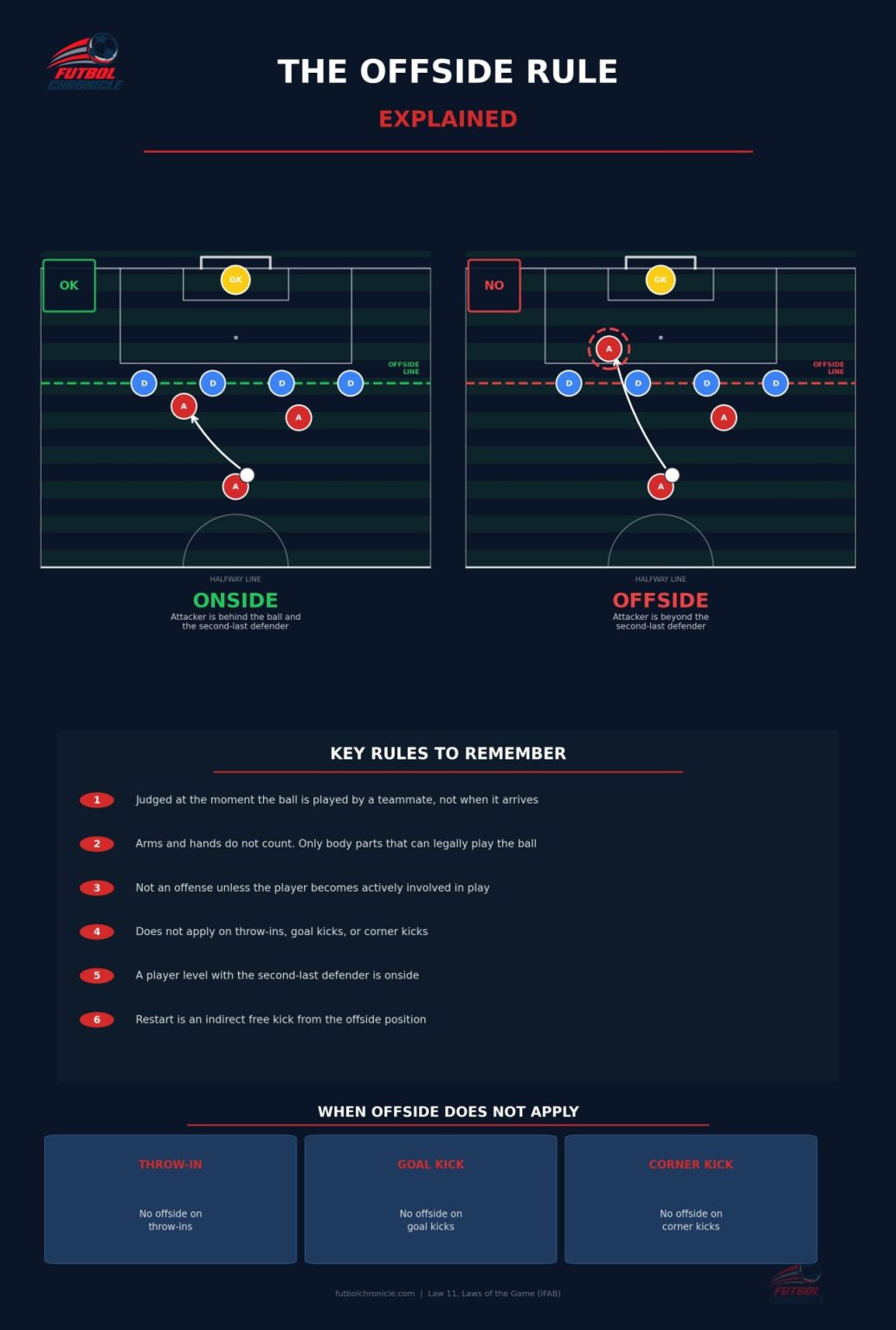
In its simplest form, a player is offside when, at the moment the ball is played forward, they are nearer to the opponent’s goal line than both the ball and the second‑last defender. Two key nuances often trip players up:
- Only forward passes count. A ball played sideways or backwards can’t put anyone offside.
- Being level with the second‑last defender is safe. The “line” includes the defender’s feet, so a shoulder‑to‑shoulder position is legal.
These points become clearer when you watch a match in slow motion, but the real test is replicating the scenario in training.
Why Offside Mastery Matters
Beyond avoiding costly free kicks, a well‑tuned offside sense opens up attacking options. Teams that can time runs perfectly force defenders to keep a deeper line, which in turn creates space for midfielders to exploit. Conversely, defenders who understand the rule can set an “offside trap” that catches opponents flat‑footed. Mastery, therefore, benefits both sides of the ball.
Essential Drills to Internalise the Rule
1. Shadow Line Drill
Set up a 30‑metre corridor with cones marking the “defensive line.” One group of players acts as defenders, holding a static line, while attackers sprint forward on a signal. The attacker must stop exactly on the line or step back if they cross it. Rotate roles after each run. This drill trains the eye to judge distance relative to the second‑last defender.
2. Pass‑and‑Move Timing
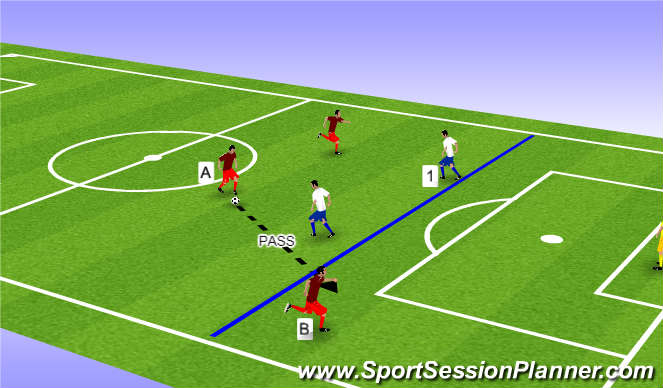
Arrange three stations: a midfielder with a ball, a forward, and a defender positioned a few metres behind the forward. The midfielder plays a forward pass; the forward must time their run to stay onside, while the defender steps forward to simulate a moving line. Repeat with varying pass speeds to mimic real‑game tempo.
3. Small‑Sided “Offside Tag” Game
In a 5‑vs‑5 setup, designate one player as the “offside judge” who carries a flag. Whenever a teammate makes an illegal run, the judge tags them, and the ball is turned over. The constant vigilance forces all players to think before they sprint, reinforcing the mental aspect of the rule.
4. Video‑Assisted Review
After each drill, use a phone or tablet to replay the key moments in slow motion. Highlight the exact frame when the ball was played and where the attacker stood. Discuss why the decision was on‑side or off‑side. Visual feedback cements the abstract concept into a concrete visual cue.
Integrating Drills into a Regular Session
Start with a brief tactical briefing (5 minutes) that outlines the day’s focus. Follow with the Shadow Line Drill as a warm‑up—its low‑intensity nature gets players moving without taxing them. Then move to the Pass‑and‑Move Timing drill, which introduces ball work and decision‑making. Finish the technical portion with the Small‑Sided Game, allowing players to apply what they’ve learned in a competitive context. End the session with the Video‑Assisted Review, dedicating 10‑15 minutes to analysis.
For youth teams, keep the total drill time under 30 minutes to maintain attention spans. For senior squads, you can extend the video review and even add a tactical board discussion to link the drills with upcoming opponents.
Coaching Tips for Consistency
- Use consistent language. Call the defensive line “the offside line” every time you speak, so players associate the phrase with the visual cue.
- Reward correct judgement. When a player stays onside in a drill, acknowledge it publicly; positive reinforcement sticks.
- Vary the angle of attack. Have defenders shift laterally during drills to mimic a moving line, preventing players from relying on a single fixed reference point.
- Keep it game‑like. Add pressure by limiting the time a player has to make their run, mirroring the rapid decision‑making required in matches.
Frequently Asked Questions
What is the difference between being “offside” and “interfering with an opponent”?
A player can be in an offside position without committing an offence if they do not interfere with play, an opponent, or gain an advantage. The referee only penalises the player if they become actively involved—by playing the ball, obstructing a defender’s line of sight, or influencing the opponent’s ability to play.
Can a player be offside from a corner kick?
No. A corner kick is considered a restart from a stationary position, and the offside rule does not apply. Players can line up anywhere in the opponent’s half without risk of an offside call.
How often should teams practice offside drills?
Most coaches embed a short offside‑focused exercise into every training week. For elite squads, a dedicated session every two weeks is common, while youth teams benefit from a quick 10‑minute drill at the start of each practice.
Is there a simple way for players to judge the offside line without counting defenders?
Yes. Encourage players to focus on the position of the second‑last defender’s feet rather than trying to count. Visualising a “wall” formed by those two defenders helps them gauge whether they are level or behind the line.