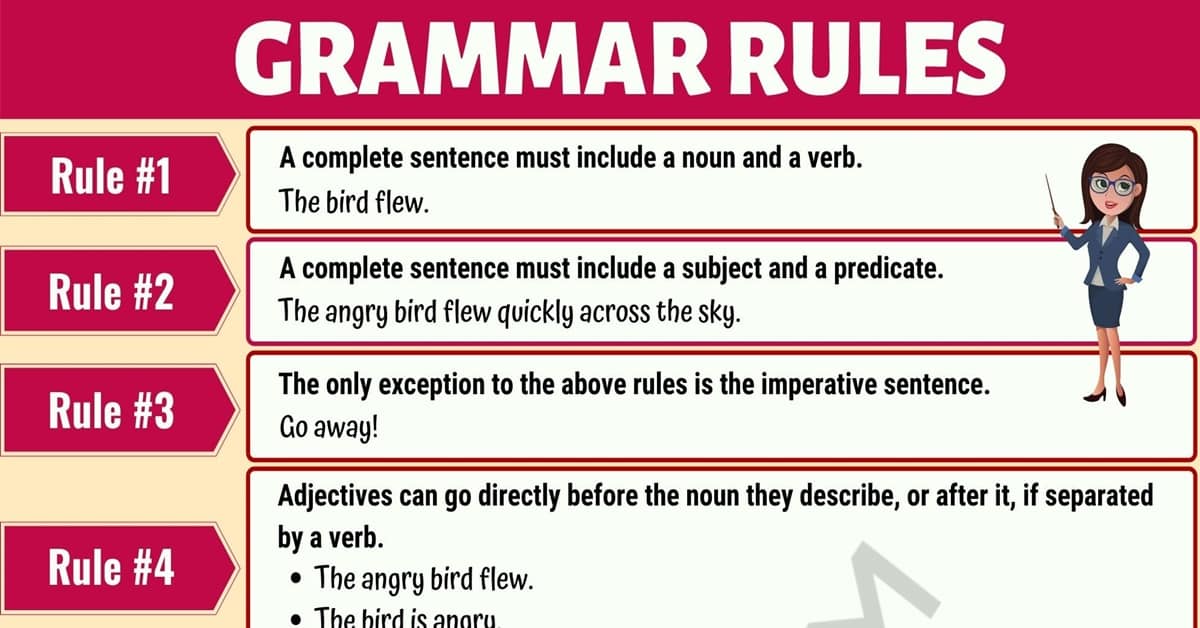
Mastering Sentence Accuracy: A Practical Guide to Precision
We’ve all been there. You type out a quick email, a text, or a social media post, hit send, and then immediately freeze. That sinking feeling in your stomach isn’t just about hitting the wrong button; it’s the realization that what you meant to say might not be what you actually said. We talk about "sentence accuracy" as if it’s a rigid academic exercise reserved for grammar police and high school English teachers. But in reality, it is the single most important skill you can develop for clear, effective communication in the modern world.
When we dismantle the concept of accuracy, we aren’t just looking for subject-verb agreement. That is the hygiene factor. True accuracy is about alignment. It is the precise mapping between your internal intent and the external words you choose to convey it. When that map is distorted, confusion follows. And in professional settings, confusion can be costly.
The Hidden Cost of Ambiguity
Consider a simple workplace instruction: "Send the report to the client by Friday." Sounds clear, right? But the receiver might interpret this in several ways. Does "by Friday" mean before the market opens on Friday morning, or does it mean before the end of the business day on Friday? Worse yet, what happens if the client is in a different time zone? Is the deadline based on your clock or theirs?
This isn’t a pedantic argument for the sake of winning a debate. It’s a practical example of how slight shifts in wording create massive operational friction. When we prioritize speed over precision, we often pay for that shortcut later with clarification emails, rushed revisions, and misunderstood expectations. The cost of re-working a task because of a vague instruction is almost always higher than the time invested in crafting a precise one initially.
Beyond Grammar: The Architecture of Clarity
Many people equate accuracy with grammar. While a misplaced comma or a wrong verb tense can certainly interrupt the flow of text, true sentence accuracy relies heavily on structural logic and the strategic elimination of clutter. Great writers aren’t just those who use fancy words; they are the ones who can say complex ideas using the simplest, most direct sentences possible.
To achieve this, you need to focus on three core pillars:
- Subject-Verb-Object proximity: Keep the actor, the action, and the receiver close together. If you bury the subject under layers of subordinate clauses, the reader loses track of who is doing what.
- Active voice dominance: Passive voice isn't inherently incorrect, but it often drains energy from a sentence and can obscure responsibility. Comparing "Mistakes were made" to "I made a mistake" illustrates how active voice restores clarity and accountability.
- Elimination of filler: Words like "very," "basically," and "actually" rarely add meaning. They serve to pad the sentence, which can make your message feel less authoritative and more hesitant. Pruning these words tightens your impact.
The Trap of Tech-Assisted Writing
We live in an era where autocorrect and predictive text are ubiquitous. These tools have undeniably sped up our typing, but they have also contributed to a subtle erosion of sentence accuracy. When we rely on algorithms to finish our thoughts, we risk accepting a word that fits grammatically but fails contextually. Selecting a synonym from a dropdown menu without understanding its precise nuance can shift the tone of a message in ways the writer might not intend.
Think of autocorrect as a spell-checker, not a style editor. It catches typos, but it cannot read your mind. It cannot know if "their" should be "there" based on your original intent, only on the keyboard layout or common usage patterns. Relying too heavily on automated suggestions can lead to a laundry list of errors that feel accidental. Always take the time to review your final output without relying on the crutch of predictive text. This habit alone will significantly improve the fidelity of your communication.
Editing as a Separate Stage
One of the most effective strategies for improving sentence accuracy is to separate the drafting phase from the editing phase. When you are writing, your brain is in creation mode. You are trying to get ideas down. Trying to edit while you write splits your cognitive focus and leads to inconsistencies. Instead, write your draft first. Then, step away. Let the text sit. When you return to it, switch to critic mode. Read the sentences aloud. If you stumble over a phrase, or if you have to re-read a sentence to understand it, it’s a sign that the sentence lacks accuracy. Trust your ear. It is a surprisingly effective tool for identifying awkward phrasing.
Tone and Nuance: The Final Mile
Accuracy is not just about right and wrong. It’s about fitting. A sentence can be grammatically perfect but still fail if it is inappropriate for the context. Using overly formal language in a casual email can come across as stiff or condescending. Using overly casual language in a formal report can undermine your credibility. The key is to match the tone of the sentence to the expectations of the audience.
This requires a degree of social awareness. Before you hit send, ask yourself: Who is reading this? What is their relationship to me? What is the expected level of formality? Adjusting your sentence structure and word choice to fit these parameters ensures that your message is not just understood, but also received in the intended manner. It prevents the awkwardness of miscommunication and builds stronger professional relationships.
An Example in Action
Imagine you need to apologize for a missed deadline. An inaccurate sentence might be: "Sorry for the delay, things got crazy at work." While understandable, it is vague and shifts blame. A more accurate and accountable version would be: "I apologize for the delay on this project. We encountered unexpected technical issues that required additional time to resolve." The second sentence is more specific, takes ownership, and provides a clear reason for the delay. It transforms a potentially negative interaction into a professional explanation.
Building a Habit of Precision
Improving sentence accuracy is a skill. It’s not something you’re born with. It requires practice, awareness, and a willingness to slow down. Start by reading more. Pay attention to how professional writers structure their sentences. Notice how they use transitions to connect ideas. Read aloud to build your intuition for rhythm and clarity. Over time, you’ll find that you write with greater confidence and ease. The result will be clearer, more effective communication. And in a world where we are constantly connecting through text, that clarity is not just nice to have. It is essential.
Quick FAQ on Sentence Accuracy
Q: Why is active voice generally preferred over passive voice?
A: Active voice clarifies who is performing the action, making the subject and verb more prominent. This reduces ambiguity and creates a more direct, energetic tone.
Q: Can I use contractions to improve sentence clarity?
A: Yes. Contractions make writing sound more natural and conversational. However, they are less appropriate in highly formal or academic contexts. Use your judgment based on the audience and purpose.
Q: How can I check if my sentences are accurate?
A: Read them aloud. Listen for awkward phrasing or run-on constructions. If you find yourself stumbling or needing to re-read a sentence to understand it, it likely needs refinement. Editing separately from drafting is also a key step.
Q: What is the biggest mistake people make when trying to write accurately?
A: The biggest mistake is overcomplicating. People often use long words or complex sentence structures to hide a lack of thought or to sound smarter. This only leads to confusion. Clarity is king. Choose simple, precise words and keep your sentences short and focused.