Mastering the Dutch Alphabet: A Simple Guide for Beginners
Why learning the Dutch alphabet is a good first step
The Dutch alphabet looks familiar at first glance—it's the same 26 letters you see in English. Yet each character carries its own quirks, especially when it comes to pronunciation. Getting these basics right gives you a solid footing for everything from reading street signs in Amsterdam to spelling your name on a passport application.
Beyond the practical side, mastering the alphabet helps train your ear for Dutch vowel sounds, which differ subtly from English. When you can decode a word on paper, you’ll notice patterns in spoken language faster, making conversations feel less like a guessing game.
The 26 letters and how Dutch speakers typically say them
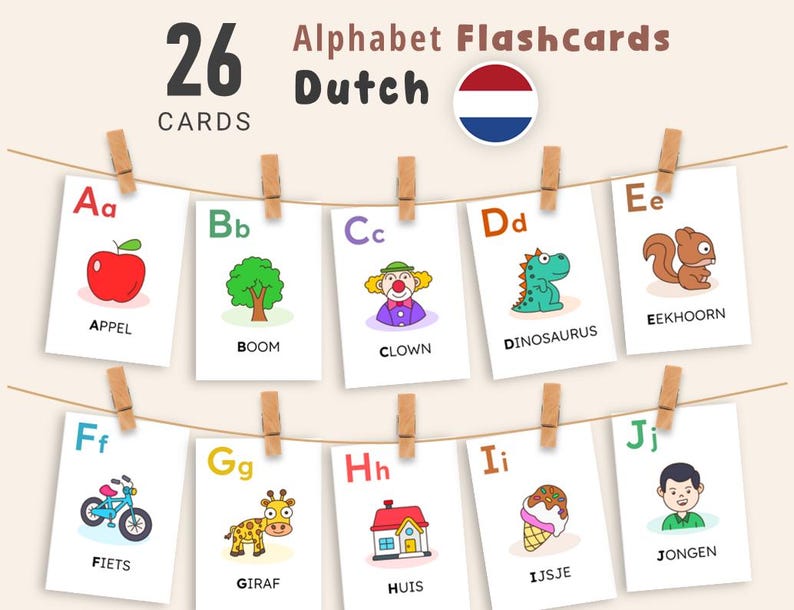
Below is a quick rundown of each letter, paired with a common Dutch word that showcases its sound. The examples are chosen for clarity, not exhaustive coverage.
- A – “appel” (apple) – a short, open “ah” like in “father”.
- B – “boom” (tree) – similar to English, but often softer at the end of a word.
- C – “café” (café) – only appears in loanwords; pronounced “k” before “a, o, u” and “s” before “e, i, y”.
- D – “dag” (day) – like English “d”, but the tongue touches the upper teeth slightly.
- E – “eet” (eat) – can be a short “eh” or a long “ay” depending on context.
- F – “fiets” (bicycle) – identical to English “f”.
- G – “goed” (good) – a guttural sound made at the back of the throat, unlike any English “g”.
- H – “huis” (house) – a soft, breathy “h” similar to the “h” in “ahead”.
- I – “ik” (I) – short “ih” as in “bit”, but can stretch to “ee” in loanwords.
- J – “jaar” (year) – sounds like English “y” in “yes”.
- K – “kat” (cat) – crisp, unvoiced “k”.
- L – “lief” (dear) – same as English “l”.
- M – “maan” (moon) – straightforward “m”.
- N – “naam” (name) – same as English “n”.
- O – “oog” (eye) – a rounded “o” like in “more”.
- P – “paard” (horse) – identical to English “p”.
- Q – rarely used; appears only in foreign names, pronounced like “k”.
- R – “rijd” (ride) – either a rolled “r” or a guttural “r” depending on region.
- S – “school” (school) – usually “s” as in “see”, but can become “z” between vowels.
- T – “tafel” (table) – same as English “t”.
- U – “uur” (hour) – a tight “oo” similar to German “u”.
- V – “vader” (father) – often pronounced like “f”, especially in the north.
- W – “water” (water) – a sound between English “v” and “w”.
- X – appears in “exact” (exact) – pronounced “ks”.
- Y – found in “mythe” (myth) – usually “i” as in “machine”.
- Z – “zout” (salt) – a voiced “z”, rarely softened.
Special Dutch digraphs and diacritics you’ll meet
While the base alphabet is straightforward, Dutch relies on a few letter combinations that change pronunciation dramatically. Recognizing them early saves you from misreading countless everyday words.
- IJ – Treated as a single vowel, it sounds like the English “ay” in “day”. Example: “bij” (at).
- OE – Produces a long “oo” as in “boot”. Example: “poet” (poet).
- EU – A rounded front vowel, somewhere between “uh” and “eu” in French. Example: “neus” (nose).
- AA, EE, OO, UU – Double vowels indicate a longer sound than their single counterparts.
- Diaeresis (¨) over vowels – Signals that the vowel should be pronounced separately, as in “reünie” (reunion).
Common pitfalls for English speakers
Even though many letters share an English look, the Dutch language throws a few curveballs that learners often miss.
First, the “g” can feel intimidating. It’s not a hard “g” as in “go”; instead, imagine a soft gargle at the back of your throat. Practicing with “goed” or “gracht” (canal) helps you find the right placement.
Second, the “r” varies regionally. In the Randstad (Amsterdam‑Rotterdam area) you’ll hear a guttural “r”, while many northern speakers roll it. Listening to both accents early on prevents the “one‑size‑fits‑all” assumption.
Finally, don’t assume “v” always sounds like English “v”. In most of the Netherlands it leans toward an “f” sound, especially before voiceless consonants. The word “vijf” (five) is a good test case.
Practical tips for turning theory into habit
Memorizing a list works only until you forget it. Embedding the alphabet into daily routines makes recall effortless.
- Label objects around your home with their Dutch names. Seeing “tafel” on your kitchen table reinforces both spelling and meaning.
- Use language‑learning apps that focus on pronunciation. Many let you record your “g” or “ij” and compare it to native speakers.
- Sing the alphabet to a familiar tune—say, “Twinkle Twinkle Little Star”. Rhythm aids muscle memory, especially for tricky sounds.
- Read short children’s books. The simple vocabulary and generous illustrations let you practice letter‑sound matches without feeling overwhelmed.
FAQ
Q: Does Dutch have any letters that don’t exist in English?
A: The alphabet itself uses the same 26 letters, but combinations like “ij” and “oe” function like unique vowels, and the diacritic “ë” changes pronunciation.
Q: How long does it take to pronounce the Dutch “g” correctly?
A: It varies by individual, but with focused practice—say, 10 minutes a day—most learners feel comfortable after a few weeks.
Q: Are there regional differences I should worry about as a beginner?
A: Yes, especially with the “r” and the harshness of the “g”. Listening to both northern and southern speakers early on helps you develop a flexible ear.
Q: Can I rely on English spelling rules when learning Dutch words?
A: Only partially. While many letters look the same, vowel length and digraphs often defy English expectations, so treat each word as its own mini‑lesson.