Mastering VLSI & Microelectronics: A Comprehensive Course Review
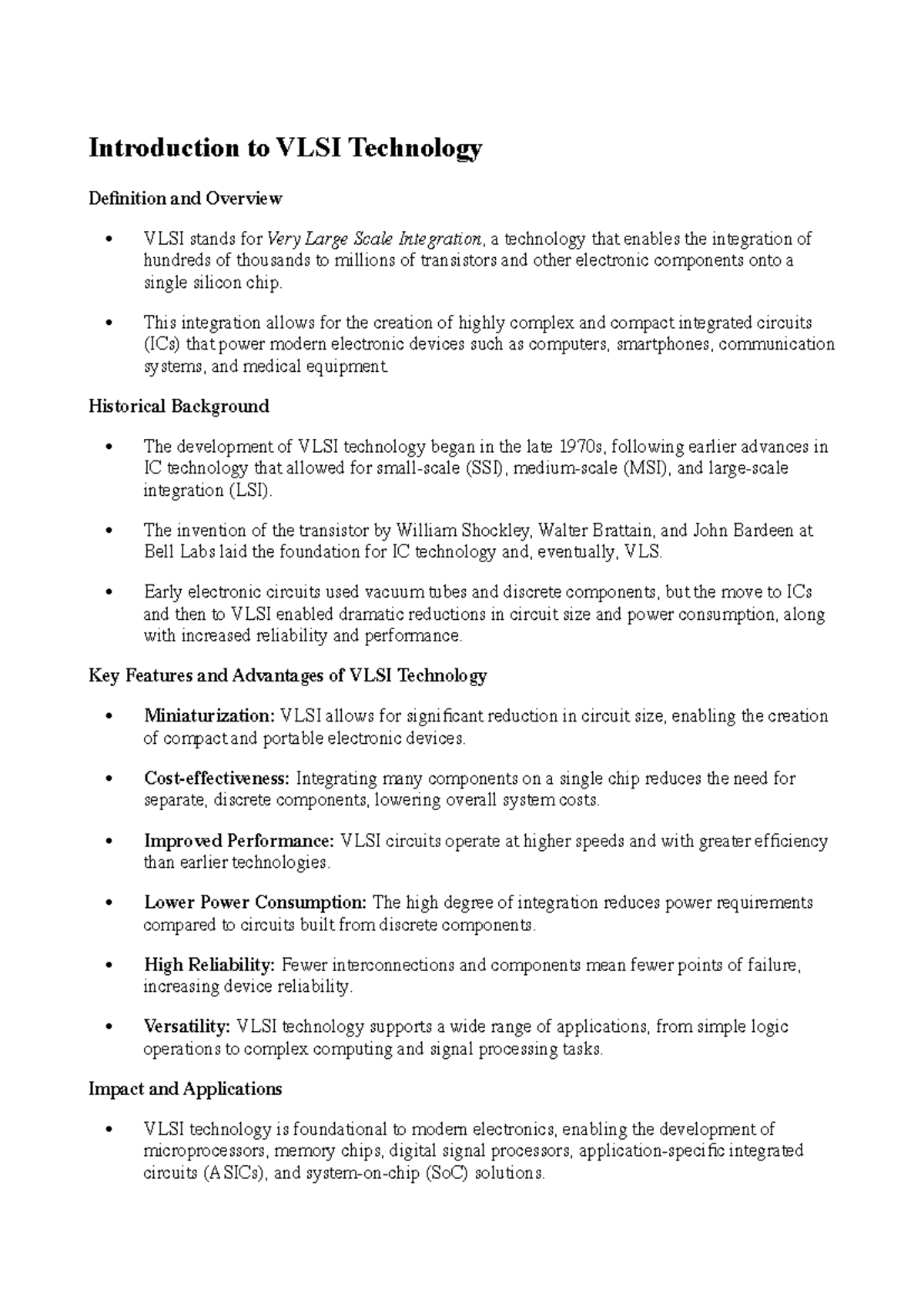
Behind every smartphone, electric vehicle, and smartwatch lies a complex world of tiny transistors packed onto silicon chips. This is the domain of Very Large Scale Integration (VLSI) and microelectronics. For engineering students and professionals, a dedicated course in this field serves as the bridge between abstract circuit theory and the physical realities of modern semiconductor design. It’s not just about understanding how a chip works; it’s about learning how to build one from the ground up.
If you’re considering diving into this specialized area of electronics engineering, it helps to know exactly what you’re getting into. The landscape of chip design has shifted dramatically in recent years, moving from simple logic gates to complex systems on a single chip. A good curriculum reflects this evolution, offering a blend of theoretical foundations and practical, tool-based skills.
Why VLSI Matters Today
Before looking at the syllabus, it’s worth understanding the "why." Moore’s Law, while slowing down, still dictates the pace of technological innovation. As devices become smaller and more powerful, the physical constraints of electrons move from negligible to critical. Heat dissipation, signal integrity, and power consumption are no longer secondary concerns; they are primary design parameters.
A VLSI course equips you with the knowledge to tackle these challenges. In an era where specialized hardware accelerators are driving AI and machine learning applications, the ability to design custom silicon is a rare and valuable skill. It’s the difference between being a user of technology and a creator of it.
Core Pillars of the Curriculum
Most comprehensive microelectronics programs are built on three main pillars: device physics, digital logic design, and physical implementation. Let’s break down what each of these entails.
1. Semiconductor Device Physics
You can’t design a chip if you don’t understand the materials it’s made of. This section typically covers the behavior of semiconductors, focusing heavily on the Metal-Oxide-Semiconductor Field-Effect Transistor (MOSFET). You’ll delve into how electrons move through silicon, the impact of doping, and how scaling affects transistor performance. It’s heavy on theory, but it’s the foundation for everything that follows.
2. Digital Logic and Computer Architecture
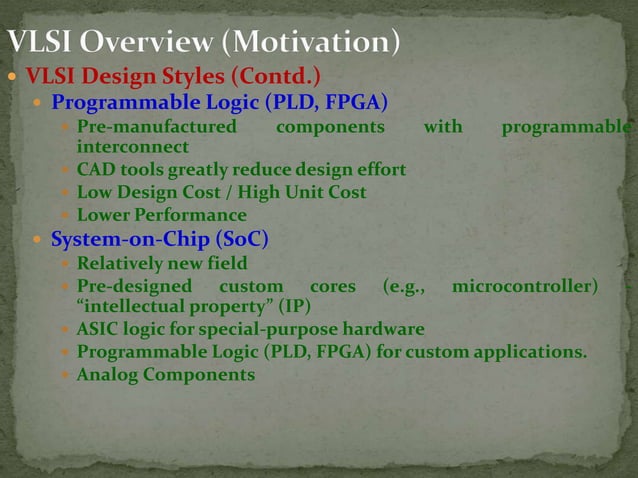
Once you understand the transistor, you start building logic gates. This part of the course moves from the physical level up to the logical level. You’ll study combinational and sequential logic, finite state machines, and memory structures. But it doesn’t stop at basic gates. Modern courses emphasize System on a Chip (SoC) architecture, teaching you how to integrate processors, memory, and input/output interfaces into a single cohesive unit.
3. Physical Design and Verification
This is where the rubber meets the road. Writing code (in Hardware Description Languages like Verilog or VHDL) is only half the battle. The physical design phase involves translating that code into a physical layout. This includes:
- Synthesis: Converting high-level code into a gate-level netlist.
- Place and Route: Determining the physical location of components and connecting them.
- Timing Analysis: Ensuring signals arrive at the correct time without violations.
- Sign-Off: Final checks for power, thermal, and reliability issues.
Verification is equally crucial. A chip that costs millions to fabricate but contains a bug is a total loss. Courses increasingly focus on Hardware Emulation and Formal Verification techniques to catch errors early in the design cycle.
The Role of EDA Tools
No discussion of VLSI is complete without mentioning Electronic Design Automation (EDA) tools. Modern chips are too complex for manual design. Students usually gain hands-on experience with industry-standard software suites such as Cadence Virtuoso, Synopsys Design Compiler, or Mentor Graphics (now Siemens EDA).
Learning these tools is often the most challenging part of the course because they have steep learning curves. However, proficiency here is exactly what makes graduates employable. Employers don’t just want to know that you understand CMOS technology; they want to know you can navigate a complex EDA environment to bring a design to tape-out.
Emerging Trends in Microelectronics Education
The field is evolving, and so are the courses. Traditional VLSI education focused heavily on digital logic. Today, there’s a significant push toward:
Low-Power Design: With the proliferation of IoT devices, energy efficiency is paramount. Courses now emphasize techniques like clock gating, power gating, and dynamic voltage scaling.
Heterogeneous Integration: As we hit the limits of miniaturization, we’re moving toward 3D stacking and chiplets. Understanding how different materials and processes interact is becoming a key topic.
AI in Design: Interestingly, AI is now being used to optimize chip floorplans and routing. Some forward-thinking programs are introducing machine learning concepts to help students automate and optimize aspects of the physical design flow.
Who Should Take This Course?
This isn’t a light elective. It requires a strong background in fundamental electronics, mathematics, and programming. It’s ideal for electrical engineering undergraduates seeking specialization, computer engineering graduates looking to move into hardware roles, or software engineers interested in underlying hardware architectures. If you enjoy puzzle-solving, have a meticulous attention to detail, and are willing to deal with complex debugging sessions, VLSI offers a rewarding career path.
The Reality of Chip Design
It’s important to set realistic expectations. Designing a chip is a marathon, not a sprint. The feedback loops are long, and the stakes are high. A course can teach you the methodology, the tools, and the physics, but it can’t replicate the pressure of working on a multi-million dollar project. However, by the end of a solid VLSI program, you’ll have a portfolio of designs, a understanding of the full flow from specification to silicon, and the confidence to contribute to the teams building the future of computing.
The barrier to entry is high, but so is the value of the expertise. As the digital world continues to expand, the demand for skilled microelectronics engineers remains robust. It’s a specialized field that rewards deep knowledge and persistent problem-solving.
Frequently Asked Questions
Is Verilog or VHDL better for learning VLSI?
Both are widely used, but Verilog is generally more prevalent in the digital design industry, especially in the US. VHDL is often favored in aerospace and safety-critical systems. Many modern courses teach Verilog first due to its syntax similarity to C, which makes it slightly easier for beginners to pick up.
Do I need a Master’s degree to work in VLSI?
While many senior design roles prefer or require advanced degrees, entry-level positions often hire Bachelor’s degree holders with strong project portfolios. However, given the depth of the field, a Master’s can provide a significant advantage for specialized roles in physical design or analog circuit design.
How long does it take to design a chip?
For development or educational projects, a few months might suffice. For commercial ASICs (Application-Specific Integrated Circuits), the process can take 12 to 24 months from specification to manufacturing, involving multiple iterations of design, verification, and testing.
Can a software engineer transition into VLSI?
Yes, but it requires a significant shift in mindset. Software engineers often need to bootstrap their knowledge of computer architecture, digital logic, and hardware description languages. The transition is challenging but feasible, especially for those interested in FPGA prototyping or hardware-software co-design.