Midnight Library Quotes: Finding Meaning Between Lives Lived and Unlived
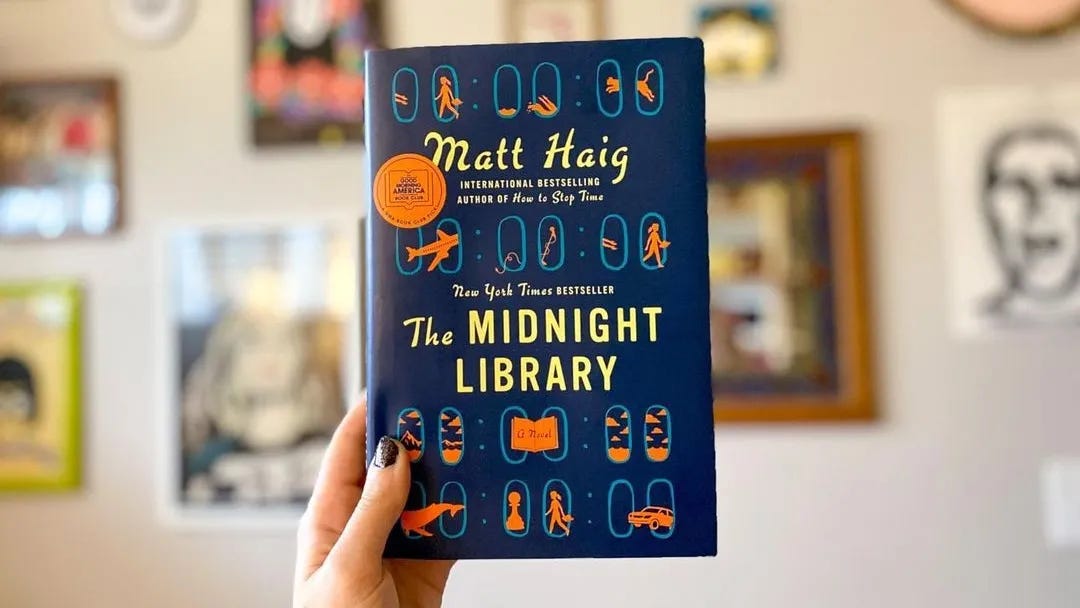
There is a peculiar comfort in knowing that every decision we make doesn’t just define a path; it effectively closes the door on every other path we didn’t take. Matt Haig’s The Midnight Library captures this existential heavy lifting with remarkable gentleness. It’s not just a novel about regret; it’s a map for anyone who has ever wondered if a better version of themselves exists somewhere in the multiverse of their own choices. The quotes scattered throughout the narrative act as anchors, keeping the protagonist, Nora Seed, grounded when the sheer weight of her alternate lives becomes overwhelming. For readers navigating their own crossroads, these lines offer more than literary flair—they provide a framework for understanding dissatisfaction, potential, and the quiet power of simply being alive.
The Anatomy of Regret
We often treat regret as a singular, monolithic emotion. We look back and feel a sharp pang of "what if," assuming that the road not taken must have been paved with gold. Haig dismantles this illusion early on. He suggests that our memory of the unlived life is often cleaner, brighter, and more perfect than it likely would have been in reality. We romanticize the outcome because we never had to deal with the mundane, exhausting details of the process.
This perspective shift is crucial. When Nora realizes that her regrets are not about the choices themselves, but about the expectations attached to those choices, the narrative gains its emotional core. The library serves as a physical manifestation of this internal struggle. Each book represents a life where one key decision was made differently. Yet, as Nora flips through these pages, she discovers that changing one variable rarely solves the fundamental human condition. We swap one set of problems for another. The quote, "You only have one life. You can’t know what the others hold, but you can change your own," serves as a stark reminder that comparison is the thief of—well, everything. It’s easy to envy a hypothetical success. It’s infinitely harder to cultivate contentment in the present reality.
The Burden of Potential
One of the most persistent themes in the book is the crushing weight of unfulfilled potential. Society often tells us that we must achieve specific milestones to validate our existence. We must become the musician, the scientist, the politician, or the adventurer. If we don’t, we are failures. Haig challenges this metric of success by highlighting the absurdity of chasing a ghost.
Nora’s journey reveals that the "perfect" life is a myth. In one alternate timeline, she is a polar explorer. It’s glamorous, dangerous, and isolated. In another, she is a successful career woman, but lonely and disconnected from her family. The narrative doesn’t offer a clean resolution where one life is objectively superior. Instead, it suggests that satisfaction comes not from the external validation of our achievements, but from how we choose to engage with the present moment. The library offers infinite options, but infinity is paralyzing. True freedom comes from limiting the options, not expanding them.
This concept resonates deeply in an age of infinite choice. We have access to endless careers, relationships, and lifestyles. Yet, this abundance often leads to anxiety rather than fulfillment. The quotes in the book remind us that a good life is not a perfect life. It is a life lived fully, with all its flaws and imperfections. By accepting the limitations of our single timeline, we can stop looking for the "right" choice and start making the current choice the right one.
Key Takeaways from the Narrative
- Regret is natural: Feeling regret is a sign of a functioning conscience, not a character flaw. It means you value outcomes and care about the well-being of yourself and others.
- Connection over achievement: The most fulfilling lives in the narrative are those characterized by deep, meaningful connections with others, rather than professional accolades.
- The power of small joys: Happiness is often found in small, everyday moments—a glass of wine, a good book, a conversation with a friend—rather than grand, life-altering events.
- Acceptance is liberation: Accepting our limitations and past choices frees us from the relentless pursuit of an impossible ideal.
Shifting the Paradigm of Happiness
Perhaps the most profound insight from The Midnight Library is the redefinition of happiness. We tend to view happiness as a destination—a place we arrive at after we have solved all our problems, secured our careers, and found our perfect partners. Haig proposes a different model. He suggests that happiness is a practice. It is the willingness to engage with the present moment, to find joy in the ordinary, and to accept the imperfections of our lives.
Nora’s final realization is not that she has found the "best" life, but that her current life has value. It has struggles, yes, but it also has love, community, and hope. The quotes in the book emphasize that we often overlook the beauty of our own lives because we are too busy looking at the lives of others. By shifting our focus from the external to the internal, we can discover a reservoir of contentment that was there all along. This is not about ignoring problems or pretending that everything is perfect. It is about recognizing that our worth is not determined by our achievements, but by our capacity for connection and compassion.
The midnight library is closed when Nora decides to return to her own life. It isn’t a happy ending in the traditional sense, but it is a hopeful one. She leaves behind the allure of the perfect life and embraces the messy, complicated reality of the one she has. This is a powerful message for anyone struggling with dissatisfaction. The perfect life is not out there, waiting in some alternate timeline. It is here, in this moment, if we are willing to see it. The quotes from The Midnight Library serve as a gentle reminder to stop chasing the horizon and start appreciating the ground beneath our feet. Life is not about choosing the right path; it is about walking the path we have chosen with intention and grace.
Frequently Asked Questions
What is the main message of The Midnight Library?
The primary message is that happiness lies in accepting your current life and making the most of it, rather than obsessing over the possibilities of unlived lives or seeking a perfect outcome in an alternate reality.
Who is the protagonist in the novel?
The protagonist is Nora Seed, a woman feeling overwhelmed by regret and dissatisfaction with her life, who finds herself in a mysterious library between life and death.
Does the book suggest that all decisions are insignificant?
No, the book does not suggest decisions are insignificant. Rather, it argues that we often overestimate the impact of specific choices on our overall happiness and that satisfaction comes from our perspective and connections, not just the outcomes of our decisions.
Is The Midnight Library a tragic story?
The novel begins with a tragic tone, reflecting Nora’s depression and suicidal thoughts. However, it evolves into a hopeful and uplifting narrative about finding meaning and value in one’s own life.