MIKE Powered By DHI: The Ultimate Water Modeling Tool
Water is everywhere, but predicting its behavior is notoriously difficult. From rising sea levels threatening coastal cities to sudden flash floods in urban centers, the stakes for accurate hydrological forecasting have never been higher. For engineers, hydrologists, and environmental planners, the software of choice often comes down to one name: MIKE Powered By DHI. It has become the de facto standard in the industry, but is it really the “ultimate” tool, or just another expensive piece of software? To answer that, we need to look past the marketing and dive into how it actually performs in the field.
More Than Just a Single Program
When people talk about MIKE, they are rarely referring to a single application. Instead, it is a comprehensive suite of tools designed to model water in all its forms and phases. Developed by DHI, a Danish engineering and consulting company with decades of experience in hydraulic structures, the platform covers everything from rainfall-runoff simulation to wave dynamics and water quality analysis.
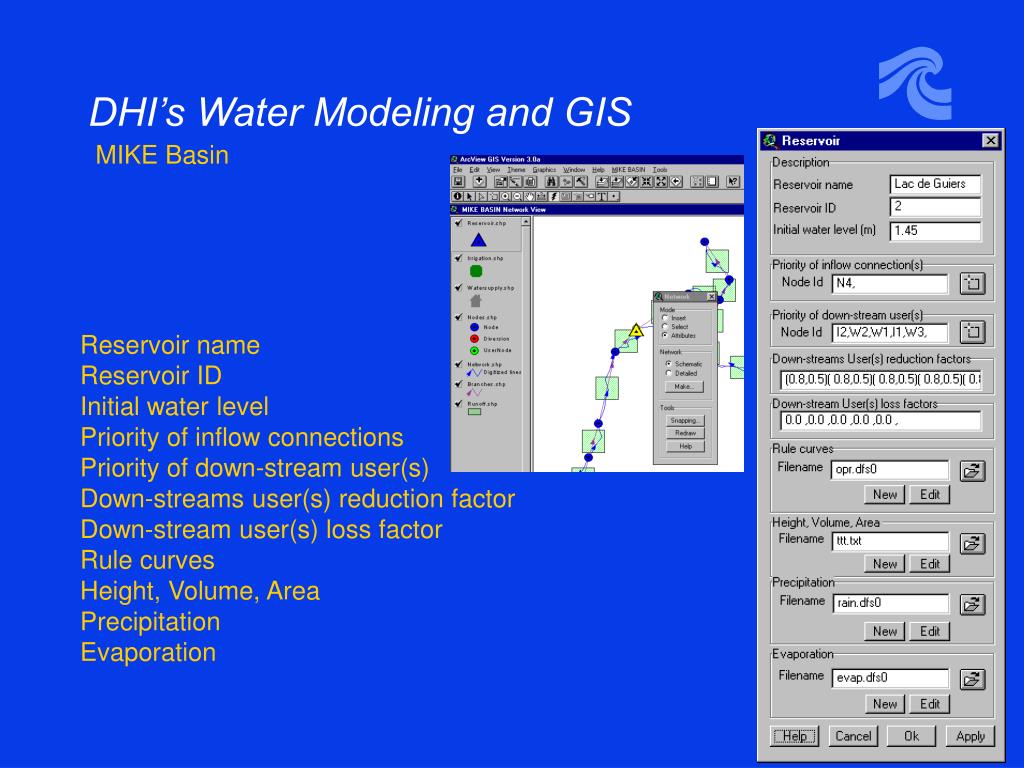
You might use MIKE 11 for river and canal systems, while MIKE 21/3 handles open surfaces like lakes and coastal waters. If you are dealing with complex urban drainage, MIKE URBAN or MIKE FLOOD becomes essential. This modularity is both its greatest strength and its initial hurdle. You don’t buy “MIKE”; you buy the specific components that solve your particular puzzle. This flexibility allows for highly specialized simulations that generic software simply cannot replicate.
The Power of Coupling Simulations
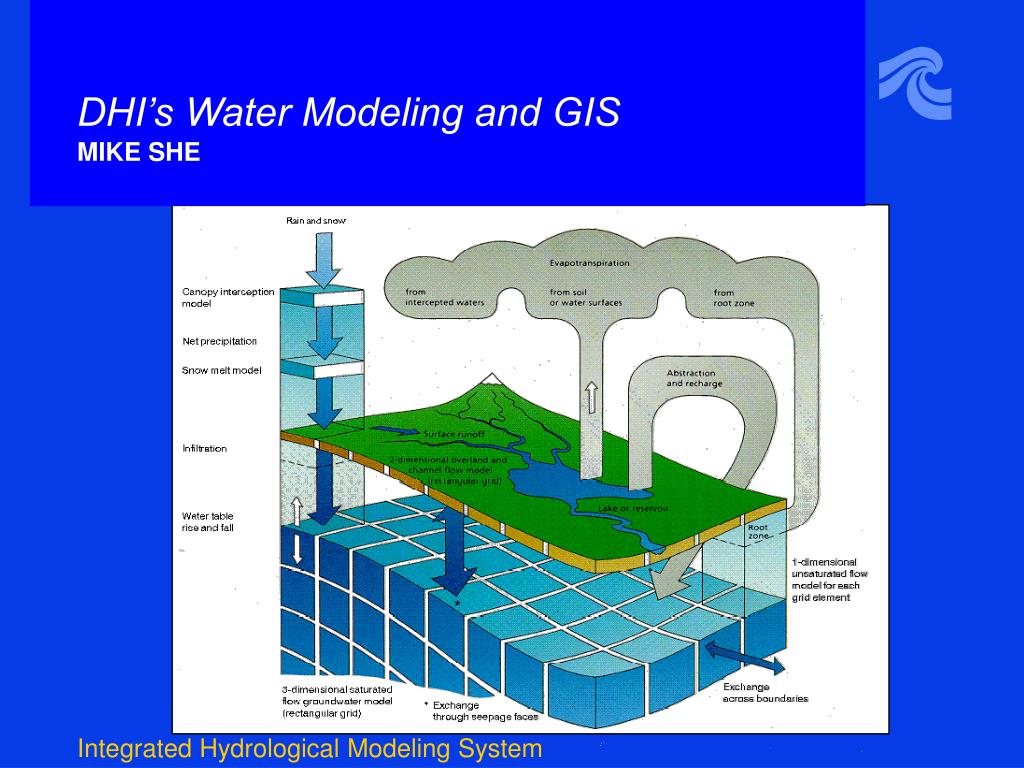
Real-world water problems rarely exist in isolation. A river doesn’t just flow; it interacts with the groundwater, the atmosphere, and the surrounding infrastructure. The true power of the DHI suite lies in its ability to couple these different models. For instance, you can link a 1D river model with a 2D floodplain model to see exactly how overflow spreads across a landscape during a storm event.
This integration is critical for comprehensive flood risk management. Older methods often treated these elements separately, leading to gaps in data and potential safety risks. By running a coupled simulation, engineers can visualize the complete picture. They can see how a levee breach in the river model directly impacts the inundation depth in the flood model, allowing for more precise emergency planning and infrastructure design.
Why Visualization Matters
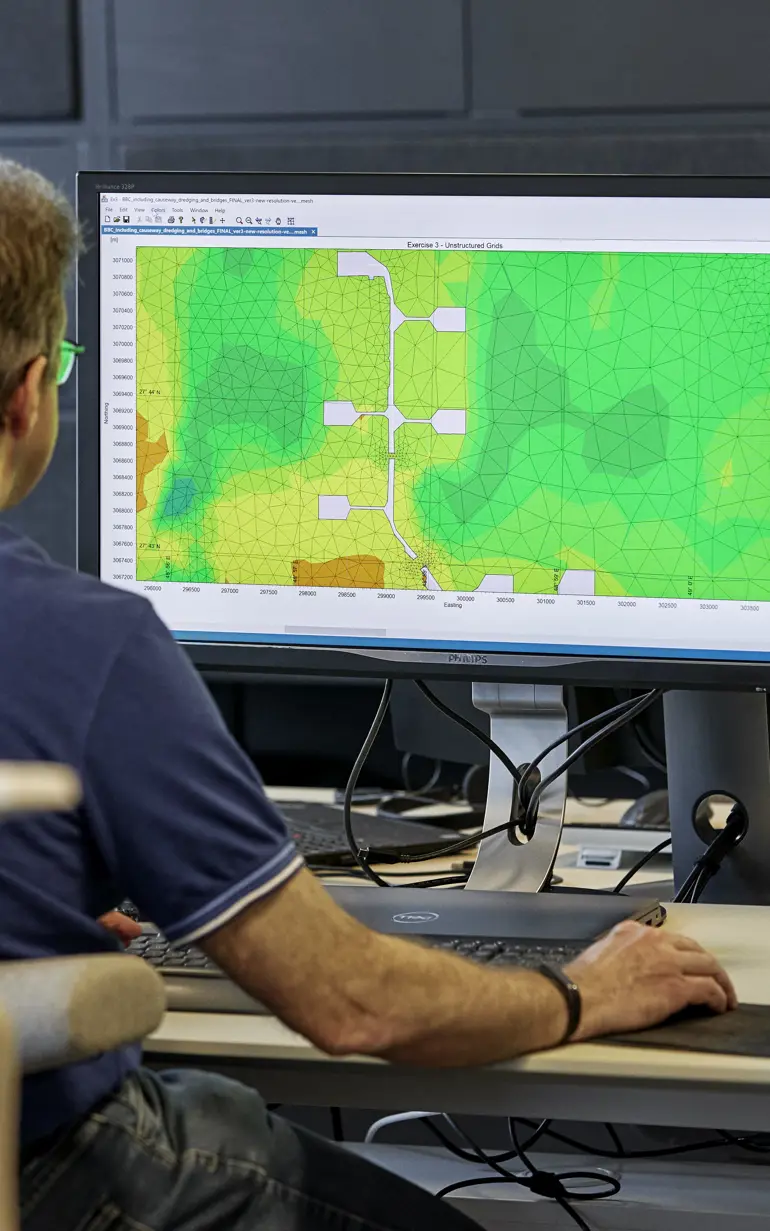
Data is useless if stakeholders cannot understand it. One of the reasons MIKE has dominated the consulting sector is its robust visualization capabilities. The output isn’t just tables of numbers; it’s dynamic, color-coded maps and time-lapse animations that make complex hydrological data accessible to city planners, politicians, and the public. When you can show a council member a clear animation of how a proposed bridge pier will alter flow currents, decision-making becomes much faster. That clarity is often what separates a theoretical project from an approved one.
The Learning Curve and Cost Barrier
Let’s address the elephant in the room: this is not light desktop technology. MIKE Powered By DHI is enterprise-grade software, and it comes with a price tag to match. For small firms or individual researchers, the licensing costs can be prohibitive. Furthermore, the complexity of the tools means that users need a solid background in hydraulic engineering and numerical modeling.
It is not a “point-and-click” solution that yields instant, accurate results. Setting up a boundary condition wrong can invalidate an entire simulation. This necessitates significant training. Many consultants find that they spend months mastering the interface and understanding the physics behind the algorithms before they can produce reliable deliverables. However, once mastered, the efficiency gains are substantial. The time spent learning pays off in the precision and reliability of the final models.
Support and Community
DHI is known for its strong technical support and active user community. Because the software is so widely used globally, there is a vast library of case studies, tutorials, and forums where experts share best practices. This ecosystem helps mitigate the learning curve. When you encounter a specific bug in a sediment transport module, it is likely someone else has already documented a workaround. This shared knowledge base is a hidden value that propels the software above many competitors.
Is It Right for Your Project?
Whether MIKE is the right choice depends on the scale and complexity of your work. If you are designing a simple backyard pond drainage system, this overkill. However, for large-scale infrastructure projects, climate change adaptation strategies, or complex water resource management, it remains unmatched. Its ability to handle coupled 1D/2D/3D models gives it a versatility that few rivals can offer.
The industry standard status of MIKE also means that hiring expertise is easier. Most hydraulic engineers have at least some familiarity with the interface, which reduces team ramp-up time. In a world where water security is becoming increasingly vital, having access to the most robust, proven modeling tools isn’t just a luxury—it’s a necessity.
Frequently Asked Questions
- What is the difference between MIKE 11 and MIKE 21? MIKE 11 is designed for 1D flow in rivers, canals, and pipelines where the width is smaller than the length. MIKE 21 is for 2D horizontal flow in open surface water bodies like lakes, estuaries, and coastal areas where both length and width are significant.
- Can MIKE simulate climate change scenarios? Yes. By adjusting boundary conditions such as sea level rise, precipitation patterns, and temperature, users can model future climate impacts on flood risks and water availability.
- Is MIKE software open-source? No, MIKE Powered By DHI is proprietary commercial software. However, DHI does offer free educational licenses for students and academic researchers.
- What are the system requirements for running MIKE? Since many simulations are computationally intensive, a powerful workstation with a multi-core CPU, ample RAM (16GB minimum, 32GB+ recommended for large models), and a fast SSD is advised.