National Intelligence Council: What Does It Actually Do?
If you have ever watched a spy thriller or followed the news during a geopolitical crisis, you have likely heard the term "National Intelligence Council" (NIC). It sounds like a place where shadowy figures plot global dominance, right? Well, not quite. The reality is far less dramatic, but arguably much more important.
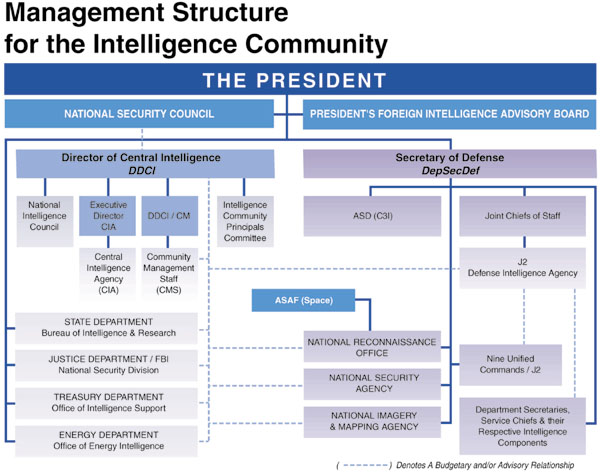
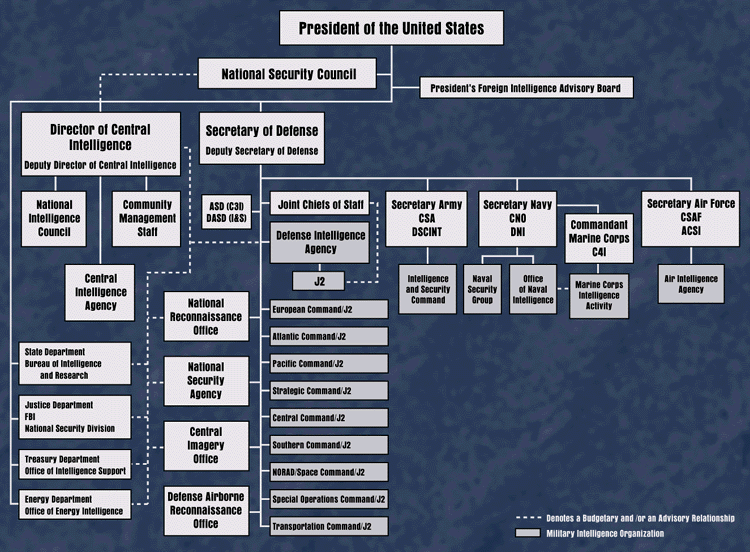
The NIC is not a spy agency. It doesn’t run covert ops, execute arrests, or field agents in hostile territory. Instead, it sits at the very top of the US intelligence community as the principal advisory body for the National Intelligence Manager and the Director of National Intelligence (DNI). Think of it as the think tank within the intelligence apparatus.
Its job isn't to gather raw data—that’s for the CIA, NSA, and DIA. The NIC’s role is to synthesize that data, look for patterns, and warn policymakers about long-term trends and emerging threats. It’s the group that tries to answer the question: "What is coming around the corner in five to twenty years?"
Who Really Runs the Show?
The structure of the NIC is designed to be collaborative rather than hierarchical in a traditional military sense. At the helm is the Chairman of the National Intelligence Council, who serves as the principal advisor to the DNI on strategic intelligence matters. This person is usually a career intelligence analyst who has spent decades climbing the ladder.
Below the Chairman, the council is composed of senior leaders from across the entire intelligence community. This includes representatives from the 18 agencies that make up the US IC, such as the Federal Bureau of Investigation, the Department of Defense, and the Department of Energy.
This diversity is key. By pulling together experts from different disciplines—cybersecurity, counterterrorism, economic intelligence, and science and technology—the NIC avoids the "tunnel vision" that often plagues single-agency analysis. It forces analysts to look at a problem through multiple lenses before forming a conclusion.
Integrating Intelligence: More Than Just Summing Up
One of the most misunderstood aspects of the NIC is its function as an integrator. In a world where the NSA intercepts communications, the CIA collects human intelligence, and the DIA monitors military movements, the NIC acts as the central nervous system.
They don’t just throw these reports into a pile. Instead, they perform "integrative analysis." This means identifying conflicting information, resolving discrepancies, and building a coherent picture of the strategic environment. For example, if the NSA detects unusual network traffic in a specific country, and the CIA reports increased diplomatic friction, the NIC connects those dots to assess the likelihood of imminent conflict or cyber warfare.
This integration is critical for producing products like the Worldwide Threat Assessment. Presented annually to the Senate Select Committee on Intelligence, this document is perhaps the most significant public-facing output of the US intelligence community. It outlines the top threats facing the nation, from nuclear proliferation in the Middle East to the rise of authoritarianism and the destabilizing effects of climate change.
The Long Game: Global Trends
While daily intelligence briefings keep decision-makers aware of immediate threats, the NIC focuses on the long horizon. Their flagship product, Global Trends, is published roughly every four years. It attempts to map out the future of the international system.
This isn't crystal ball gazing. It’s rigorous academic-style forecasting. Analysts look at demographic shifts, energy markets, technological advancements, and geopolitical alliances. They ask hard questions: Will the US remain the sole superpower? How will artificial intelligence change the nature of warfare? What happens to global stability if Arctic ice melts faster than predicted?
These reports are not meant to predict specific events but to identify plausible futures. By outlining different scenarios, the NIC helps policymakers prepare for a wide range of outcomes rather than optimizing for a single, likely course of action. This approach reduces the risk of being caught off guard by a "black swan" event.
Why Strategic Warning Matters
Beyond long-term trends, the NIC plays a vital role in strategic warning. This is the early detection of events or developments that could have significant implications for US national security. Unlike tactical warning, which alerts commanders to an attack happening right now, strategic warning operates on a longer timeline.
It might involve spotting signs of a neighbor amassing weapons, detecting early stages of a pandemic, or identifying economic vulnerabilities in a key ally. The goal is to give leaders time to react—diplomatically, militarily, or economically—before a situation becomes unmanageable. In an era of rapid change, this early warning system is arguably more valuable than ever.
Working With, Not Just For, Policymakers
The NIC doesn’t work in a vacuum. It engages frequently with senior officials in the White House, the State Department, and the Pentagon. However, there is a delicate balance to strike. The NIC must provide objective, unbiased analysis without becoming a yes-man for political agendas.
This independence is hard-won and constantly tested. Analysts must stick to the facts, even when those facts are inconvenient for current policy. The credibility of the entire intelligence community rests on this reputation for objectivity. If policymakers believe the NIC is的政治ly motivated, the entire value proposition of strategic intelligence collapses.
To maintain this integrity, the NIC follows strict professional standards. Disagreements among analysts are documented and included in reports. This transparency allows policymakers to see where the consensus lies and where there are significant differences of opinion within the community.
The Evolution of Intelligence Roles
It’s worth noting that the NIC’s role has evolved significantly since its creation in 1972. Initially, it focused heavily on the苏联 Union and nuclear weapons. Today, its scope has expanded dramatically to include non-traditional security threats like cyberattacks, climate disasters, and global health crises.
This expansion reflects the changing nature of risk. In the past, national security was mostly about missiles and armies. Now, it’s just as likely to be about supply chain disruptions, electromagnetic pulses, or misinformation campaigns. The NIC has had to adapt its methods and recruit new types of experts to keep pace with these changes.
Challenges in the Modern Era
Of course, the NIC faces significant challenges. The sheer volume of data available today is overwhelming. Distinguishing signal from noise is harder than ever. Additionally, the politicization of intelligence remains a persistent threat to its effectiveness.
There is also the challenge of interagency cooperation. While the IC is officially unified, individual agencies often have their own cultures and priorities. Getting everyone to agree on a single assessment can be a political process in itself. The NIC’s true skill lies in navigating these bureaucratic complexities to produce clear, actionable intelligence.
Frequently Asked Questions
- Is the National Intelligence Council part of the CIA? No. While it works closely with the CIA and other agencies, the NIC is part of the Office of the Director of National Intelligence (ODNI). It is an independent analytical body within the broader intelligence community.
- Who approves the reports from the NIC? The findings undergo a rigorous review process involving the DNI and senior leadership across the IC. Disagreements are resolved through debate and evidence, with final authority resting with the DNI.
- How does the NIC differ from the National Security Council (NSC)? The NSC is part of the Executive Office of the President and focuses on policy formulation and decision-making. The NIC provides the intelligence analysis that informs those decisions but does not set policy itself.
- Can the public access NIC reports? Some reports, like Global Trends and the Worldwide Threat Assessment (summarized versions), are publicly available. However, most detailed analytical products classified for national security reasons remain secret.