Netherlands Visa: Your Complete Guide for Travelers
Planning a trip to the Netherlands is exciting. Imagining cycling through Amsterdam’s canals or visiting the sleepy villages of Friesland is easy. But before you can pack your bags, there is the logistical hurdle of paperwork. Navigating the visa requirements for the Netherlands can feel like deciphering an ancient language if you haven’t done it before. The good news is that the system, while bureaucratic, is actually quite structured. Understanding exactly which permit you need and how to apply can save you weeks of stress and the embarrassment of being turned away at the border.
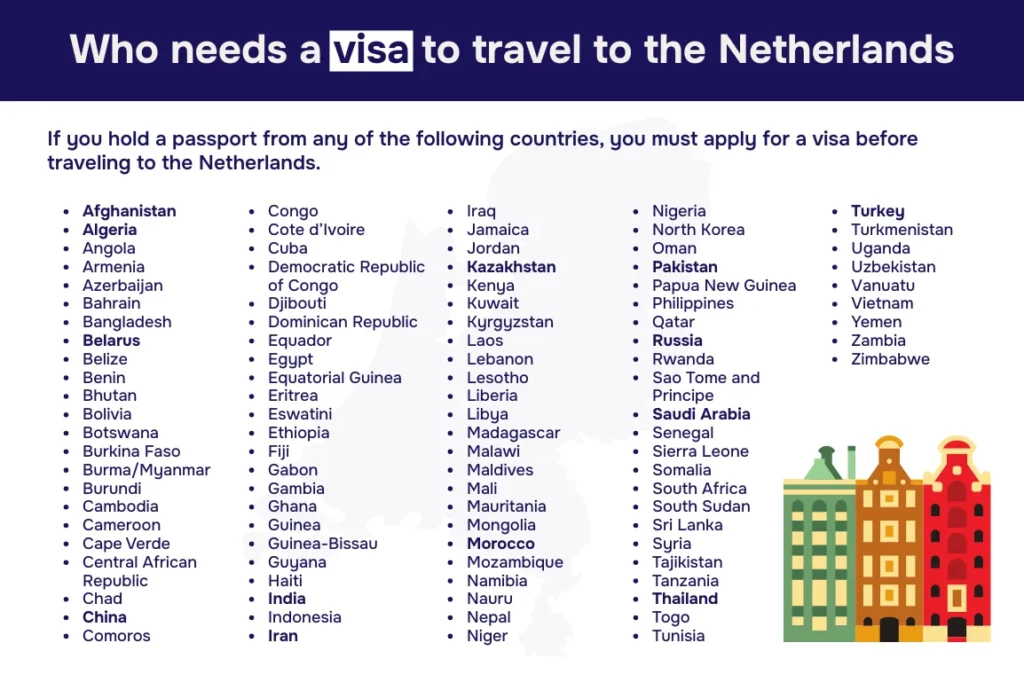
The first and most critical step is determining whether you actually need a visa in the first place. Not every traveler faces this requirement. If you are a citizen of a Schengen-visa-exempt country, such as the United States, Canada, Australia, or the United Kingdom, you generally do not need a visa for short stays. You can enter the Netherlands for tourism, business, or family visits for up to 90 days within any 180-day period without one. However, starting in 2025, all visa-exempt travelers must register with the European Travel Information and Authorization System (ETIAS), which is an electronic authorization rather than a traditional visa, but serves a similar security function.
If you are not from an exempt country, you will likely need a Schengen Visa. The Netherlands is part of the Schengen Area, a zone comprising 29 European countries that have abolished passport and other types of border control at their mutual borders. This means a visa issued by the Netherlands allows you to travel freely to other Schengen nations like France, Germany, and Italy. It is important to apply for the visa from the country that is your main destination. If the Netherlands is your primary stop, you must apply through their channels, not those of another Schengen country.
Types of Visas for the Netherlands
Not all visas are created equal. The type of document you need depends entirely on the purpose and duration of your visit. For most tourists, short-stay visitors, and business travelers spending less than three months in the country, the standard Schengen Visa (Type C) is the correct path. This is a short-stay visa that allows multiple entries, meaning you can leave and re-enter the Schengen zone within the validity period, provided you do not exceed the 90-day limit.
However, if you plan to stay longer than 90 days for reasons such as study, work, or family reunification, a short-stay visa will not suffice. In these cases, you need a Residence Permit, often preceded by a Single-Entry Visa (Type D). This long-stay visa is more complex. It often requires proof of sufficient financial means, a valid health insurance policy that meets Dutch standards, and sometimes a residence permit approval from the Dutch Immigration and Naturalisation Service (IND) before you can even apply for the visa at the embassy. Mixing these up is a common mistake that leads to rejected applications, so be very clear about your intended length of stay.
Gathering Your Documents
Once you know which visa you need, the paperwork begins. The Netherlands is known for being thorough, and consistency is key. Your application file should tell a coherent story. At a minimum, you will need a completed application form, which is available online through the IND portal. You will also need two recent passport-sized photos that meet strict EU specifications. These are more demanding than standard photo ID pictures; for instance, your mouth must be closed, and you cannot wear glasses in the photo.
Beyond the basics, you need to prove your intent to return home. Embassies are skeptical of applicants who might overstay their welcome. A round-trip flight reservation demonstrates a plan to leave. Hotel bookings or an invitation letter from a host in the Netherlands shows where you will live. Perhaps most importantly, you need proof of financial stability. This could be bank statements from the last three months showing a healthy balance, or a sponsorship letter if someone else is covering your costs. Health insurance is non-negotiable; it must cover emergency medical expenses and repatriation with a minimum coverage of €30,000. Furthermore, your passport must be valid for at least three months beyond your planned departure date from the Schengen Area.
The Application Process
Submitting your application is rarely done directly at the Dutch Embassy itself. Most countries have outsourced this process to visa application centers, typically operated by companies like VFS Global or TLScontact. These centers handle the initial intake, biometric data collection (fingerprints and photos), and fee payment. You will need to book an appointment well in advance, especially during peak travel seasons like summer or spring holidays. Walk-in applications are generally not accepted.
After submitting your documents, you wait. Processing times vary but typically take up to 15 days for a standard Schengen Visa. It can take longer if your case requires additional administrative checks, extending the timeline to 45 days or even two months in rare instances. During this time, you cannot change your travel plans, as the visa is tied to the specific dates and accommodation details you provided. Once approved, the visa sticker is placed in your passport, and you can begin the journey you’ve been planning.
Common Pitfalls to Avoid
Many applications are rejected not because the traveler is ineligible, but because of small errors. Inconsistency is the enemy of approval. If your cover letter says you are visiting for tourism, but your itinerary looks like a business trip, the visa officer will flag it. Your insurance dates must exactly match your travel dates. Your bank statements must be recent and stamped by the bank. Failing to provide clear contact information for your host in the Netherlands can also cause delays. Finally, applying too late is a frequent issue. The Netherlands allows you to apply up to six months before your trip, but no earlier. Waiting until the last week often results in missing your flight because processing times can be unpredictable.
Frequently Asked Questions
- Can I extend my visa while in the Netherlands?
Generally, no. Schengen visas are strict about the 90-day limit. Extensions are only granted in exceptional circumstances, such as force majeure or humanitarian reasons, and you must apply before your current visa expires. - What if my visa application is rejected?
You will receive a letter explaining the reason. You can appeal this decision, but it is often more effective to correct the underlying issue and reapply with a stronger, more consistent set of documents. - Do I need a visa if I am just transiting through Amsterdam Schiphol Airport?
If you do not leave the international transit area of the airport, you usually do not need a visa. However, citizens of certain countries require a Airport Transit Visa, even if they are not entering the Schengen zone.