Nissan Skyline GT-R: How The JDM Legend Earned Its Fierce Reputation
The Nissan Skyline GT-R is more than just a car. For decades, it has been the crown jewel of Japanese automotive engineering, a machine that blurs the line between a daily driver and a track weapon. If you grew up in the ’90s or early 2000s, you likely know the story. You know about its stranglehold on D1 Grand Prix racing. You definitely know the nickname: “Godzilla.” But the title of “iconic sports car” wasn’t handed to the Skyline GT-R on a silver platter. It was earned through sheer mechanical dominance, relentless evolution, and a bit of bad luck that only made it more legendary.
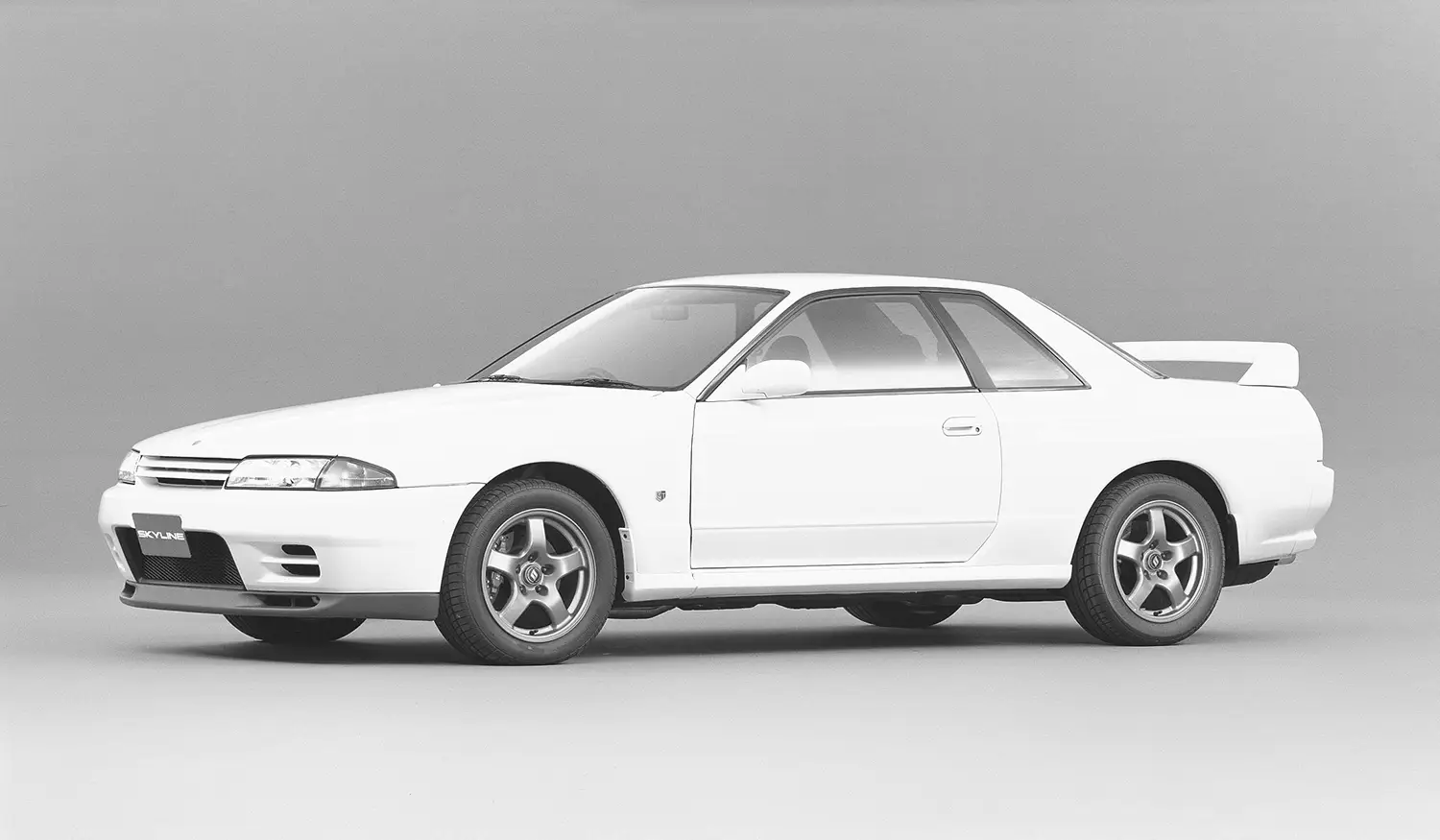
When we talk about the Skyline GT-R, we aren’t talking about one single vehicle. We are talking about a lineage that began in the late 1960s but truly found its spiritual home in the R32 generation launched in 1989. That was the moment Nissan decided to build a grand tourer that could beat Ferraris and Porsches on the track, thanks largely to its advanced ATTESA all-wheel-drive system and Super-Hysterics Control (Super-H) traction management. The result was a car that wouldn’t slide out of control in the rain, something Japanese racers desperately needed.
The Mechanical Heart: The Legendary RB26 Engine
You can talk about aerodynamics, interior comfort, and brand heritage all day, but the soul of the Skyline GT-R lives in its engine bay. The RB26DETT is widely considered one of the greatest inline-six engines ever built. It features two turbochargers, each feeding three of the six cylinders. This setup reduces turbo lag and provides a torque curve that feels almost linear.
Here is where things get interesting for enthusiasts. The engine was engineered to produce 280 horsepower on paper. Why so low? Because of an unspoken gentlemen’s agreement among major Japanese automakers in the ’90s to voluntarily limit power outputs. The reality? The R32 produced closer to 300 horsepower. The R33? Around 320. And the final R34? Closer to 350. With a relatively light curb weight and that brilliant all-wheel-drive system, the power-to-weight ratio was devastating. It wasn’t just fast in a straight line. It was relentless through corners.
From R32 to R34: The Evolution
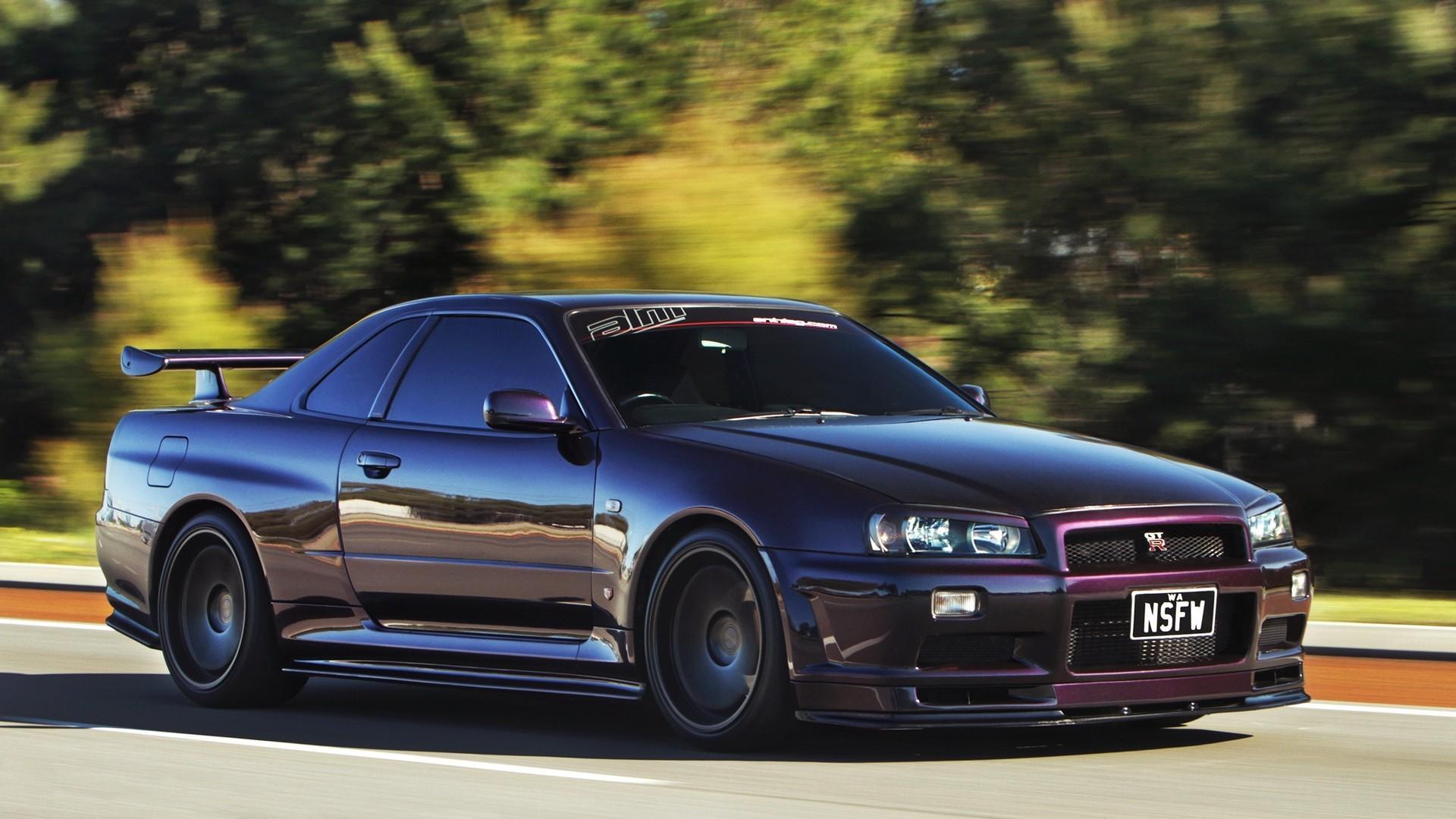
While the R32 broke the mold, the R33 refined it. It introduced a new, sharper exterior design and improved the ATTESA AWD system. But it is the R34, released in 1999, that cemented the GT-R’s status in popular culture, largely thanks to its appearance in the Fast & Furious franchise. The R34 wasn’t just a styling exercise. Nissan upgraded the steering, stiffened the chassis, and introduced multi-function displays (MFDs) that allowed drivers to monitor boost pressure, engine temperature, and gear shift times in real-time.
For many drivers, the R34 feels more connected to the road than its predecessors. The steering is heavier, more hydraulic. The suspension, particularly on the Z-Tune variants created by Nissan’s legendary race engineer Akio Ito, is dialed in with a precision that borders on obsessive. It is a car that demands respect. You don’t just drive a Skyline GT-R. You communicate with it.
The End of an Era and Its Enduring Legacy
The Skyline nameplate was retired in 2002, largely due to complex naming conventions in global markets that confused buyers. The direct successor, the Infiniti G35/G37, carried the spirit but lacked the badge. It wasn’t until 2007 that Nissan revived the GT-R name, though the new R35 is a completely different beast, built on a global platform rather than the traditional Skyline chassis.
Even though you can no longer buy a new Skyline GT-R, the cars have transcended their role as transportation. They are cultural artifacts. Restoration projects are blooming everywhere from Tokyo to Los Angeles. Parts are hard to find, and maintenance is expensive. Owning one today is a commitment. You are buying into a heritage of innovation.
What makes the Skyline GT-R truly iconic isn’t just that it was fast. It’s that it proved Japanese engineering could outthink European luxury. It showed that technology, like the N1 computer system that managed the car’s dynamics, could bridge the gap between human driver and machine. For many, it remains the benchmark against which all performance sedans are measured.
Frequently Asked Questions
- Is the Nissan Skyline GT-R street legal in the US?The R32, R33, and R34 models were never officially sold in the United States by Nissan. They are typically imported under the 25-year rule (making them eligible for import 25 years after manufacture) or through specific show-or-display exemptions. The R35 GT-R has been officially sold in the US since 2008.
- What is the difference between the R32, R33, and R34?Each generation improved upon the last. The R32 (1989-1994) established the all-wheel-drive, twin-turbo formula. The R33 (1995-1998) offered a wider body and refined handling. The R34 (1999-2002) introduced sharper styling, the iconic multi-function displays, and the most advanced suspension tuning of the pre-2000 era.
- Why is it called "Godzilla"?The nickname was coined by the British magazine Top Gear after the R32 dominated the Japanese Touring Car Championship (JTCC), easily beating European rivals. The moniker stuck globally and became synonymous with the car's dominant nature.
- How much is a classic Skyline GT-R worth today?Prices vary wildly based on condition, mileage, and provenance. A standard R32 might start around $20,000. Clean R33s often hover between $40,000 and $60,000. Iconic R34s, especially those with low mileage or rare paint colors like Bayside Blue or Midnight Purple, can easily exceed $100,000, with special editions like the Nür Edition R35 or Z-Tune models commanding even higher sums.