Reuters Institute Digital News Trends 2024: What’s Actually Changing?
It’s easy to feel like the news landscape is shifting beneath our feet every single day. One week it’s about newsletters, the next it’s short-form video, and then suddenly we’re talking about AI-summarized briefings. If you’ve been trying to keep up, you’ve probably stumbled upon the Reuters Institute Digital News Report. It’s widely considered the gold standard for understanding how audiences interact with news across the globe.
But let’s be honest—reading a 200-page academic report isn’t exactly a weekend activity for most of us. So, what are the key insights and trends that actually matter? What does the data tell us about trust, platforms, and the future of media revenue? Here is a breakdown of the most significant findings from the latest reports, stripped of the academic jargon.
The Search for Trust in a Skeptical Age
Trust remains the elephant in the room for journalists and publishers everywhere. The data consistently shows that while people need news, they don’t necessarily trust it. The gap between information need and source credibility is widening.
A major trend in recent years has been the "trust deficit." Audiences are becoming increasingly discerning about where they get their information. Traditional broadsheet newspapers and established broadcasters often still hold the highest trust scores, but their reach is shrinking. Meanwhile, social media platforms dominate attention but lag significantly in trust. This creates a paradox: people prefer to get news from sources they don’t fully trust simply because those sources are easier to access and more culturally relevant to their daily scroll.
This doesn’t mean audiences are cynically rejecting facts. Instead, they are prioritizing convenience and community over institutional authority. The implication for newsrooms is clear: building trust isn’t just about better journalism; it’s about better communication. Transparency, consistency, and perhaps a bit of personality go a long way in bridging that gap.
Platforms Are No Longer Just Distribution Channels
If you thought the death of the third-party cookie and changes to Facebook’s algorithm were the biggest headaches for publishers, think again. The dynamic between news brands and tech platforms has evolved from a symbiotic relationship to a tense negotiation.
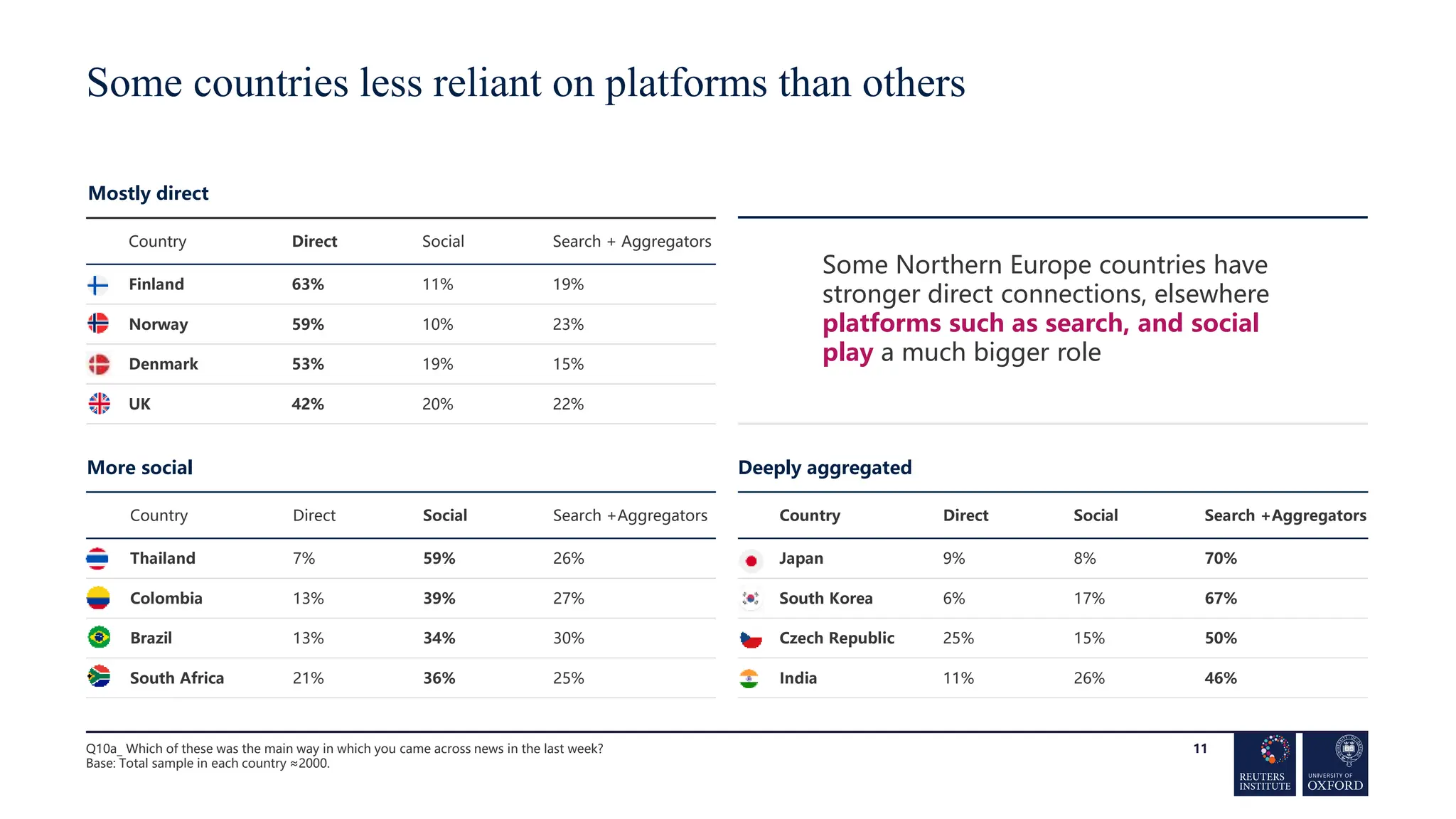
One of the most striking insights from the Reuters Institute is the shift in how audiences discover news. For decades, the homepage of a major news site was the gatekeeper. Now, discovery is fragmented across WhatsApp, TikTok, YouTube, and email inboxes. In many countries, WhatsApp is the primary source of news for younger demographics, surpassing even dedicated news apps.
This fragmentation forces publishers to adapt their content formats drastically. A long-form investigative piece might live on a website, but its highlights need to be repurposed into a 60-second video for TikTok and a carousel post for Instagram. It’s exhausting work, but the data shows that audiences expect this omnichannel presence. The brands that succeed are those that speak the language of each platform without diluting their core journalistic identity.
The Paywall Paradigm Shift
Let’s talk about money. The internet broke the traditional advertising model for news, but it didn’t break the business of news itself. The most encouraging trend in recent reports is the growth of direct consumer revenue. More people are paying for news directly than ever before.
However, the path to subscription is no longer a simple metered paywall. Audiences have sophisticated expectations. They want flexible bundles, free access for students or seniors, and unique value propositions that they can’t get from free wire services. The "free tier" is still essential for audience growth, but it has to be carefully managed to avoid becoming a dead end.
Interestingly, the success of paid digital subscriptions isn’t uniform. It tends to thrive in markets with higher disposable income and a cultural habit of paying for content. In emerging markets, ad-supported or hybrid models remain dominant. For publishers, the lesson is that there is no one-size-fits-all monetization strategy. You have to match the model to the local economic reality.
AI: Tool or Threat?
Artificial Intelligence is the buzzword of the decade, but the Reuters Institute data offers a nuanced view. Audiences are generally skeptical of AI-generated content when it replaces human journalists. They value the "human touch"—the context, the bias, the narrative flair—in news reporting.
However, AI is finding a welcome home in curation and personalization. Newsletters that use algorithms to curate a daily briefing are seeing high engagement. The key is transparency. When publishers are upfront about using AI for tasks like data analysis or transcript generation, audiences are more accepting. The fear isn’t technology itself; it’s the erosion of editorial accountability.
For newsrooms, AI is less about replacing writers and more about augmenting efficiency. It’s the new spell-checker, the macro-tool for scheduling, and the assistant for sorting through massive datasets. The human journalist remains the crucial filter, ensuring that the story matters and the context is correct.
Why These Trends Matter for You
Whether you’re a journalist, an editor, or just a conscious consumer of news, these trends tell a story of resilience and adaptation. The news industry isn’t dying; it’s transforming. Trust is being rebuilt on new foundations, revenue is becoming more direct, and platforms are being tamed into useful tools rather than masters.
The future of news isn’t about going back to the way things were. It’s about embracing the complexity of the digital age. It’s about meeting audiences where they are, being honest about who you are, and delivering value that’s worth paying for—whether that payment is in money or in attention.
FAQ
What is the Reuters Institute Digital News Report?
It is an annual, comprehensive global survey conducted by the Reuters Institute for the Study of Journalism at the University of Oxford. It tracks how audiences across dozens of countries consume, pay for, and trust news media.
How much do people trust social media for news?
Generally, trust in social media as a news source is lower than trust in traditional outlets like newspapers and TV broadcasts. However, many people still rely on platforms like Facebook and Twitter for discovery, even if they verify the information elsewhere.
Are people willing to pay for online news?
Yes, the trend shows a steady increase in paid subscriptions. While free content remains popular, a significant segment of the audience values quality journalism enough to pay a monthly or annual fee, particularly for in-depth analysis and local news.
Which platforms are most popular for news consumption?
It varies by region and age group. WhatsApp is dominant in Latin America and parts of Asia for younger users. Facebook remains strong for older demographics globally. YouTube is growing rapidly as a news source, especially for visual storytelling and explanatory videos.