Tesla vs. Giants: Why Its Market Cap Defies Traditional Auto Math
When you look at a balance sheet, numbers rarely tell the whole story. Nowhere is this more true than in the automotive industry. For years, traditional automakers like Toyota, Volkswagen, and Ford have chugged along, producing tens of millions of vehicles annually with steady, predictable dividends. Then there is Tesla.
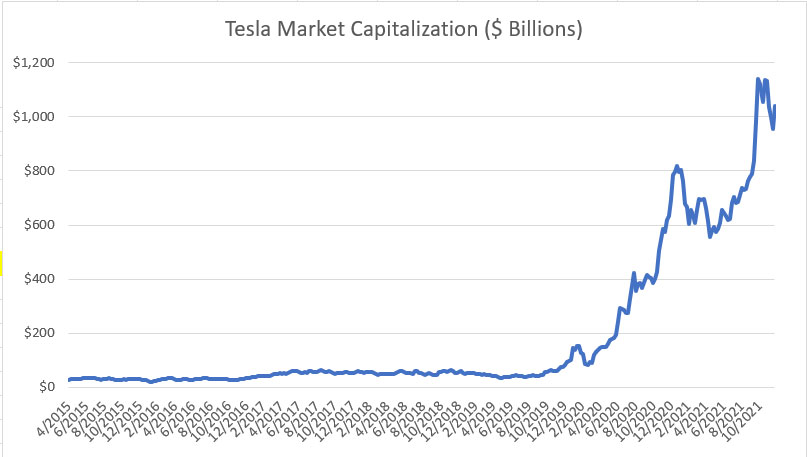
Despite selling a fraction of the volume of these legacy giants, Tesla’s market capitalization has frequently hovered near or above the combined value of entire fleets of incumbents. To the casual observer, it looks like a glitch in the matrix. To investors, it looks like a bet on the future. But why does the market value an electric vehicle startup so differently from the companies that have built roads, cities, and economies for a century?
The Profit Per Share Anomaly
The first thing to understand is that market cap isn’t just about revenue; it’s about perceived future cash flow. Traditional automakers are heavy asset businesses. They have massive factories, intricate supply chains, and unions. This leads to thin profit margins, often sitting between 5% and 8%. Toyota is a master of efficiency, but even they struggle to push past those margins consistently.
Tesla, on the other hand, has managed to achieve software-like margins in a hardware business. By vertical integration and unique manufacturing techniques like gigacasting, Tesla has squeezed out profitability that legacy automakers find difficult to replicate. When a company grows revenue while expanding margins simultaneously, the market rewards it with a higher multiple. You aren’t just buying cars; you’re buying a margin expansion story that hasn’t fully matured yet.
More Than Just A Car Company
Elon Musk has long argued that Tesla is an AI and robotics company that happens to make cars. Investors seem to buy into this narrative. The valuation includes expectations for:
- Full Self-Driving (FSD) technology as a recurring software revenue stream.
- The Optimus humanoid robot potential.
- Energy storage and solar deployments.
If FSD works at scale, the margin profile for a robotaxi fleet is radically different from selling one-off vehicles. It shifts Tesla from a cyclical consumer goods business to a high-margin utility or platform model. That potential shifts the stock’s comparison from Toyota to companies like Microsoft or Google. Legacy automakers are trying to catch up with electric vehicles, but they are playing catch-up in software and AI, where they have significant technical debt and cultural hurdles.
The Legacy Automaker Dilemma
Meanwhile, the giants are stuck in a transition trap. They must continue to sell millions of internal combustion engine (ICE) vehicles to fund the transition to electric vehicles (EVs). This is a massive CAPEX burden. They have to build new battery plants, retool factories, and retrain workers, all while keeping their existing profitable ICE business running.
Tesla has no such legacy burden. Every factory built is an EV factory. Every engineer is focused on electrification and software. This agility allows Tesla to iterate faster. When Volkswagen decides on a new platform, it goes through layers of bureaucracy that can take years. Tesla can update code over-the-air in days. In a rapidly changing market, speed is a financial asset.
Volatility And The Risk Premium
However, the high valuation comes with a price: volatility. Tesla’s stock swings wildly based on production numbers, Elon Musk’s tweets, and macroeconomic interest rates. It is a high-beta stock. Traditional automakers are more stable but offer slower growth. For this reason, many institutional investors use Tesla as a way to get exposure to the EV trend without betting on a specific outcome, while using Ford or GM for stability.
Critics argue that Tesla’s valuation is detached from reality. They point out that BYD in China now sells more EVs than Tesla in some months, yet trades at a fraction of the valuation. This comparison is valid. Tesla is priced for perfection, not just success. If they miss production targets or if FSD lags further, the multiple can compress rapidly. This is the danger of the "growth stock" label.
Can The Gap Close?
The gap between Tesla’s market cap and its physical output may remain for a long time. As long as Tesla leads in brand cachet, software integration, and charging infrastructure, it will command a premium. The auto industry is no longer just about mechanical engineering; it is about user experience, data, and software ecosystems. Tesla was the first to digitize the car interior seriously, creating a moat around its user base.
Legacy automakers are not standing still. They are forming partnerships, buying software firms, and launching their own EV sub-brands. But cultural change is slow. Getting a century-old company to think like a tech startup is incredibly difficult. Tesla has that DNA baked in, for better or worse.
Conclusion
Tesla’s market cap compared to auto industry giants is less a reflection of today’s car sales and more a reflection of tomorrow’s technology landscape. It is a bet that the future of mobility is software-defined, autonomous, and powered by renewable energy. If that future materializes as Tesla envisions it, the current valuation will look cheap. If the transition is slower or the technology hits a wall, the correction will be steep. For now, the market continues to vote for the disruptor over the established giants, prioritizing potential over present sum.
Frequently Asked Questions
Why does Tesla have a higher market cap than Toyota despite lower sales?
Tesla’s higher valuation reflects expectations of future profitability, high gross margins, and potential revenue from AI and autonomous driving technology, rather than just current vehicle sales volume. Toyota’s valuation is based on its reliable, steady earnings but lower growth expectations.
Is Tesla’s valuation sustainable?
Sustainability depends on Tesla continuing to grow revenue while maintaining or expanding its margins. It also relies on the successful deployment of FSD and new product lines. If growth slows significantly, the market may reduce its valuation multiple.
How do legacy automakers compete with Tesla’s valuation?
Legacy automakers compete by leveraging their massive scale, established supply chains, and brand loyalty. They are rapidly launching electric models and partnering with tech firms to improve software capabilities, aiming to capture market share in the growing EV segment.
Does Tesla’s market cap include its energy business?
Yes, although the majority of Tesla’s revenue and profit currently comes from automotive sales, the market cap includes the value of its energy storage and generation business, which has been growing rapidly in recent years.