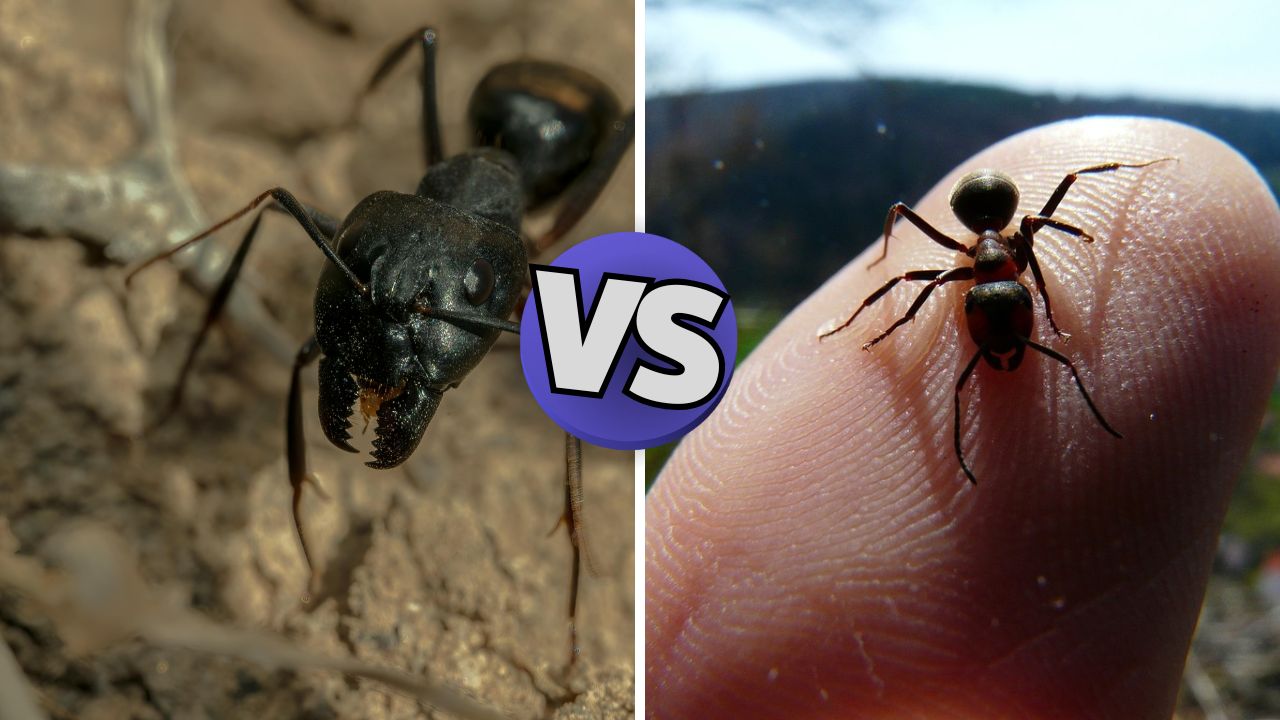
The Analysis of Red Ant vs. Black Ant: Differences Explained
When you spot a line of tiny insects marching across a picnic table, you might not think twice about which species you’re watching. Yet the contrast between the scarlet‑hued red ant and its charcoal counterpart, the black ant, is more than just a splash of color. Their habits, nests, and even the roles they play in the ecosystem diverge in ways that can surprise even seasoned naturalists.
Overview of the Two Species
Both ants belong to the family Formicidae, but they occupy different genera and have distinct evolutionary histories. Red ants are typically members of the genus Pogonomyrmex or Formica, while black ants often fall under Lasius or Camponotus. This taxonomic split translates into measurable differences in size, diet, and social organization.
Red Ant (General Traits)
- Coloration: Vibrant reddish orange, useful for warning predators of their painful sting.
- Size: Generally 4–7 mm, though some species can reach 10 mm.
- Habitat: Prefer open, dry terrains like grasslands and deserts.
- Diet: Omnivorous, with a strong preference for seeds and small arthropods.
Black Ant (General Traits)
- Coloration: Matte black to deep brown, providing camouflage in leaf litter.
- Size: Ranges from 2 mm in tiny garden species to 12 mm in carpenter ants.
- Habitat: Thrive in forested areas, wooded gardens, and urban structures.
- Diet: Primarily aphid honeydew, plant exudates, and occasional insect prey.
Social Structure and Colony Dynamics
One of the most striking differences is how each species organizes its colony. Red ants often form relatively small, aggressive colonies that focus on territorial expansion. In contrast, black ants tend to build larger, more cooperative nests that can persist for decades.
Red ant colonies usually consist of a single queen and a few hundred workers. Their queens are prolific breeders, but the colonies rarely exceed a few thousand individuals before they split or relocate. Black ant colonies, especially those of carpenter ants, may house multiple queens and number tens of thousands of workers. This multi‑queen system—known as polygyny—allows them to dominate a broader area and recover quickly after disturbances.
Foraging Strategies
Red ants are famous for their “solitary hunting” approach. A worker will leave the nest, locate a prey item, and return alone, sometimes recruiting a few comrades if the target is sizable. Their keen sense of smell enables them to track seed trails across barren ground.
Meanwhile, black ants employ a “trail‑following” tactic. They lay pheromone lines that other workers follow, creating organized highways of traffic. This leads to efficient exploitation of resources like honeydew, which requires collective care and protection from predators.
Impact on Human Environments
Both species intersect with human activity, but the consequences differ. Red ants, especially those with potent stings, can become a nuisance at outdoor events, prompting painful bites and allergic reactions. Their propensity to build shallow nests near footpaths can also damage lawns.
Black ants, notably carpenter ants, are notorious for weakening wooden structures. By hollowing out damp timber, they can compromise the integrity of homes and furniture. However, they are generally less aggressive toward people, preferring to stay hidden unless their nest is disturbed.
Ecological Roles and Benefits
Despite their occasional annoyances, both ants contribute positively to their ecosystems. Red ants act as seed dispersers; they collect and store seeds, some of which germinate after being forgotten. This behavior supports plant diversity in arid regions.
Black ants, on the other hand, serve as biological control agents. Their predation on aphids and other sap‑sucking insects helps keep plant pathogens in check. Moreover, their tunneling aerates soil, improving water infiltration and root growth.
Adaptations to Climate and Terrain
Red ants possess a higher tolerance for heat and low humidity. Their exoskeletons are thicker, reducing water loss, and their foraging times often peak during the cooler early morning hours.
Black ants favor cooler, moist environments. Their lighter exoskeleton reflects sunlight, and they are adept at nesting in decaying wood where humidity remains stable. Some species even adjust their activity patterns seasonally, retreating underground during extreme heat.
Key Takeaways
- Red ants: bold coloration, aggressive foragers, smaller colonies, thrive in dry habitats.
- Black ants: dark camouflage, cooperative foraging, larger or multi‑queen colonies, favor moist, wooded settings.
- Both play crucial ecological roles—seed dispersal versus pest control—and have distinct implications for human structures.
Understanding these nuances helps gardeners, homeowners, and outdoor enthusiasts coexist more harmoniously with these tiny architects of the natural world. Whether you’re admiring a line of red ants marching across a rock or observing black ants tending to aphid honeydew, you’re witnessing two parallel evolutionary experiments—each fine‑tuned to survive and shape its own niche.