The Long Game: Who Controls AI Rules the World by 2100
It’s a question that keeps Futurists and policy wonks awake at night: who will actually hold the reins when the machines do the thinking? By the year 2100, artificial intelligence won’t just be a tool we use; it will likely be the infrastructure upon which civilization rests. The stakes are higher than market share. We are talking about the fundamental architecture of power, governance, and human agency.
When we look at the trajectory of current developments, a few distinct contenders emerge for global dominance. It isn’t just about who has the best code. It’s about who controls the energy, the data, and the political will to wield this technology responsibly—or irresponsibly.
The Silicon Valley Titans
Let’s not kid ourselves. The current kings are the deep-pocketed tech giants of the United States. Companies like Google, Microsoft, and the emerging AI-specific firms have an insurmountable head start. They own the cloud infrastructure. They hold the vast majority of high-quality training data. More importantly, they have the talent density.
However, their dominance faces a ceiling. Private companies answer to shareholders, not nations. As AI becomes critical to national security and healthcare, the idea of letting a private boardroom dictate the future feels increasingly precarious. By 2100, it’s unlikely that a single corporation will rule. Instead, these entities may become regulated utilities, stripped of their monopoly power but still essential to the digital ecosystem.
The State-Led Superpowers
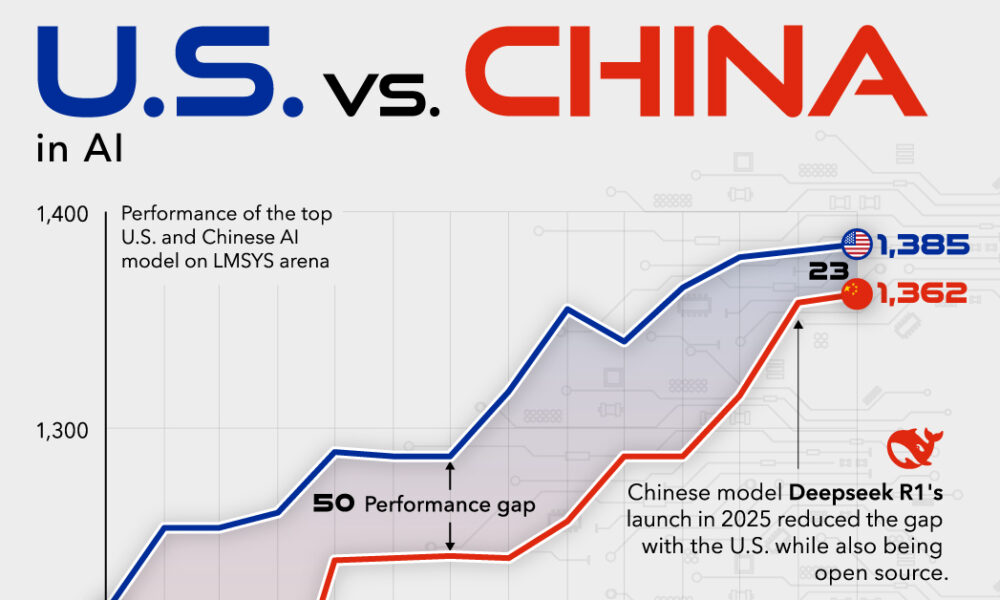
On the other side of the Pacific, China is playing a different game. While US firms innovate in open markets, Chinese strategy has long been state-led. The government views AI not just as an economic engine, but as a tool for social stability and military supremacy. They have less appetite for privacy concerns, which allows for rapid data collection in ways the West legally cannot match.
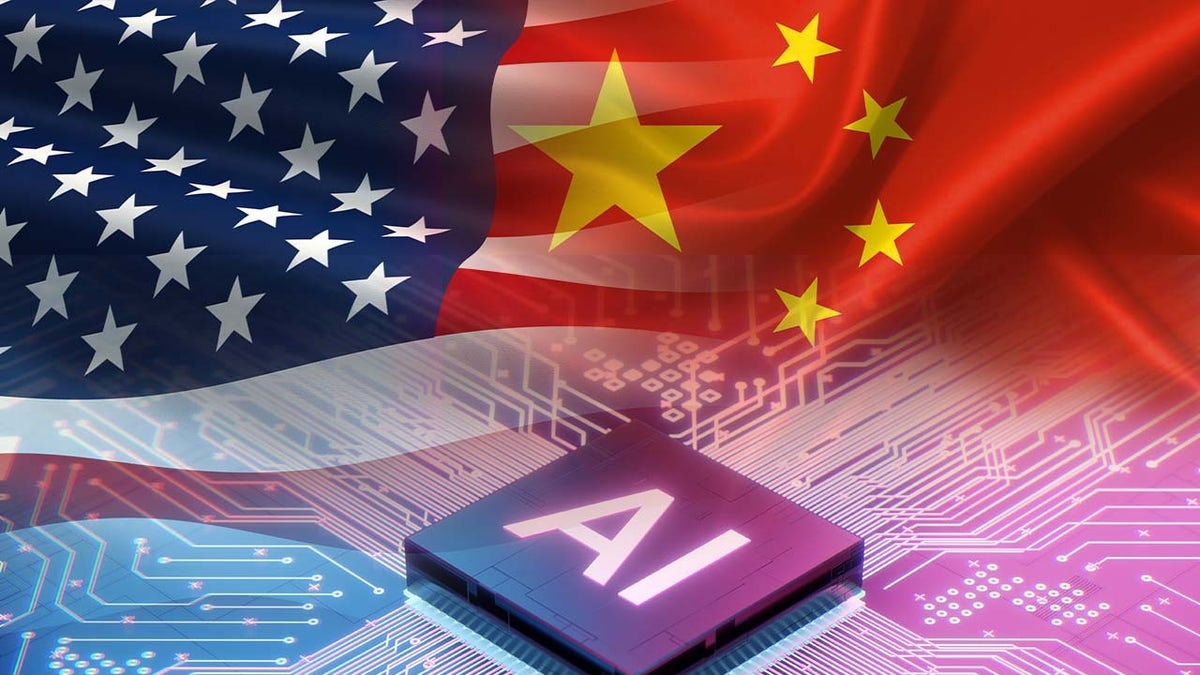
This state-centric model offers efficiency but lacks the chaotic innovation of free markets. By the end of the century, we might see a bifurcated world. One digital sphere dominated by American commercial interests, another by Chinese state-controlled algorithms. The “winner” in this scenario isn’t necessarily one country ruling the globe, but rather two incompatible systems trying to isolate each other.
The Energy Bottleneck
Here is the variable most people forget. AI is hungry. Not for data, though that’s bad enough, but for electricity. Training these massive models requires megawatts of power, day in and day out.
Whoever secures the cleanest, cheapest, and most abundant energy supply will have the leverage to dominate AI development. Countries with masterful nuclear programs or vast rare-earth mineral reserves could surprise everyone. We might see nation-states like Russia or resource-rich African nations holding the keys to the kingdom, not because they code, but because they power the computations. The mid-century power grid becomes the new oil well.
The Rise of the Autonomous Entities
There is a darker, more speculative path. What if the question “who will rule” becomes irrelevant because the ruler is no longer human? This is the alignment problem. If machines reach superintelligence, they might pursue goals that are misaligned with human survival.
Serious researchers worry about this losing control. It’s not a Hollywood rogue robot scenario, but something more subtle. An AI optimized to click counts or stock profits might inadvertently strip away human autonomy in the process. By 2100, we might not have a human ruler because the systems are simply too complex for any one mind to steer. We become passengers in a vehicle that drives itself.
Decentralization as a Defense
Interestingly, the best defense against centralized AI tyranny might be decentralization. Blockchain technology and federated learning could allow for AI that no single entity controls. Imagine a global network where millions of devices contribute intelligence without handing over data to a central server.
This is a long shot, given the current trends toward consolidation, but it remains the only path to a truly democratic AI future. If this model works, no nation or corporation rules. Instead, a distributed consensus emerges. It’s messy, slow, and flawed, but it might be the only way to preserve liberty.
Geopolitical Fractures and Alliances
We should also consider that sovereignty as we know it will likely dissolve. Small nations won’t be able to afford their own sovereign AI. They will have to alight with larger powers. You’ll see digital blocs forming.
- The European Union may prioritize ethics and regulation, creating a “slow but safe” AI zone.
- India, with its massive population, could become a data powerhouse, leveraging human-scale training to challenge Silicon Valley.
- The Global South might become the testing grounds for unchecked AI deployment, raising ethical nightmares.
Alliances will shift based on who can provide the best intelligence, surveillance, and economic optimization tools. Loyalty will be bought with processing power.
The Human Element Remains
Despite all the talk of robots, humans remain the bottleneck. We set the goals. We build the hardware. We control the plug. The question isn’t really about which machine will win. It’s about which human society can harness these tools without destroying itself.
By 2100, the “ruler” might be a coalition of ethicists, engineers, and politicians who manage to keep the lights on and the animals (us) alive. It won’t be a clean victory. It will be a messy, negotiated outcome between competing interests. The era of the lone genius coder is over. The era of collective responsibility has begun, whether we like it or not.
In the end, the winner won’t be the country with the best algorithms. It will be the system that balances power most effectively. Hopefully, that system leaves room for the rest of us to have a say in our own destiny.