Understanding Minimum Finance Charges in Your Loan Contract
Most people skim through the fine print of a loan agreement without truly grasping the implications. We focus on the interest rate and the monthly payment amount. We rarely pause to dissect the smaller, seemingly technical clauses. One such clause is the minimum finance charge. It appears modest on paper, often just a few dollars, yet it can subtly inflate the total cost of borrowing over time. Treating it as an administrative footnote is a mistake. Understanding how this charge works empowers you to budget more accurately and makes you less likely to be surprised by fees when you try to pay off debt early.
What Exactly Is a Minimum Finance Charge?
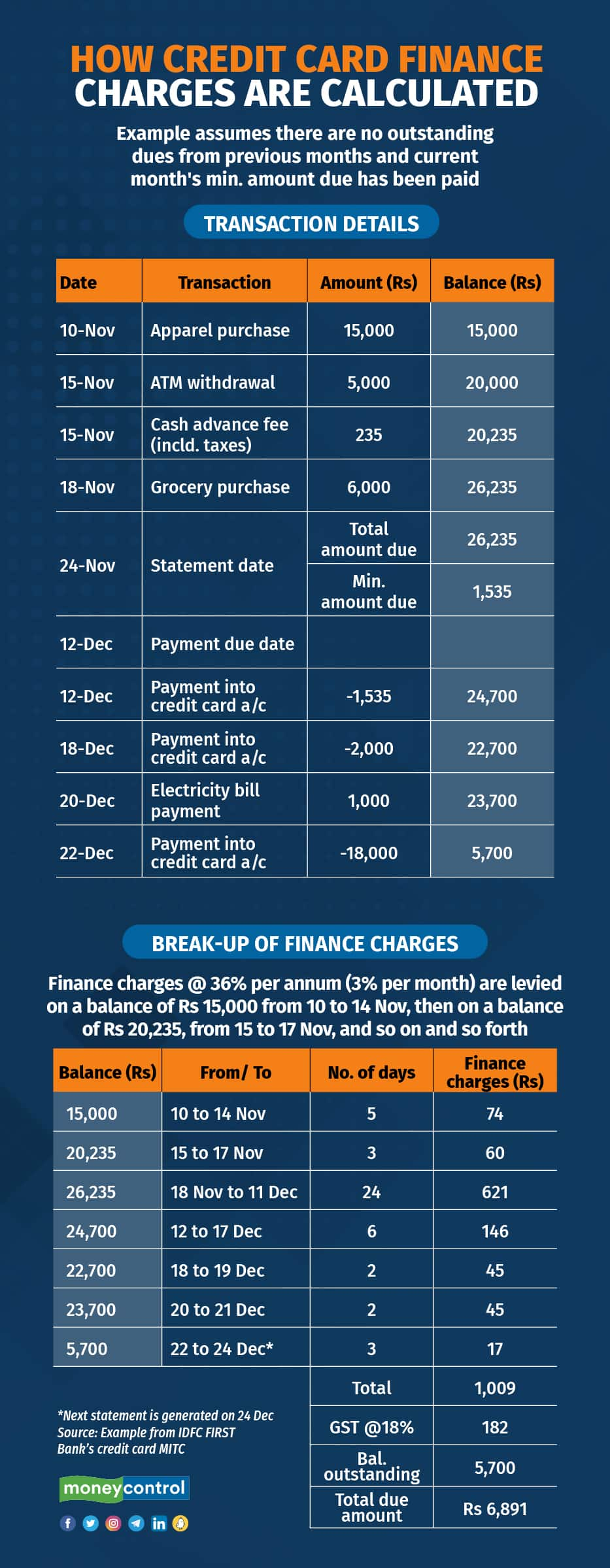
At its core, a minimum finance charge is the lowest amount of interest a lender will calculate for a specific billing cycle. In many lending scenarios, particularly with lines of credit, credit cards, or revolving loans, interest is calculated daily based on your outstanding balance.
Mathematically, if you have a very small balance, the daily accrual might result in pennies. For example, a balance of $100 at a 15% annual rate generates roughly four cents in interest per day. Over a 30-day month, that’s about $1.20.
However, lenders often cap this calculation at the bottom. Instead of charging you $1.20, the contract states that the minimum charge for the month is $2.00 or $5.00. This means that even if your calculated interest is lower, you will be billed the higher, predetermined floor amount. It acts as a baseline fee for maintaining the debt facility.
Why Do Lenders Use These Charges?
It helps to understand the business logic behind the practice. Processing transactions, managing accounts, and maintaining credit lines involve operational costs. These costs remain relatively fixed regardless of whether the borrower owes $50 or $5,000.
- Transaction Costs: Every payment processed requires infrastructure. Small balances can actually be more costly to manage proportionally than large ones due to administrative overhead.
- Profit Protection: Interest is a lender’s primary revenue stream. On tiny balances, traditional interest calculations yield negligible income. The minimum charge ensures a baseline return on the extended credit.
- Simplification: Rounding up to a fixed minimum can simplify billing statements, avoiding confusion caused by fractional cents that don’t add up neatly for consumers.
This doesn't make the charge inherently predatory, but it does mean that the cost of borrowing isn't always a linear percentage of your debt. It has a floor.
When Does the Minimum Charge Apply?
The impact of a minimum finance charge is most noticeable during specific phases of repayment. If you are carrying a large balance, the calculated interest will almost always exceed the minimum. For a $10,000 debt, even a low rate generates significant interest, making the $2.00 minimum irrelevant.
The dynamic changes drastically as you near the end of your payoff period. This is when the "death spiral" of small-balance debt can occur.
The End-Game Scenario
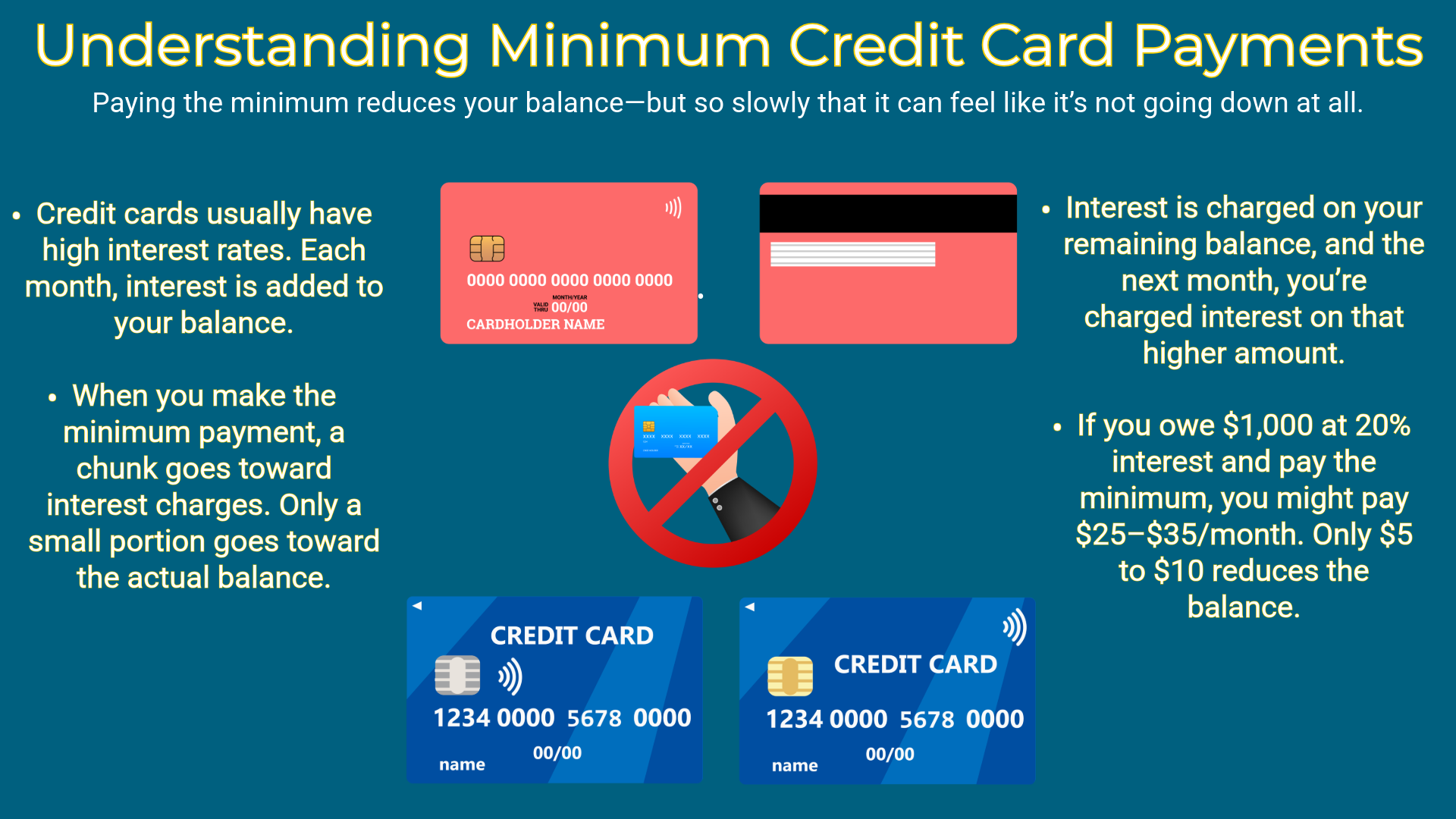
Imagine you owe $15. Your monthly payment amortization might call for a payment of $12, with $1 covering interest. Because the lender has a $2.00 minimum finance charge, you are actually charged $2.00 in interest. This exceeds your principal payment. You pay off almost nothing of the debt. In some aggressive cases, the interest charge exceeds the total payment, causing your balance to remain static or even grow, despite you making on-time payments.
This phenomenon is often why loans seem to linger at low balances for months or even years, frustrating borrowers who expected quick closure.
Revolving vs. Installment Loans
Minimum finance charges are more common in revolving credit products, such as credit cards and home equity lines of credit (HELOCs). In these instruments, the balance fluctuates. The lender needs a consistent mechanism to ensure they are compensated for the cost of carrying the account, regardless of how low the balance dips.
In traditional installment loans, like auto loans or mortgages, interest is typically calculated strictly on the amortization schedule. A minimum finance charge is less common here because the payments are fixed and designed to achieve zero balance by a specific date. However, some personal lines of credit will utilize similar structures, so it is crucial to read the terms regardless of the loan type.
How to Mitigate the Impact
You cannot control the lender's terms, but you can control your strategy. Here are a few practical approaches:
Round Up Your Payments
If your balance is getting low, do not rely on the minimum payment. Make a slightly larger payment to cover the principal more aggressively. If the minimum finance charge is $2.00, and your payment is $10.00, you are only reducing the principal by $8.00. Adding an extra $5.00 might seem negligible, but it speeds up the payoff process, keeping the debt from stagnating.
Possible Lump Sum
When you have a few hundred dollars remaining, a strategic lump-sum payment can clear the balance entirely. This stops the interest clock completely, eliminating all future minimum finance charges.
Review Transfer Options
If the minimum finance charge is preventing you from paying off a high-interest line of credit, consider a balance transfer to a card with a lower fee structure or a promotional 0% APR period. This can reset the calculation environment, though transfer fees must be weighed against the interest savings.
FAQ: Common Questions About Minimum Charges
Is a minimum finance charge illegal?
No, provided it is clearly disclosed in the loan agreement. Federal regulations require lenders to disclose how finance charges are calculated. As long as the terms are transparent, the practice is legal.
Does this apply to all credit cards?
Not all cards have a minimum interest charge. Many modern card issuers calculate interest down to the penny. However, many others maintain a $1.00 to $5.00 minimum. You must check your cardholder agreement to know for sure.
Can negotiating the rate help?
Negotiating a lower interest rate helps with high balances, but it often does not remove the minimum finance charge clause. The floor remains even if the slope of the interest calculation decreases. Focus on payoff strategy rather than rate negotiation for low balances.
Understanding the mechanics of minimum finance charges prevents frustration. It transforms a confusing bill into a manageable variable. By recognizing the floor beneath the interest, you can pay off debt faster and with greater confidence.