Understanding the Duration Gap: A Simple Guide in Finance
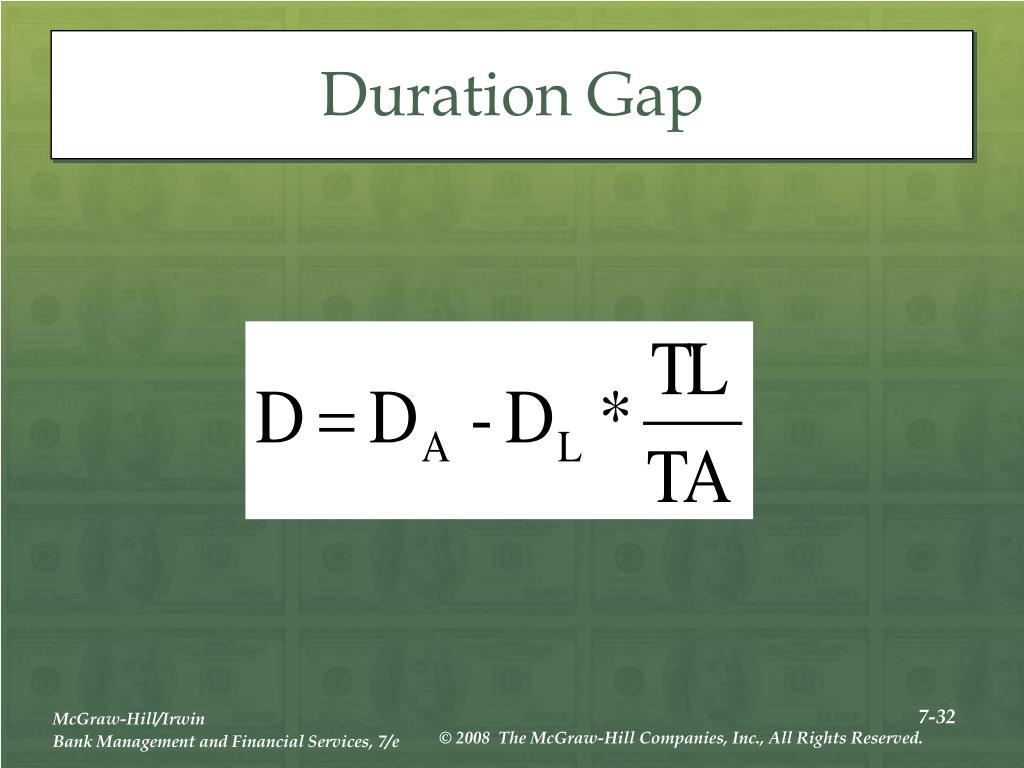
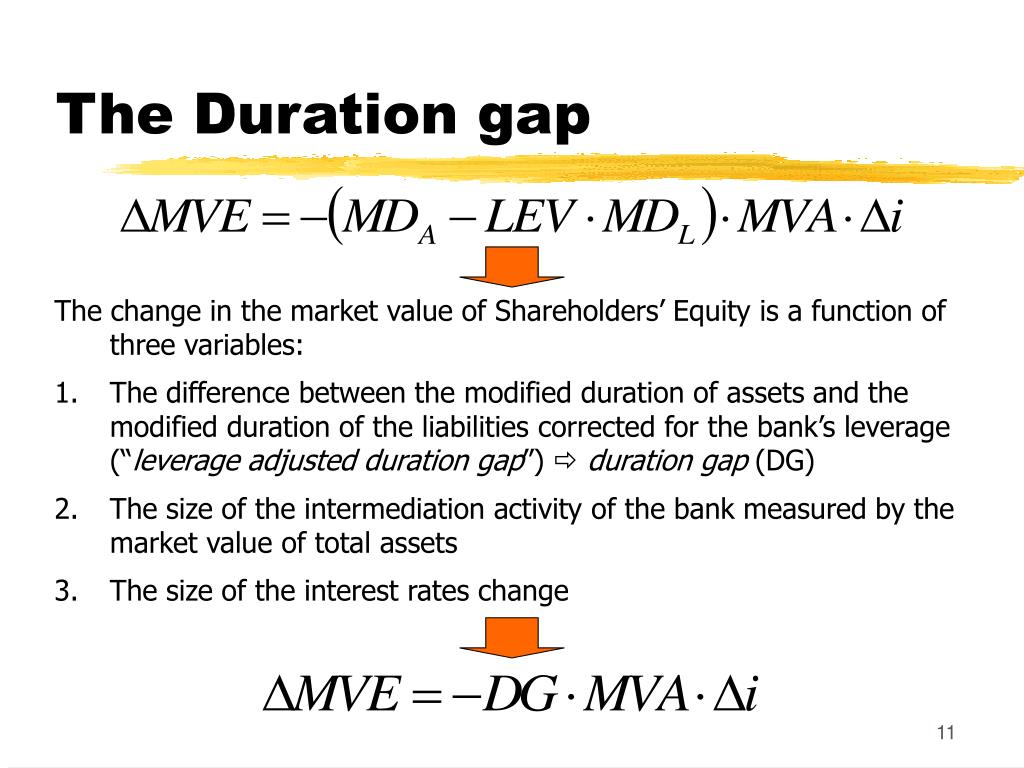
The duration gap is a financial concept that plays a critical role in managing interest rate risk for banks, financial institutions, and other organizations. It refers to the difference between the duration of assets and liabilities, which can significantly impact an institution's financial stability. In this article, we will delve into the concept of the duration gap, its importance, and how it can be managed effectively.
To comprehend the duration gap, it's essential to understand what duration means in finance. Duration is a measure of the sensitivity of a security's price to changes in interest rates. It takes into account the time until the security's cash flows are received, the present value of these cash flows, and the yield to maturity. The longer the duration, the more sensitive the security's price is to interest rate fluctuations.
How the Duration Gap Works
The duration gap arises when there is a mismatch between the duration of assets (such as loans or investments) and liabilities (such as deposits or debt). For instance, a bank may have long-term loans (assets with a high duration) but short-term deposits (liabilities with a low duration). This creates a positive duration gap, where the assets are more sensitive to interest rate changes than the liabilities. Conversely, if the bank has short-term assets and long-term liabilities, it would have a negative duration gap.
A positive duration gap can lead to significant losses if interest rates rise, as the value of the long-term assets will decrease more than the value of the short-term liabilities. On the other hand, a negative duration gap can result in profits if interest rates fall, as the value of the long-term liabilities will decrease more than the value of the short-term assets.
Managing the Duration Gap
Financial institutions can manage the duration gap by employing various strategies to match the duration of their assets and liabilities. Some common techniques include:
- Asset-Liability Management (ALM): This involves actively managing the duration of both assets and liabilities to ensure they are aligned and the duration gap is minimized.
- Interest Rate Swaps: Institutions can use interest rate swaps to convert floating-rate assets or liabilities into fixed-rate ones, thereby altering their duration and reducing the duration gap.
- D Duration Matching: This involves matching the duration of assets and liabilities by investing in securities with durations similar to those of the liabilities.
Effective management of the duration gap requires continuous monitoring of interest rates, economic conditions, and the institution's balance sheet. It also demands a deep understanding of the concept of duration and its implications for financial stability.
Conclusion and Best Practices
In conclusion, the duration gap is a critical concept in finance that requires careful attention from financial institutions. By understanding the duration gap and implementing effective management strategies, institutions can mitigate interest rate risk and ensure their financial stability. Best practices include regularly reviewing asset and liability portfolios, maintaining a balanced duration gap, and being proactive in managing interest rate risk.
Ultimately, managing the duration gap is an ongoing process that requires constant vigilance, expertise, and a commitment to prudential financial management. As financial markets continue to evolve, the importance of understanding and managing the duration gap will only continue to grow.