Understanding Why Horses Wear Shoes: A Complete Guide
When you first see a horse trotting in a polished arena, the glint of metal on its hooves often prompts the question: why do horses wear shoes? The answer isn’t just a matter of tradition; it’s a blend of anatomy, terrain, and the demands we place on modern equine athletes. In the next few minutes we’ll walk through the history, the science, and the everyday decisions that keep a horse’s feet protected and functional.
What Horse Shoes Actually Are
At its core, a horse shoe is a thin, usually steel or aluminum, U‑shaped plate that is nailed to the outer rim of the hoof. The shoe doesn’t become part of the hoof wall; rather, it rests on top, distributing pressure and shielding the sensitive structures underneath.
Key parts of a shoe include the sole (the bottom surface), the heel (the rear portion), and the toe (the front). Each region can be shaped differently depending on the intended use—think of a running shoe versus a hiking boot.
Historical Roots of Shoeing
Humans have been attaching protective devices to horse hooves for millennia. Early evidence from 5th‑century BC Persia shows simple iron caps used to keep hooves from wear on rocky paths. By the Middle Ages, the craft of farriery (the trade of making and fitting shoes) had become a respected profession, largely because horses were essential for travel, agriculture, and war.
In those days, the primary goal was survival: a shoe prevented a cracked hoof from turning into a serious infection. The materials were rudimentary, but the principle—adding a durable barrier between hoof and ground—remained the same.
Modern Benefits of Shoeing
Today, the reasons for shoeing are as varied as the disciplines horses compete in.
- Traction control. A well‑chosen shoe can give a dressage horse extra grip on a polished floor, while a trail horse might need studs for icy conditions.
- Impact reduction. Jumping or galloping on hard surfaces can cause bruising; a cushioned shoe helps absorb shock.
- Corrective support. Some horses develop uneven wear patterns or mild deformities; specialized shoes can guide the hoof back toward a more balanced stride.
- Protection from wear. Horses that work on abrasive terrain—sand, gravel, or rocky trails—benefit from a metal shield that would otherwise be worn away in weeks.
It’s worth noting that not every horse needs shoes. Many owners opt for a barefoot approach, especially when the animal spends most of its time on soft pastures and receives regular hoof care.
Types of Horse Shoes
Choosing the right shoe is a collaborative decision between the rider, trainer, and farrier. Here are the most common categories:
- Standard steel shoes. The workhorse of the farrier world; sturdy, relatively inexpensive, and suitable for a broad range of activities.
- Aluminum shoes. Lighter than steel, making them popular for eventing or show jumping where reduced limb inertia can enhance agility.
- Rubber or polyurethane pads. Often glued or nailed under a metal plate, these provide extra cushioning for horses with sensitive heels.
- Therapeutic shoes. Custom‑crafted from materials like epoxy or carbon fiber to address specific orthopedic issues.
- Studded or caulked shoes. Feature protruding metal spikes (studs) or replaceable caulks that bite into slick surfaces, ideal for winter work.
The farrier may also trim the hoof differently depending on the shoe—some designs require a more rounded heel, others a flatter sole.
How Shoes Are Applied and Maintained
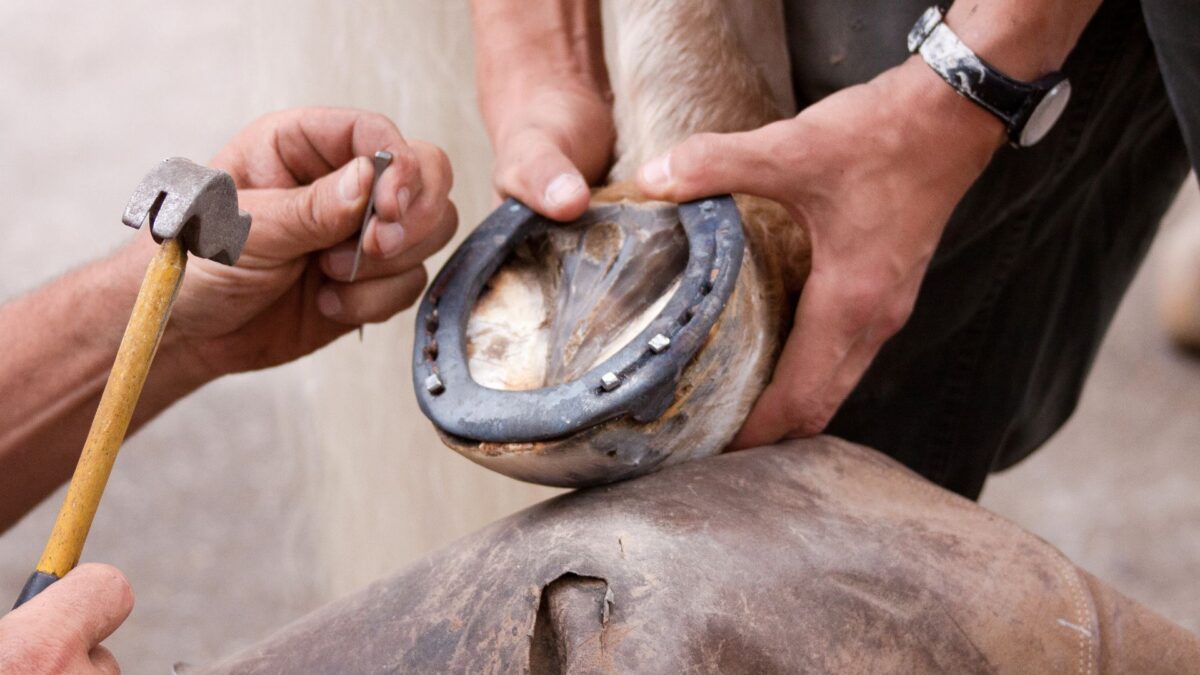
The process begins with a thorough hoof trim. A skilled farrier removes excess hoof wall to achieve a balanced shape, then fits the shoe to the freshly trimmed surface. Nails—usually 1.2 mm in diameter—are driven through pre‑drilled holes in the shoe and into the insensitive outer part of the hoof wall. The nails are then bent over (a technique called “clinching”) to secure the shoe without damaging the sensitive inner structures.
Maintenance is a routine matter. Most horses wearing shoes need a check every six to eight weeks. During this visit the farrier will:
- Inspect the shoe for cracks or loosened nails.
- Re‑balance the hoof if any uneven wear is evident.
- Replace the shoe if the horse’s activity level or terrain has changed.
Neglecting regular checks can lead to sore hooves, nail loss, or even injury to the frog (the V‑shaped pad on the underside of the hoof).
Common Misconceptions
There are a few myths that persist around equine footwear.
- “Shoes prevent all hoof problems.” A shoe is a tool, not a cure‑all. Proper nutrition, regular trimming, and a suitable environment remain essential.
- “All horses must be shod.” As mentioned, many healthy horses thrive barefoot, especially when managed on soft ground.
- “More nails mean better protection.” Over‑nailing can damage the hoof wall and cause pain. A skilled farrier knows the exact number needed for each shoe.
Understanding the why behind shoeing helps owners make informed choices rather than relying on tradition alone.
FAQ
Do horses feel pain when a shoe is nailed on?
Generally no. The nail goes through the insensitive outer layer of the hoof wall, which lacks nerve endings. If a farrier works correctly, the horse should feel nothing beyond the normal pressure of a trim.
Can a horse go barefoot after being shod for years?
Yes, but the transition should be gradual. Removing shoes abruptly can expose a hardened hoof wall to sudden stress. A farrier can taper the shoe over several sessions while the hoof re‑softens.
What’s the difference between a shoe and a hoof boot?
A shoe is nailed permanently (or semi‑permanently) to the hoof. A boot is a removable cover, often made of rubber or neoprene, used for short‑term protection during transport or trail rides.
How often should a horse’s shoes be replaced?
Most horses benefit from a new set every six to eight weeks, though the interval can stretch to ten weeks for light work on soft ground or shorten for intense competition on hard surfaces.
:strip_icc()/shoeing-faq-is-barefoot-better-1885965-hero-ede5e6cced394e19b599205751539677.JPG)