Unlocking the Code: The Importance of Math for Computing and Informatics
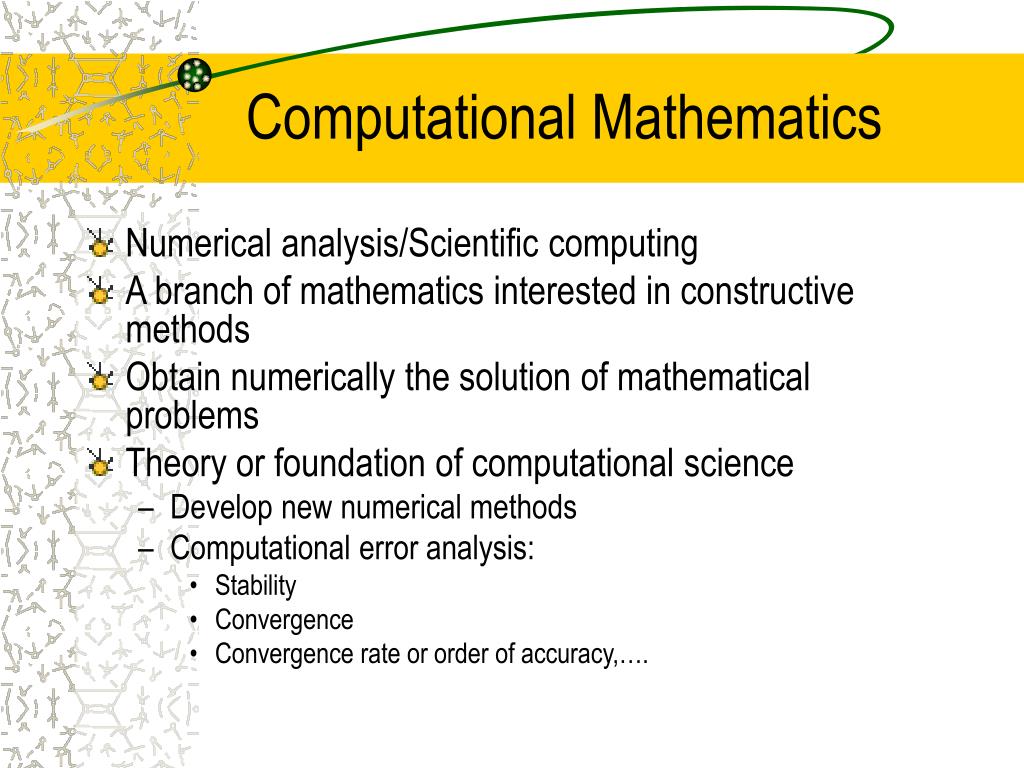
Mathematics has long been the foundation of computer science and informatics, providing the necessary tools and techniques to develop innovative solutions and drive technological advancements. From algorithms and data structures to machine learning and artificial intelligence, math plays a vital role in shaping the digital world. In this article, we will delve into the world of math for computing and informatics, exploring its significance, applications, and the skills required to succeed in this field.
The relationship between math and computer science is deeply intertwined. Mathematical concepts such as discrete mathematics, linear algebra, and calculus form the basis of computer programming, enabling developers to create efficient algorithms, model complex systems, and analyze large datasets. Moreover, mathematical techniques like probability theory and statistics are essential for machine learning and data science, allowing computers to learn from data, make predictions, and optimize processes.
Mathematical Foundations of Computing
The mathematical foundations of computing include a range of disciplines, including discrete mathematics, graph theory, and combinatorics. These fields provide the theoretical underpinnings for computer science, enabling developers to design and analyze algorithms, data structures, and software systems. For instance, graph theory is used to model network systems, optimize routing protocols, and analyze social networks, while combinatorics is used to develop algorithms for solving complex problems, such as scheduling and resource allocation.
Linear algebra and calculus are also crucial for computing, as they provide the mathematical framework for computer graphics, game development, and scientific simulations. These fields enable developers to create realistic models, animate characters, and simulate complex phenomena, such as physics and climate systems.
Applications of Math in Computing and Informatics
The applications of math in computing and informatics are diverse and widespread. Some examples include:
- Cryptography: Mathematical techniques like number theory and algebraic geometry are used to develop secure encryption algorithms, ensuring the confidentiality and integrity of online transactions and communications.
- Machine Learning: Math is used to develop machine learning algorithms, such as neural networks and decision trees, which enable computers to learn from data and make predictions or decisions.
- Data Science: Statistical and mathematical techniques are used to analyze and visualize large datasets, extracting insights and patterns that inform business decisions or scientific discoveries.
- Computer Vision: Math is used to develop algorithms for image and video processing, object recognition, and tracking, enabling applications like self-driving cars, facial recognition, and medical imaging.
Skills Required for Math in Computing and Informatics
To succeed in the field of math for computing and informatics, individuals require a strong foundation in mathematical concepts, as well as programming skills and knowledge of computer science principles. Some essential skills include:
Proficiency in programming languages like Python, Java, or C++; experience with mathematical software like MATLAB or Mathematica; and knowledge of data structures and algorithms, including graphs, trees, and dynamic programming. Additionally, individuals should have strong analytical and problem-solving skills, as well as the ability to communicate complex mathematical concepts to non-technical stakeholders.
Conclusion and Future Directions
In conclusion, math plays a vital role in computing and informatics, providing the necessary tools and techniques to develop innovative solutions and drive technological advancements. As the field of computer science continues to evolve, the importance of math will only continue to grow, with applications in areas like artificial intelligence, cybersecurity, and data science. By developing a strong foundation in math and computer science, individuals can unlock the code to a rewarding and challenging career in this exciting field.
As we look to the future, it is clear that math will remain a fundamental component of computing and informatics, enabling us to tackle complex problems, develop new technologies, and push the boundaries of human knowledge. By embracing the importance of math in computing, we can unlock new possibilities, drive innovation, and create a brighter future for generations to come.