Unlocking the Secrets of Euler and Hamilton Circuits in Graphs
Graph theory is a fascinating field of mathematics that deals with the study of graphs, which are collections of nodes or vertices connected by edges. Two fundamental concepts in graph theory are Euler circuits and Hamilton circuits. In this article, we will delve into the world of Euler and Hamilton circuits, exploring their definitions, differences, and applications.
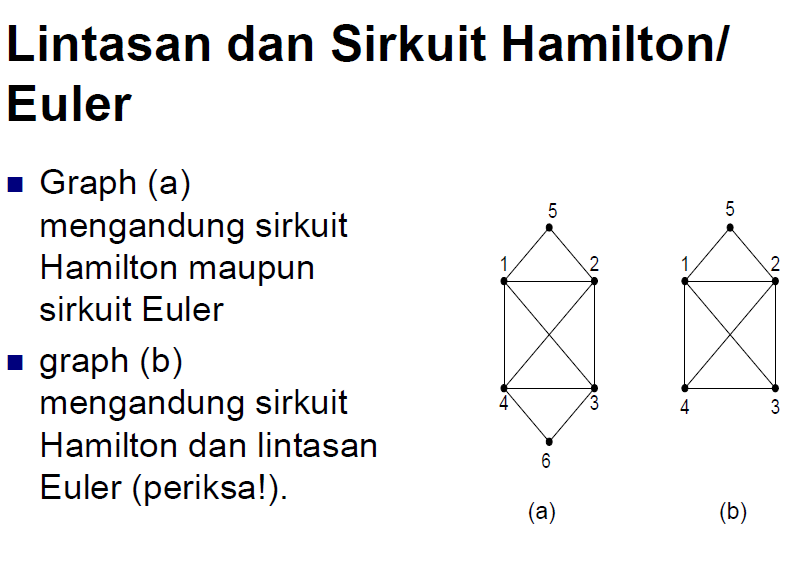
Euler circuits are named after the Swiss mathematician Leonhard Euler, who first introduced the concept in the 18th century. An Euler circuit is a path that visits every edge in a graph exactly once and returns to the starting vertex. This concept is closely related to the idea of a "path" in a graph, which is a sequence of vertices connected by edges. Euler circuits have numerous applications in fields such as network analysis, transportation systems, and computer science.
Key Characteristics of Euler Circuits
To better understand Euler circuits, let's examine some of their key characteristics. First, an Euler circuit must visit every edge in the graph exactly once. This means that the circuit must be a closed path, where the starting and ending vertices are the same. Additionally, an Euler circuit can only exist in a graph if all vertices have even degrees, meaning that the number of edges connected to each vertex is even.
- Euler circuits visit every edge in the graph exactly once.
- The circuit must be a closed path, where the starting and ending vertices are the same.
- All vertices must have even degrees for an Euler circuit to exist.
Hamilton Circuits: A Different Perspective
Hamilton circuits, on the other hand, are named after the Irish mathematician William Rowan Hamilton, who introduced the concept in the 19th century. A Hamilton circuit is a path that visits every vertex in a graph exactly once and returns to the starting vertex. Unlike Euler circuits, which focus on edges, Hamilton circuits focus on vertices. This concept has significant implications in fields such as computer science, optimization, and logistics.
One of the key differences between Euler and Hamilton circuits is the level of complexity involved. Euler circuits can be found in polynomial time using algorithms such as Hierholzer's algorithm, whereas Hamilton circuits are NP-complete, meaning that the running time of algorithms increases exponentially with the size of the input graph.
Applications of Euler and Hamilton Circuits
Both Euler and Hamilton circuits have numerous applications in various fields. In network analysis, Euler circuits can be used to optimize the routing of data packets or the scheduling of tasks. In transportation systems, Hamilton circuits can be used to optimize the route of delivery trucks or taxis. In computer science, Euler circuits can be used to solve problems related to graph traversal and network optimization.
In conclusion, Euler and Hamilton circuits are two fundamental concepts in graph theory that have significant implications in various fields. By understanding the characteristics and differences between these two concepts, we can unlock the secrets of graph theory and develop innovative solutions to real-world problems.